
Aminoglycoside Nephrotoxicity Risk Calculator
Risk Assessment
Risk assessment results will appear here
Prevention Tips: Based on your risk factors, consider these evidence-based strategies:
- Use once-daily dosing (reduces risk by up to 40%)
- Maintain adequate hydration
- Avoid vancomycin combinations if possible
- Monitor creatinine every 48-72 hours
- Keep gentamicin trough levels below 1 μg/mL
When you're fighting a serious bacterial infection-especially one caused by tough Gram-negative bugs like E. coli or Pseudomonas-doctors sometimes turn to aminoglycoside antibiotics. Drugs like gentamicin, tobramycin, and amikacin are powerful. They kill bacteria fast. But there’s a dark side: about 1 in 5 people who take them develop kidney damage. And it’s not rare. It’s predictable. And it’s preventable-if you know what to watch for.
How Aminoglycosides Hurt the Kidneys
These antibiotics don’t just float through your body. Once they enter the bloodstream, your kidneys filter them out. But here’s the problem: about 5% of the dose gets stuck in the cells lining the proximal tubules-the part of the kidney that reabsorbs nutrients and water. That’s where the damage starts. Inside these cells, aminoglycosides pile up in lysosomes, the cell’s recycling centers. Over time, they mess with enzymes, disrupt the cell’s energy supply, and trigger inflammation. Electron microscopes show the damage: swollen lysosomes filled with myeloid bodies, damaged mitochondria, and broken membranes. It’s not just one thing going wrong. It’s a cascade. And it’s not just the tubules. Research from 2011 showed that aminoglycosides also cause blood vessels in the kidney to tighten. That reduces blood flow. Less blood flow means less filtration. So even if the tubules weren’t damaged, your kidneys still wouldn’t work right. This dual attack-tubular damage plus reduced blood flow-is why nephrotoxicity is so common and so hard to stop.What Does Kidney Damage Look Like?
Unlike other types of kidney injury, aminoglycoside damage usually doesn’t stop urine production. You still pee-sometimes even more than usual. That’s called nonoliguric acute kidney injury. The classic sign? A slow rise in serum creatinine. Not overnight. Usually after 5 to 7 days of treatment. Doctors look for a rise of at least 0.5 mg/dL or 50% above your baseline. But the earliest warning signs show up in urine long before creatinine climbs. You’ll see more sodium, potassium, magnesium, and calcium leaking out. Proteins like beta-2-microglobulin and enzymes like N-acetylglucosaminidase spike too. These aren’t routine tests, but they’re what researchers use to catch damage before it becomes obvious. The damage isn’t always permanent. Most people recover kidney function within 1 to 3 weeks after stopping the drug. But about 1 in 5 don’t fully bounce back. That’s why even a short course can leave a lasting mark.Who’s at Highest Risk?
Not everyone gets kidney damage. But some people are far more likely to. The biggest risk factor? Already having weak kidneys. If your estimated glomerular filtration rate (eGFR) is below 60 mL/min/1.73m², your risk jumps 3.2 times. Age matters too. People over 65 are more vulnerable. Another big one: combining aminoglycosides with other kidney-hurting drugs. Vancomycin is the worst offender. When used together, the risk of kidney injury nearly triples. Other culprits include NSAIDs, contrast dyes, and certain antifungals. Even dehydration plays a role. If you’re not well-hydrated, the drugs concentrate in your kidneys faster. The longer you’re on the drug, the worse it gets. Most damage happens after 7 days. But even a 3-day course can hurt if you’re high-risk.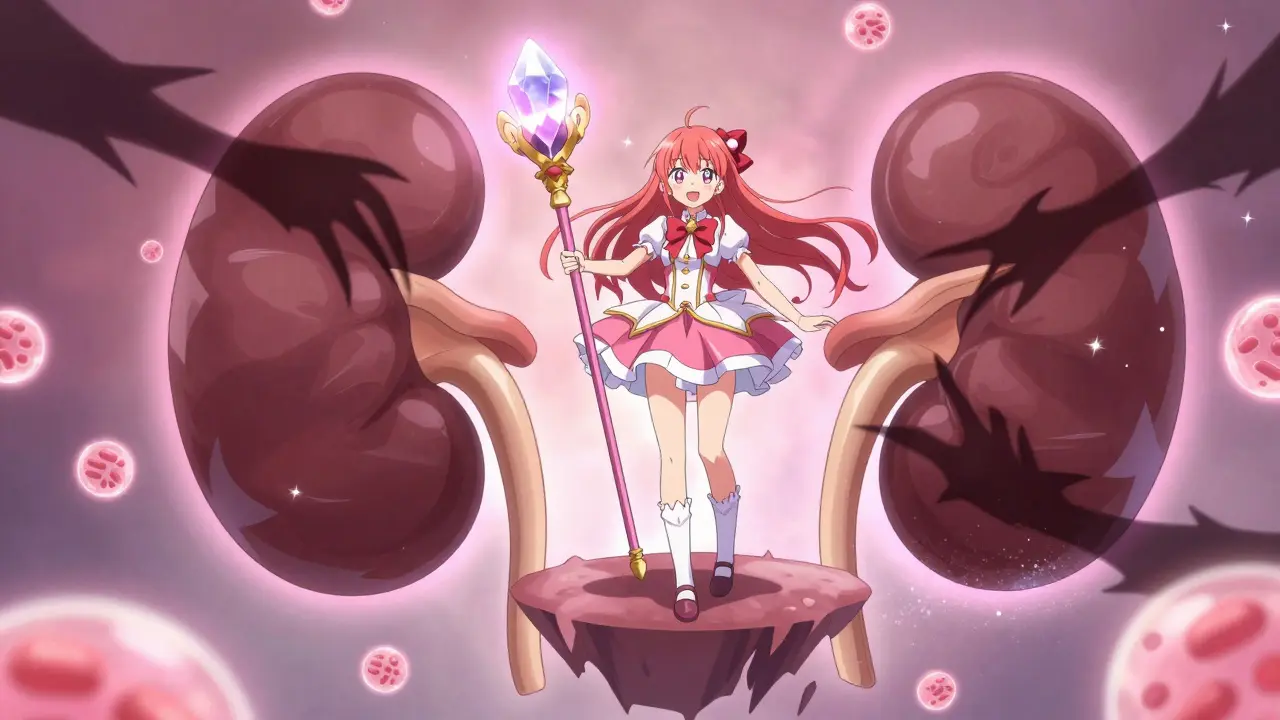
Dosing Matters More Than You Think
Here’s something most patients don’t know: how often you get the dose changes everything. For decades, aminoglycosides were given every 8 hours. That meant high peaks and frequent dips in blood levels. But research in the 1990s and 2000s showed something surprising: giving the full daily dose all at once-once-daily dosing-is safer. Why? Because your kidneys get a break. The drug clears faster between doses, and less accumulates in the tubules. Studies show once-daily dosing cuts nephrotoxicity by up to 40% compared to multiple daily doses-even when the total daily amount is the same. It also works better at killing bacteria because of how these drugs behave in the body. And timing? There’s even evidence that giving the dose at 1:30 p.m. leads to less kidney damage than giving it at 8 a.m. or midnight. Your kidneys have daily rhythms. When you give the drug matters.What About Gentamicin vs. Amikacin?
Not all aminoglycosides are equal. Gentamicin is the most widely used-and the most toxic. Amikacin is a bit gentler on the kidneys at equivalent doses. Tobramycin falls in between. Why? It’s not just the drug itself. It’s how tightly it binds to kidney cells. Gentamicin sticks more. Amikacin has a bulkier structure that doesn’t cling as easily. That small difference can mean the difference between kidney injury and safe treatment. But here’s the catch: amikacin is more expensive. So doctors often use gentamicin first-unless you’re high-risk. That’s a trade-off many don’t realize.How Do Doctors Try to Prevent It?
Current guidelines from the European Society of Clinical Microbiology and Infectious Diseases (2023) say:- Use once-daily dosing whenever possible
- Check serum creatinine every 48 to 72 hours
- Keep gentamicin trough levels below 1 μg/mL
- Avoid combining with vancomycin unless absolutely necessary
- Hydrate patients well before and during treatment

Comments
Lori Anne Franklin
December 27, 2025 AT 12:20 PMi just had gentamicin for a UTI last year and thought i was fine until my creatinine spiked. no one warned me. why do they not tell patients this stuff before giving it? i felt fine but my kidneys were screaming.
Bryan Woods
December 27, 2025 AT 19:17 PMThe pharmacokinetic rationale for once-daily dosing is well-established in the literature. The concentration-dependent bactericidal activity and post-antibiotic effect of aminoglycosides support this regimen, and the reduced tubular accumulation significantly lowers nephrotoxic risk. Clinical guidelines have endorsed this approach for over a decade.
Ryan Cheng
December 28, 2025 AT 19:20 PMHey everyone, just wanted to add something real quick - if you're on these meds, drink water like it's your job. Seriously. I'm a nurse and I've seen patients bounce back faster when they're hydrated. Also, don't be shy about asking your doc if they're using amikacin instead of gentamicin. The cost difference isn't worth your kidneys. You got this.
wendy parrales fong
December 29, 2025 AT 09:41 AMit's wild how something so powerful can also be so quiet in its damage. you feel fine, you pee normally, but inside your body it's like a slow leak in a dam. i think we need to talk more about invisible harm. not everything that hurts screams.
Jeanette Jeffrey
December 30, 2025 AT 03:25 AMOh please. 'Preventable'? More like 'predictable negligence'. Doctors still give gentamicin like it's candy because it's cheap and they're lazy. And don't get me started on 'once-daily dosing' - if it were that safe, why are we still seeing 1 in 5 cases? This is just medicine pretending to be science.
Shreyash Gupta
December 30, 2025 AT 13:14 PMi think this is all wrong 😔 maybe the real issue is that we're using antibiotics at all? 🌱 maybe plants can heal us? i read somewhere that turmeric is better than gentamicin. 🌿✨
Ellie Stretshberry
December 31, 2025 AT 06:07 AMi had this happen to me and no one told me to watch for protein in urine or anything just said your creatinine is up and you're fine now but i still feel tired all the time and i dont know if its from the drugs or just life
Zina Constantin
January 2, 2026 AT 02:19 AMIn Nigeria, we use aminoglycosides like they're going out of style - and honestly? We don't have the luxury of alternatives. But I've seen patients recover fully when they got hydration, monitoring, and a little extra care. It's not about the drug. It's about how we use it. And that's something we can change - together.
Dan Alatepe
January 3, 2026 AT 23:38 PMthis whole thing is a circus 🎪 my cousin got on gentamicin for 3 days and came out with kidney failure... they blamed him for not drinking water. bro he was in the hospital on IVs. someone needs to answer for this. 🤬 #MedicalMalpractice
Angela Spagnolo
January 4, 2026 AT 20:54 PMI just... I didn't know this was even a thing. I thought if you're in the hospital, they're keeping you safe. But now I'm scared to even take antibiotics. What if I'm next? I don't even know what to ask my doctor...
Sarah Holmes
January 6, 2026 AT 01:23 AMThis post is dangerously misleading. You imply that nephrotoxicity is 'preventable' when in reality, it is an inevitable consequence of using these drugs. The so-called 'guidelines' are corporate-approved compromises. The pharmaceutical industry profits from both the drugs and the subsequent dialysis treatments. This is not medicine - it is a calculated exploitation of human vulnerability.
SHAKTI BHARDWAJ
January 7, 2026 AT 21:41 PMwhy do people keep acting like this is new info?? i posted this exact thing 3 years ago and got banned for being 'too negative'. now everyone's shocked? we all knew this. just nobody wanted to admit it. #i_told_you_so
Matthew Ingersoll
January 8, 2026 AT 13:04 PMThe data on timing of administration is fascinating. Circadian rhythms in renal perfusion and tubular transport are well documented. Administering aminoglycosides in the afternoon aligns with peak renal clearance and minimizes intracellular accumulation. This is not anecdotal - it's physiology.