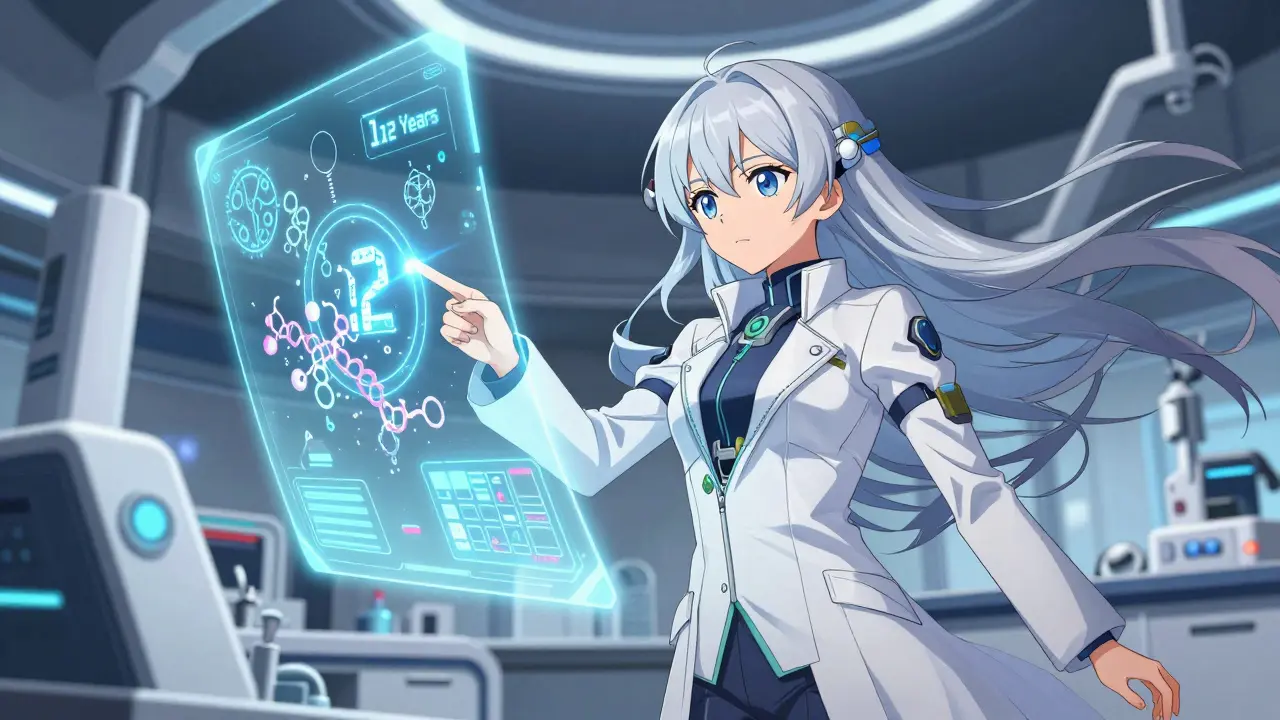
Why does a cancer drug or arthritis treatment cost thousands of dollars more in the United States than in Europe, even when the science is identical? The answer isn't just greed; it's a specific set of legal clocks ticking down on biologic patent protection. Unlike simple chemical drugs, biologics are complex molecules made from living cells. This complexity creates a unique regulatory landscape where competition doesn't arrive immediately after a patent expires. Instead, there is a structured waiting game governed by federal law.
If you are a patient, a payer, or a healthcare provider, understanding these timelines is crucial. It explains why some life-saving treatments remain expensive monopolies for over a decade while others see rapid price drops. The core issue lies in how long the government protects the original innovator company before allowing biosimilars-highly similar follow-on versions-to enter the market.
The Core Timeline: The 12-Year Exclusivity Clock
To understand when competition arrives, we have to look at the Biologics Price Competition and Innovation Act (BPCIA). Passed in 2009 as part of the Affordable Care Act, this law created the first pathway for biosimilars in the US. Before this, there was no clear rule for approving follow-on biologics. The BPCIA established a dual-layer protection system for the original manufacturer, often called the reference product sponsor.
The clock starts the moment the Food and Drug Administration (FDA) approves the new biological drug. Here is how the timeline breaks down:
- Years 0-4 (Data Exclusivity): During this period, the FDA cannot even accept an application for a biosimilar. No one can submit the paperwork to prove their version is safe and effective. This gives the innovator four years of absolute market freedom with zero threat of regulatory competition.
- Years 4-12 (Market Exclusivity): At the four-year mark, companies can finally submit their Biologics License Applications (BLAs). However, the FDA is legally barred from approving any of them until the full 12 years have passed. This means that while competitors are preparing, testing, and filing, they cannot sell their product.
This 12-year window is significantly longer than the protection given to small-molecule generic drugs, which typically face only five years of data exclusivity. For context, the European Union provides 10 years of data exclusivity plus 1 year of market exclusivity, totaling 11 years. Japan offers 8 years of data exclusivity and 4 years of market exclusivity. The US model is designed to recoup the massive costs of developing complex biologics, but it comes at a steep price for consumers.
| Region | Data Exclusivity | Market Exclusivity | Total Protection |
|---|---|---|---|
| United States | 4 Years | 8 Years (post-submission) | 12 Years |
| European Union | 10 Years | 1 Year | 11 Years |
| Japan | 8 Years | 4 Years | 12 Years |
| South Korea | 10 Years | None | 10 Years |
This variation has real-world consequences. Major drugs like Humira (adalimumab) launched with biosimilar competition in Europe in 2018. In the US, patients waited until 2023. That five-year gap cost American patients an estimated $167 billion in excess spending for just three major drugs, according to analysis by the Initiative for Medicines, Access & Knowledge (I-MAK).
The Patent Dance: Litigation as a Delay Tactic
You might assume that once the 12-year exclusivity period ends, biosimilars flood the market instantly. That rarely happens. The BPCIA includes a complex process known as the "patent dance," which allows the original manufacturer to list additional patents beyond the initial exclusivity period. These patents cover everything from manufacturing methods to specific formulations.
Here is how the dance works in practice:
- Information Exchange: Within 20 days of the FDA accepting a biosimilar application, the applicant must share confidential details about their manufacturing process with the reference product sponsor.
- Patent Listing: The sponsor has 60 days to provide a list of patents they believe the biosimilar would infringe upon.
- Response: The biosimilar maker has another 60 days to argue why those patents are invalid, unenforceable, or not infringed.
- Negotiation and Litigation: Both parties negotiate which patents to litigate first. If they fail to agree, they go to court.
This process is notoriously slow. Companies like AbbVie built what experts call "patent thickets" around Humira, accumulating over 160 granted patents even after the primary patent expired. This strategy forces biosimilar makers into multi-year legal battles. A landmark Supreme Court case, Amgen v. Sandoz (2017), addressed whether companies could skip parts of this dance, but the litigation burden remains high. Legal scholars note that 87% of BPCIA cases involve multiple patent infringement claims, turning the courtroom into the primary battlefield for market access.

Biosimilars vs. Generics: Why They Are Not the Same
A common misconception is that biosimilars are just "generic biologics." They are not. Understanding this distinction is key to grasping why the approval process is so rigorous and time-consuming.
Generics are copies of small-molecule drugs (like aspirin or statins). These drugs are chemically synthesized and relatively simple. Because their structure is small and well-defined, a generic manufacturer can create an exact molecular copy. The FDA requires proof of bioequivalence-that the generic acts in the body the same way as the brand name-but the chemistry is straightforward.
Biosimilars, on the other hand, are large, complex proteins produced in living cells (like yeast or mammalian cells). You cannot exactly replicate a biologic because the living production system introduces natural variations. Therefore, a biosimilar must be "highly similar" to the reference product with no clinically meaningful differences in safety, purity, or potency. It does not need to be identical, but it must perform identically in patients.
This difference drives up costs and time. Developing a generic drug takes about two years and costs $1-2 million. Developing a biosimilar takes five to nine years and costs over $100 million, excluding regulatory fees. For complex therapies like antibody-drug conjugates or cell therapies, development can take 7-10 years and cost upwards of $250 million. This high barrier to entry limits who can compete, especially for niche markets.
The Biosimilar Void: Missing Competition
Despite the clear economic incentives for competition, a significant problem known as the "biosimilar void" persists. Between 2025 and 2034, 118 biologics will lose patent protection in the US, representing a $234 billion market opportunity. Yet, as of early 2023, only 12 of these had biosimilars in active development.
Why is this happening? Several factors contribute to the void:
- Low Sales Potential: About 32% of expiring biologics have low sales volumes, making the massive investment required for biosimilar development financially unattractive.
- Orphan Drug Status: Many biologics treat rare diseases. Orphan drugs often have smaller patient populations, reducing the return on investment for competitors. Currently, 88% of expiring biologics with orphan indications have no biosimilars in the pipeline.
- Molecular Complexity: Newer classes of biologics, such as bispecific antibodies and gene therapies, are technically difficult to replicate. None of the 16 complex biologics losing protection between 2025 and 2034 currently have biosimilars in development.
This void hurts patients most. Dr. Peter Bach of Memorial Sloan Kettering Cancer Center noted that US patients pay 300% more than European counterparts for identical treatments due to delayed competition. Pharmacists report that 63% have seen patients abandon therapy due to cost concerns. The Congressional Budget Office projects that addressing these barriers could save the US healthcare system $158 billion over the next decade, compared to $71 billion under current conditions.
Regulatory Efforts and Future Outlook
Recognizing these issues, the FDA released its Biosimilars Action Plan in October 2022. The plan aims to enhance communication, improve approval efficiency, and support market competition. However, progress has been slow. Since 2015, the US has approved only 38 biosimilars, compared to 88 in Europe. Legislative efforts like the Biosimilars User Fee Act of 2022 stalled in committee, leaving the regulatory framework largely unchanged.
For stakeholders, the path forward involves monitoring legislative changes and supporting policies that reduce litigation burdens and streamline approvals. Until then, the 12-year exclusivity clock and the patent dance will continue to dictate when-and if-affordable alternatives reach US patients.
How long is biologic patent protection in the US?
Under the BPCIA, biologics receive 12 years of market exclusivity from the date of FDA approval. This includes 4 years during which no biosimilar applications can be submitted, followed by 8 years during which applications can be submitted but not approved.
What is the difference between a biosimilar and a generic drug?
Generic drugs are exact molecular copies of small-molecule chemicals. Biosimilars are highly similar versions of complex biologic products made from living cells. Because biologics vary naturally, biosimilars do not need to be identical but must show no clinically meaningful differences in safety or efficacy.
Why do biosimilars take so long to develop?
Developing a biosimilar takes 5-9 years and costs over $100 million due to the complexity of manufacturing proteins in living cells. It requires extensive analytical studies, pharmacokinetic testing, and sometimes clinical trials to prove similarity to the reference product.
What is the "patent dance" in biologic regulation?
The patent dance is a legal process outlined in the BPCIA where biosimilar applicants and reference product sponsors exchange information and negotiate patent litigation. This process often leads to multi-year lawsuits that delay biosimilar market entry beyond the 12-year exclusivity period.
What is the "biosimilar void"?
The biosimilar void refers to the lack of biosimilar development for many biologics nearing patent expiration. Despite billions in potential savings, many drugs, especially those for rare diseases or with complex structures, have no biosimilars in the pipeline due to high costs and low commercial incentives.