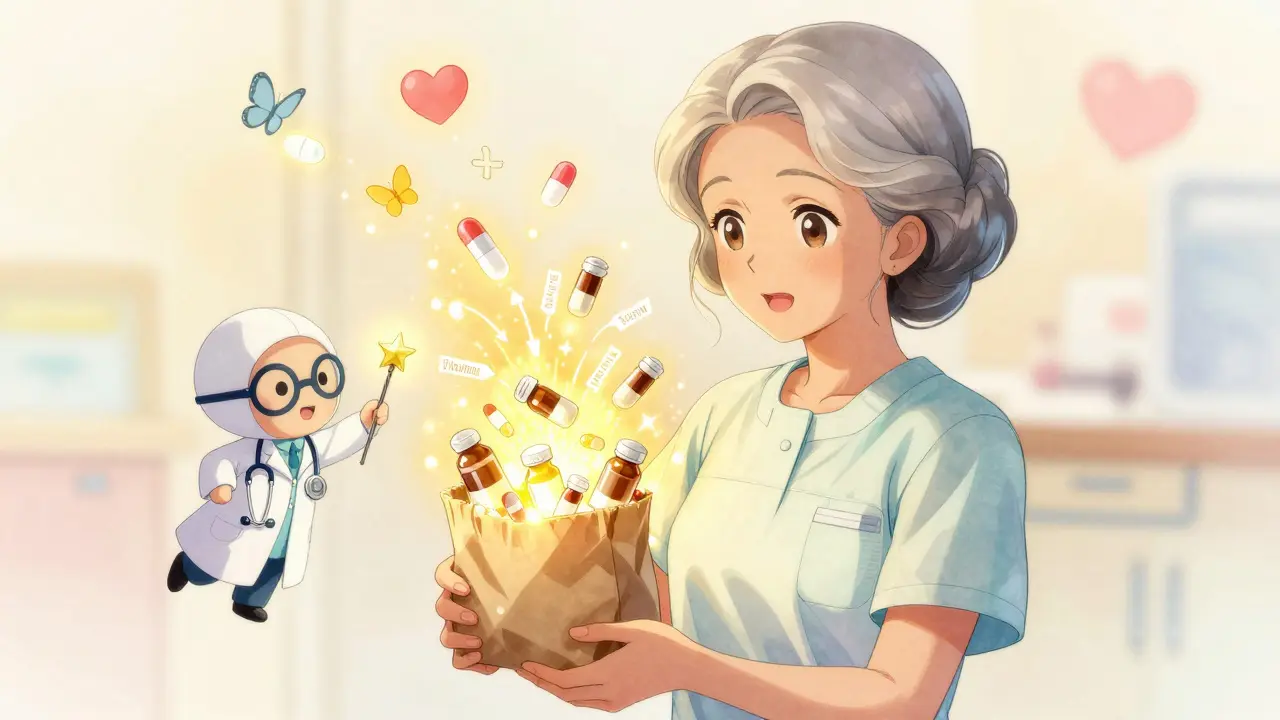
When seniors leave the hospital after a stay, their medication list often changes. New drugs are added, old ones are stopped, doses are adjusted. This is normal-but it’s also where mistakes happen. Medication errors during hospital discharge are the most common cause of preventable harm after patients go home. One in five seniors experiences a medication mistake within three weeks of leaving the hospital, according to research from the Journal of General Internal Medicine. These aren’t just minor slips. They can lead to falls, hospital readmissions, or even death. The good news? Most of these errors are preventable with a clear, step-by-step plan.
Why Medication Errors Happen at Discharge
It’s not because doctors or nurses are careless. It’s because the system is broken. Hospitals discharge patients quickly. Paperwork gets lost. Medication lists aren’t checked properly. A patient might be on eight different pills before admission, and after surgery, they’re sent home with five new ones-plus changes to the old ones. But no one sits down with the patient and says, “Here’s what changed, why, and how to take it.”
Studies show that 76% of discharge summaries still contain serious medication mistakes-even when staff think they’ve “reconciled” the list. That’s because many hospitals only do a surface-level check: they compare the hospital’s list to what the patient says they take. But patients forget. They don’t know the names. They don’t know why they’re taking them. And they often don’t tell the truth-maybe they stopped a pill because it made them dizzy, or they’re taking a cousin’s leftover painkiller.
The Core Solution: Medication Reconciliation
The single most effective way to stop these errors is medication reconciliation. This isn’t just a form you sign. It’s a process that happens at three key moments: when you’re admitted, when you move between hospital units, and right before you leave. The goal? Make sure every medication you’re taking-prescription, over-the-counter, herbal, even patches or injections-is accurately recorded and understood.
The best reconciliation teams verify five things:
- Verification: What are you actually taking? Ask to see your medicine cabinet. Bring your pills in a bag.
- Clarification: Why are you taking each one? Is the dose right? Is it still needed?
- Reconciliation: Compare the hospital’s list with your home list. Remove duplicates. Fix mistakes.
- Communication: Send the final list to your doctor, pharmacist, and home care team.
- Education: Make sure you can explain each medicine back to them in your own words.
Programs that do this right get 95% accuracy. Most hospitals? Only 60-70%. The difference? A pharmacist. Pharmacists are trained to catch interactions, dosing errors, and unnecessary drugs. A 2018 study in JAMA Internal Medicine found pharmacist-led reconciliation cuts medication discrepancies by 67%.
Who Needs the Most Help?
Not everyone needs the same level of support. Seniors who take five or more medications daily (called polypharmacy) are at highest risk. So are those with kidney problems, memory issues, or conditions like heart failure or COPD. If you’re on blood thinners like warfarin, insulin, or strong painkillers, you’re in the danger zone.
For these patients, the best approach combines three things:
- Pharmacist-led reconciliation at discharge
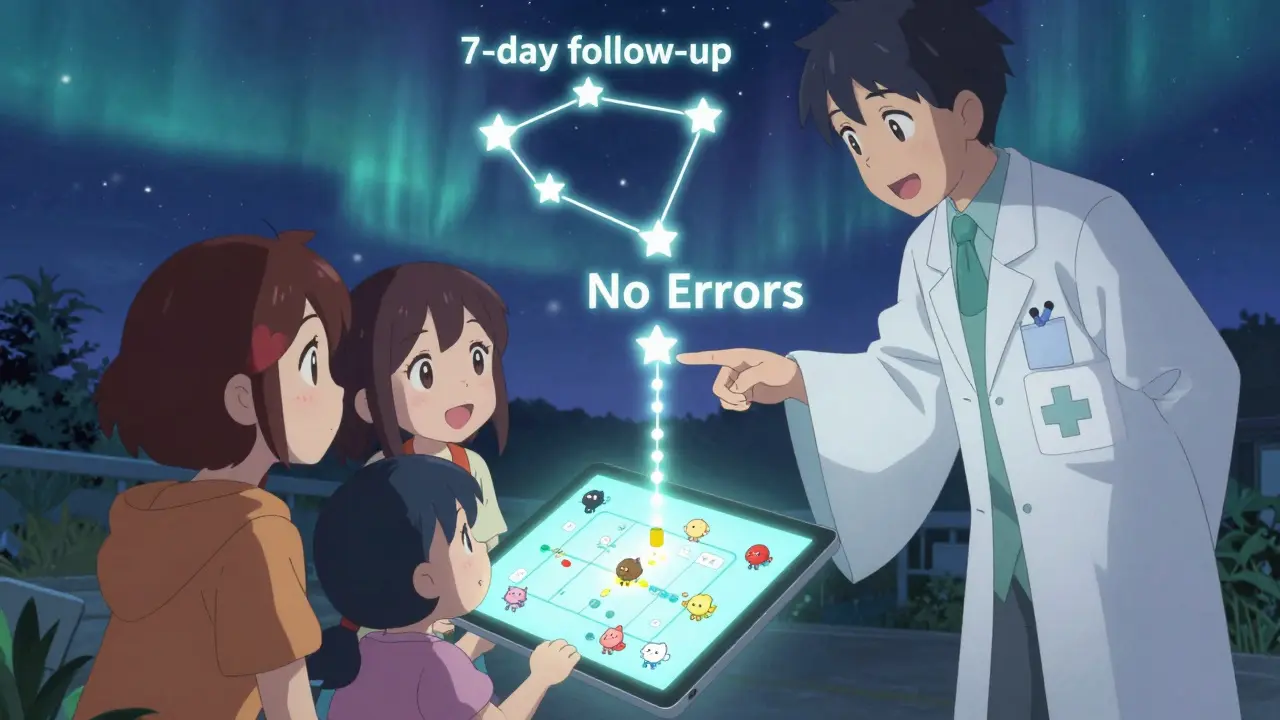
- A follow-up call or visit within 7 days
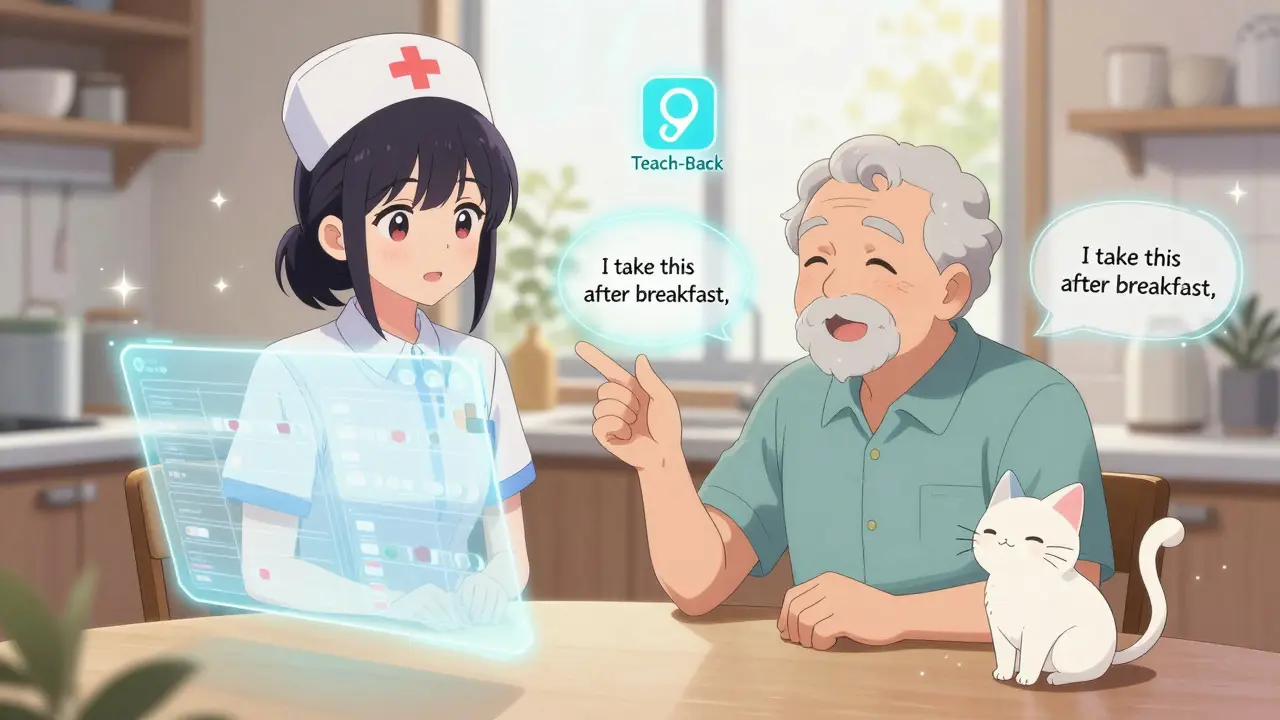
- The “Teach-Back” method
Teach-Back means the nurse or pharmacist asks: “Can you tell me how you’ll take your new blood pressure pill?” If you say, “I take it when I remember,” that’s not good enough. The right answer? “I take one 10 mg tablet every morning with breakfast, unless my blood pressure is below 100/60.” If you can’t say that, they keep teaching.
A 2012 study found this simple trick improved medication adherence by 32%. It’s not about intelligence-it’s about communication.
What You Can Do Before You Leave
You don’t have to wait for the hospital to fix this. Here’s what you can do:
- Bring your brown bag: Before discharge, gather every pill, capsule, patch, and bottle you’re taking at home. Don’t leave it to memory.
- Ask for a written list: Demand a printed copy of your discharge meds-dose, frequency, purpose. Ask for it in large print.
- Ask why: For each new medication, ask: “Why am I taking this? What side effects should I watch for?”
- Get your pharmacist involved: Take the discharge list to your pharmacy within 24 hours. Pharmacists can spot interactions your doctor missed.
- Set up a follow-up: Ask if your doctor’s office will call you in 3-5 days. If not, call them yourself.
The Role of Technology
Some hospitals use digital tools to help. Epic’s Care Transition Service, for example, automatically flags mismatches between hospital and outpatient records. A 2020 study at Mayo Clinic showed it cut errors by 28%. Mobile apps that show pill schedules with pictures and alarms have reduced mistakes by 41% in elderly patients, according to a 2023 JAMA Network Open study.
But tech alone won’t fix this. A tablet app won’t help if your vision is poor or you don’t know how to use it. The best systems combine tech with human touch. A phone call from a nurse. A home visit from a pharmacist. A family member sitting down to review the list.
What Happens After You Get Home
Many people think their care ends when they leave the hospital. It doesn’t. Home health agencies must do their own medication reconciliation within 24 hours of starting care. If you’re on warfarin, your INR must be checked within 72 hours. If you’re on insulin, you need to log your blood sugar daily.
Watch for red flags:
- New confusion or dizziness
- Unexplained bruising or bleeding
- Nausea, vomiting, or loss of appetite
- Swelling in your feet or ankles
- Missed doses because you don’t understand the schedule
If any of these happen, call your doctor or pharmacist immediately. Don’t wait. Don’t assume it’s “just aging.”
Why This Matters for Families
Families often think, “The hospital took care of everything.” But studies show that when a family member is involved in the discharge process, medication errors drop by 40%. You don’t need to be a nurse. Just ask the questions:
- “What medicines did they change?”
- “Can I see the list?”
- “Can we go over this with the pharmacist?”
Many seniors won’t speak up. They’re afraid of sounding foolish. Or they don’t want to be a burden. Your job is to speak for them.
The Bigger Picture
This isn’t just about one hospital stay. It’s about a broken system. Only 35% of U.S. hospitals can share medication data electronically with outpatient clinics. That means your doctor might not even see the discharge list until you show up for your next appointment. And only 12% of adults have strong health literacy. That means most people can’t read a prescription label or understand a medical term.
But change is happening. Medicare now pays hospitals $129-$162 per patient for follow-up care within 30 days of discharge. That money is tied to how few medication errors occur. Hospitals are finally motivated to fix this.
And the evidence is clear: when you combine pharmacist involvement, patient education, and a follow-up within 7 days, medication errors drop by nearly half. That’s not a miracle. That’s a standard. And it’s one every senior deserves.
What is medication reconciliation, and why is it important?
Medication reconciliation is the process of comparing a patient’s current medications with what was ordered during hospitalization. It ensures no drugs are accidentally added, removed, or dosed incorrectly. This step is critical because nearly half of all medication errors happen at discharge. A well-done reconciliation prevents dangerous interactions, reduces hospital readmissions, and keeps patients safe at home.
Who should be involved in preventing medication errors during discharge?
Pharmacists are the most effective single intervention, reducing errors by 67% according to JAMA Internal Medicine. Nurses, doctors, and family members also play key roles. The best teams include a pharmacist who reviews all medications, a nurse who uses the Teach-Back method to confirm understanding, and a family member who helps the patient follow up after leaving the hospital.
What is the Teach-Back method, and how does it work?
Teach-Back is a communication technique where the healthcare provider asks the patient to explain, in their own words, how to take their medications. For example: “Can you tell me how you’ll take your new blood thinner?” If the patient says, “I take it when I remember,” they need more teaching. If they say, “I take one 5 mg tablet every night after dinner,” they’ve understood. This simple method improves adherence by 32% and cuts errors.
Should I bring my medications to the hospital?
Yes. Bring all your pills, supplements, patches, and inhalers in a bag-this is called the “Brown Bag Review.” It’s the most accurate way to tell the hospital staff what you’re really taking. Many patients forget or misremember doses. Seeing the actual bottles prevents mistakes before they happen.
What should I do after I get home from the hospital?
Within 24 hours, take your discharge medication list to your pharmacy. Ask the pharmacist to review it for interactions or errors. Schedule a follow-up call with your doctor within 5-7 days. Watch for side effects like dizziness, confusion, or unusual bruising. If something feels wrong, call immediately-don’t wait for your next appointment.


Comments
Paul Ratliff
March 19, 2026 AT 04:30 AMbrung my whole medicine cabinet to the hospital. they still messed up my blood pressure med. lol. i had to call my pharmacist at 2am. they fixed it. why do they make this so hard?
Nicole Blain
March 19, 2026 AT 16:21 PMthis is so real 😭 my grandma almost went back in because they gave her a new pill that made her dizzy. she didn’t know to say anything. please tell your family to ask questions 💬💊
Kathy Underhill
March 19, 2026 AT 20:37 PMthe system fails because it treats patients as data points not people. reconciliation isn’t a checklist. it’s a conversation that requires patience and presence. most hospitals lack both
Srividhya Srinivasan
March 21, 2026 AT 17:23 PMTHIS IS ALL A GOVERNMENT PLOT TO GET US ON DRUGS!! THEY WANT US DEPENDENT!! PHARMACEUTICAL COMPANIES OWN THE HOSPITALS!! I SAW A DOCUMENT ON THE INTERNET!! THEY’RE USING YOUR MEDS TO TRACK YOU!!
Prathamesh Ghodke
March 22, 2026 AT 05:21 AMhonestly? i’m glad someone wrote this. my dad’s on 11 meds. we had to hire a nurse just to sort the pillbox. pharmacists are the real MVPs. why aren’t they paid more?
Stephen Habegger
March 22, 2026 AT 12:33 PMsmall changes make a huge difference. bring your brown bag. ask why. call your pharmacist. it’s not rocket science. but it’s something most people don’t do. you can save someone’s life with 5 minutes of effort
Aileen Nasywa Shabira
March 24, 2026 AT 04:57 AMoh wow another ‘helpful’ article from someone who’s never had to deal with real healthcare. ‘ask questions’? yeah right. try being a 78-year-old with dementia and no family while the nurse rushes out to lunch. this is performative compassion at its finest
Kendrick Heyward
March 26, 2026 AT 02:21 AMi hate how hospitals act like they’re doing us a favor. they’re not saving us. they’re profit centers. and now they want us to ‘bring our meds’ like we’re supposed to be grateful? what about the $3000 bill for a 2-day stay? 🤡
lawanna major
March 27, 2026 AT 02:51 AMThe concept of medication reconciliation is not merely procedural-it is fundamentally ethical. When we fail to verify and communicate a patient’s regimen with precision, we are not just making an administrative error. We are violating the principle of nonmaleficence. The Teach-Back method, though simple, is one of the most profound acts of dignity we can offer to someone who has been disoriented by illness.
Ryan Voeltner
March 27, 2026 AT 05:59 AMThe integration of pharmacist-led reconciliation into standard discharge protocols represents a necessary evolution in patient-centered care. While technological tools offer utility, human expertise remains irreplaceable. The data supporting this model is robust, consistent, and compelling. Implementation should be universal, not exceptional.
Linda Olsson
March 28, 2026 AT 18:09 PMI read this and immediately thought: who is this author? Some well-meaning but clueless administrator? Did they ever sit with a real senior who can’t read the tiny print on the pill bottle? Or maybe they’ve never seen someone’s medication cabinet filled with expired antibiotics and cousin’s leftover oxycodone. This is all so… sanitized.
Ayan Khan
March 29, 2026 AT 22:05 PMIn my village in India, when someone returns home after hospital, the whole family gathers. Someone reads the list aloud. Someone else writes it down. Someone else calls the local pharmacist. We don’t need apps. We need community. This is what we’ve lost in the West. Not technology. Connection.
Emily Hager
March 31, 2026 AT 17:11 PMI find it deeply offensive that this article suggests patients are responsible for their own safety. What about the hospitals that refuse to provide written lists? The ones that discharge at midnight? The ones that don’t coordinate with pharmacies? This is victim-blaming dressed as advice.
Melissa Starks
April 2, 2026 AT 13:56 PMi just want to say thank you for writing this. my mom had a stroke last year and they gave her 4 new meds and took away 3 she’d been on for 10 years. we didn’t catch it until she started falling. we called the pharmacy. they said ‘this doesn’t make sense’ and called the hospital. they had to re-admit her. now we always bring the brown bag. always. and we do teach-back. my 12-year-old nephew does it with her now. it’s weird but it works. and honestly? it’s made her feel less alone. thank you for seeing that.
Lauren Volpi
April 2, 2026 AT 22:39 PMso let me get this straight. we need to bring our meds, get a pharmacist involved, have a follow-up call, and teach-back? that’s 4 extra steps for people who are already exhausted. meanwhile, the hospital bills us $10k. yeah. this is why I don’t trust ‘experts’.