
Dry Eye Treatment & Environment Planner
Step 1: Identify Your Symptoms
Select the option that best describes your symptoms.
Step 2: Recommended Approach
Compare Prescription Options
| Medication | Time to Relief | Est. Cost (30-day) |
|---|---|---|
| Restasis | 3-6 Months | $150 - $250 |
| Xiidra | 2 Weeks | $450 - $550 |
| Miebo | Immediate | $650 |
| Tyrvaya | Days to Weeks | $200 |
*Prices are approximate estimates based on article data. Consult your doctor for specific prescriptions.
Step 3: Humidity Optimization
Why it matters: When relative humidity drops below 30%, tears evaporate rapidly. The target zone is 40-60%.
Implementation Checklist
Track your daily routine adherence.
Environment Analysis
Your eyes feel gritty, tired, or like they have sand in them. You blink, but the relief doesn't last. This is not just 'tired eyes.' It is likely Dry Eye Disease (DED), a condition where your tear film breaks down too quickly or doesn't produce enough moisture. According to the Tear Film & Ocular Surface Society's 2017 report, this affects millions of adults globally. The good news? You can manage it. The key lies in understanding the difference between simple lubricants, powerful prescription medications, and environmental helpers like humidifiers.
Managing dry eye isn't about finding one magic drop. It is about restoring balance to your ocular surface. Whether you need an over-the-counter rescue drop or a long-term anti-inflammatory treatment, knowing how each option works helps you choose wisely. Let’s break down the tools available to get your comfort back.
Understanding Your Dry Eye Type
Before picking a product, you need to know what kind of dry eye you have. Most people assume dry eye means their eyes aren't making tears. While that happens (aqueous-deficient), the more common issue-accounting for 86% of cases-is evaporative dry eye. In this scenario, your eyes make tears, but they evaporate too fast because the oily layer on top is weak or missing.
If you have evaporative dry eye, water-based drops might actually make things worse by washing away your remaining oils. You need lipid-based solutions. If you have aqueous-deficient dry eye, you need drops that replace the missing water volume. Identifying this distinction saves you money and frustration. A visit to an ophthalmologist can confirm this through simple tests like the Schirmer test or tear osmolarity measurement.
Lubricants: The First Line of Defense
For mild symptoms, over-the-counter (OTC) artificial tears are the starting point. These are essentially saline solutions with added ingredients to keep moisture on the eye longer. They fall into two main categories based on thickness:
- Low-viscosity drops: These feel like water and clear up instantly. They are great for occasional use during computer work. Ingredients often include carboxymethylcellulose (0.5-1%) or polyethylene glycol. Relief lasts 1-2 hours.
- High-viscosity gels and ointments: These contain sodium hyaluronate (0.1-0.4%) or thicker cellulose derivatives. They blur vision temporarily but provide 4-6 hours of protection. Use these at night before bed.
A pro tip: Avoid drops with preservatives if you use them more than four times a day. Preservatives like benzalkonium chloride can damage the eye surface over time. Look for single-dose vials or preservative-free multi-dose bottles.

Prescription Medications: When Drops Aren't Enough
If OTC drops don’t solve the problem, inflammation is likely the culprit. Prescription medications target the root cause rather than just masking symptoms. Here is how the major players compare:
| Medication | Active Ingredient | How It Works | Time to Relief | Approx. Cost (30-day) |
|---|---|---|---|---|
| Restasis | Cyclosporine 0.05% | Reduces lacrimal gland inflammation | 3-6 months | $150-$250 (Generic) |
| Xiidra | Lifitegrast 5% | Blocks LFA-1 protein to stop T-cell inflammation | 2 weeks | $450-$550 |
| Miebo | Perfluorohexyloctane 3.5% | Forms a barrier to reduce evaporation | Immediate | $650 |
| Tyrvaya | Varenicline 0.03 mg/mL | Nasal spray stimulates tear production | Days to weeks | $200 |
Restasis (Cyclosporine) has been around since 1998. It works by suppressing the immune response in the eye. The downside? It takes months to work, and many users report a burning sensation upon application. Generic versions are now available, significantly lowering the cost.
Xiidra (Lifitegrast) offers faster relief, often within two weeks. However, it can cause transient stinging. It targets a different inflammatory pathway than cyclosporine, making it effective for patients who didn’t respond to Restasis.
Miebo (Perfluorohexyloctane) is the newest major player, approved in 2023. Unlike anti-inflammatories, it acts as a physical barrier. It forms a protective layer over the eye to stop tears from evaporating. Clinical trials showed immediate symptom relief with very few side effects. The catch is the high price tag and the fact that you must remove contact lenses before using it, waiting 30 minutes to reinsert them.
Tyrvaya is unique because it’s a nasal spray. It uses varenicline to stimulate the nervous system to produce more natural tears. This bypasses the eye entirely, avoiding any burning or blurring.
The Role of Humidifiers in Dry Eye Care
You can buy the most expensive eye drops, but if your environment is hostile, they won’t help much. This is where Humidifiers become essential adjunctive therapy. Indoor air, especially in winter with heating systems or in summer with air conditioning, can be incredibly dry.
When relative humidity drops below 30%, your tears evaporate rapidly. A survey from the Dry Eye Zone forum found that 72% of users reported significant improvement in nighttime symptoms when using a humidifier set to 40-60% relative humidity. This range is critical. Too low, and it does nothing. Too high (above 60%), and you risk mold growth and dust mites, which can irritate your eyes further.
Choose a cool-mist humidifier for safety and ease of cleaning. Ultrasonic models are quiet but can disperse minerals from tap water, creating white dust. Use distilled water to avoid this. Place the humidifier near your desk or bedside, but not directly blowing on your face. Clean it weekly to prevent bacterial buildup.
Practical Implementation: Making It Stick
Knowing what to use is half the battle. Using it correctly is the other half. Many patients fail because they give up too soon or apply drops incorrectly.
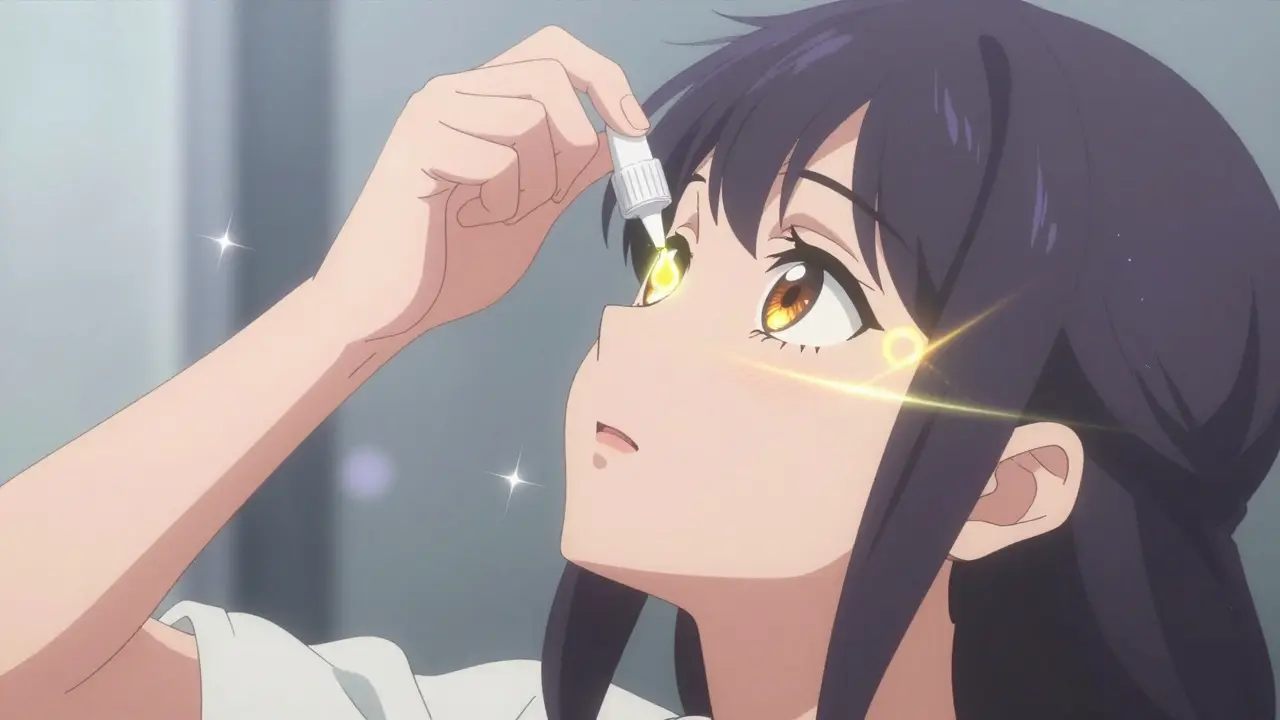
- Master the Instillation Technique: Wash your hands. Tilt your head back. Pull down your lower eyelid to create a pocket. Drop the medication into the pocket, not directly onto the eyeball. Close your eye gently for 1-2 minutes. Do not squeeze tightly, as this pushes the drop out.
- Wait Between Drops: If you are using multiple types of drops (e.g., an antibiotic and an anti-inflammatory), wait at least 5-10 minutes between applications. Otherwise, the second drop washes out the first.
- Refrigerate Your Drops: For medications like Restasis or Xiidra that cause burning, storing them in the fridge can numb the eye slightly and reduce irritation. 63% of users in surveys found this helpful.
- Set Reminders: Consistency is key. Set phone alarms for twice-daily prescriptions. Missing doses resets the clock on healing.
If you wear contact lenses, check compatibility. Most prescription drops require you to remove lenses before administration. Miebo requires a 30-minute wait; others usually need 10-15 minutes. Never put non-preservative-free artificial tears in while wearing contacts, as preservatives can absorb into the lens material and irritate your eye.
Future Trends and Personalized Care
The landscape of dry eye treatment is evolving rapidly. We are moving toward personalized medicine. Devices like the TearLab Osmolarity System allow doctors to measure the salt concentration in your tears, helping them choose the right treatment path immediately rather than guessing.
New agents like Reproxalap, a prostaglandin E2 analog, are in late-stage trials and show promise in reducing redness and increasing tear production. Industry experts predict that combination therapies-using a drug for inflammation alongside a barrier agent like Miebo-will become the standard of care within five years.
Until then, the best approach remains multimodal. Combine environmental changes (humidifiers, screen breaks), lifestyle adjustments (omega-3 supplements, blinking exercises), and targeted medications. Don’t settle for discomfort. With the right combination of lubricants, meds, and humidity control, you can restore clarity and comfort to your eyes.
How long does it take for Restasis to work?
Restasis (cyclosporine) typically takes 3 to 6 months of consistent twice-daily use to show full clinical benefits. While some patients notice slight improvements earlier, the medication works by gradually reducing inflammation in the lacrimal glands, which is a slow biological process. Patience and adherence are crucial for success.
Can I use Miebo with contact lenses?
No, you should not wear contact lenses while using Miebo. You must remove your lenses before applying the drop and wait at least 30 minutes before reinserting them. This wait time is necessary because Miebo contains perfluorohexyloctane, which can interact with lens materials and potentially affect vision or lens integrity.
What humidity level is best for dry eyes?
The ideal relative humidity for managing dry eye symptoms is between 40% and 60%. Levels below 30% accelerate tear evaporation, worsening symptoms. Levels above 60% can promote mold and dust mite growth, which may trigger allergies or respiratory issues. Use a hygrometer to monitor levels and adjust your humidifier accordingly.
Is Tyrvaya better than eye drops?
Tyrvaya is not necessarily 'better,' but it is different. As a nasal spray containing varenicline, it stimulates tear production via the nervous system without touching the eye. This makes it ideal for patients who cannot tolerate the burning or blurring associated with topical eye drops. However, it may cause nasal congestion or headache in some users.
Should I refrigerate my eye drops?
Yes, refrigerating certain prescription eye drops like Restasis or Xiidra can significantly reduce the burning or stinging sensation upon application. The cold temperature numbs the eye surface slightly. Check the specific manufacturer instructions for your medication, but for most anti-inflammatory drops, this is a safe and effective comfort hack.





Comments
Alana Frassinelli
July 3, 2026 AT 16:02 PMman i totally get the gritty feeling you described in the intro because its been my reality for like three years now and honestly it feels like someone is rubbing sand into your eyeballs every single morning when you wake up and you just want to cry but cant because your eyes are too dry to produce tears which is ironic right so i started using this humidifier thingy mentioned here and wow what a difference it made in my bedroom especially during winter when the heater dries everything out instantly so if anyone is suffering like me please dont ignore the environmental factor because drops alone arent enough sometimes you need to change the air around you too
i also tried the fridge trick for restasis and yeah it stings less but you still gotta wait months for results which is frustrating af but hey at least generic versions exist now so maybe we can breathe easier financially while our glands heal slowly
Divya Prakash
July 5, 2026 AT 10:01 AMIt is rather amusing how the general public continues to rely on such pedestrian over-the-counter solutions when modern pharmacology has already provided us with sophisticated mechanisms for ocular surface restoration. The article correctly identifies evaporative dry eye as the predominant pathology yet fails to emphasize the sheer inadequacy of lipid-based artificial tears compared to the targeted anti-inflammatory action of lifitegrast or cyclosporine formulations. One must possess a certain level of intellectual discipline to understand that merely adding moisture to an inflamed glandular system is akin to pouring water onto a fire without extinguishing the source.
The mention of Miebo is particularly relevant given its novel perfluorohexyloctane barrier technology which represents a significant leap forward from the archaic saline solutions that have plagued consumers for decades. However, the cost barrier remains a testament to the inequitable distribution of advanced medical care where only those with substantial financial resources can access immediate relief through high-efficacy agents rather than settling for temporary palliative measures that do nothing to address the underlying immunological dysfunction.
Mohit Patil
July 7, 2026 AT 08:53 AMyou think these big pharma companies give a damn about your dry eyes they want you dependent on monthly prescriptions so you never stop paying them restasis xiidra miebo its all part of the same conspiracy to keep you sick and buying their products while they hide the fact that simple lifestyle changes like eating real food and avoiding screen time would fix most cases but then they wont make billions off chronic patients who are told they have a disease instead of a symptom of modern living
the humidity tips are probably just another way to sell you more gadgets because why fix the root cause when you can sell you a bandaid forever trust no one who profits from your pain
Katie Dixon
July 8, 2026 AT 12:23 PMhoney you really need to take care of yourself because healthy eyes mean a healthy mind and if you are struggling with this you are not alone in this beautiful country of ours where we have access to some of the best treatments in the world so dont be shy about seeing a doctor because ignoring it will only make things worse for everyone around you who cares about you
i know it sounds silly but putting on a humidifier is like giving your room a hug and if you combine that with good old fashioned american grit and determination you will conquer this dry eye monster before you know it so stay strong and keep blinking those pretty eyes
Chris Munton
July 9, 2026 AT 17:07 PMThe moral failing here is obvious. People treat their bodies like rental cars instead of temples. You complain about discomfort but refuse to follow the basic hygiene protocols outlined in the text. Washing hands before instillation is not optional it is mandatory. If you cannot manage five minutes between drops you deserve the irritation you receive.
Furthermore the reliance on preservatives in multi-dose bottles shows a lack of respect for your own ocular surface integrity. Benzalkonium chloride is toxic to corneal epithelium and continuing to use it demonstrates a profound ignorance of basic cellular biology. Educate yourself or suffer the consequences.
Amrithaa Thayaparan
July 11, 2026 AT 16:11 PMits absolutely pathetic how people waste money on cheap drops when they could be investing in their long term health with proper prescription meds like miebo which is clearly superior despite the price tag because quality costs money and if you cant afford it maybe you should rethink your priorities in life instead of complaining online
also the idea that you can just fix this with a humidifier is laughable unless you live in a desert but even then inflammation needs to be treated with serious pharmaceuticals not baby water sprays so grow up and see a specialist who knows what they are doing
Paul Diamond
July 11, 2026 AT 21:17 PMThe philosophical implication of dry eye disease extends beyond mere physiological discomfort to question the nature of perception itself. If the lens through which we view the world becomes clouded by desiccation does the world itself become less real or merely less accessible? The introduction of Tyrvaya as a nasal spray introduces a fascinating dichotomy between local and systemic intervention suggesting that the body’s responses are interconnected in ways that transcend anatomical boundaries.
One might argue that the burning sensation associated with cyclosporine is a necessary penance for the neglect of one’s sensory organs. The delay in relief serves as a reminder of the patience required in all healing processes whether physical or spiritual. Thus the treatment of dry eye becomes a metaphor for the broader human condition of seeking clarity amidst inherent turbulence.
Sydney Jarrett
July 13, 2026 AT 11:36 AMLet’s break down the pathophysiology here because clearly most readers don’t grasp the nuance of aqueous-deficient versus evaporative etiologies. The table provided is decent but lacks depth regarding the specific inflammatory cytokines involved in each pathway. Cyclosporine inhibits calcineurin thereby reducing IL-2 production which is crucial for T-cell activation whereas lifitegrast blocks LFA-1 integrin preventing lymphocyte adhesion molecules from binding to ICAM-1 on endothelial cells. This distinction is vital for clinical decision making.
Moreover the discussion on Miebo ignores the potential for microvascular obstruction if used incorrectly in compromised ocular surfaces. The perfluorohexyloctane creates a hydrophobic barrier that reduces tear film breakup time (TBUT) significantly but requires precise administration to avoid contamination. Users must understand that ‘immediate relief’ does not equate to ‘cure’ and relying solely on barrier agents without addressing underlying meibomian gland dysfunction is clinically negligent.
Lorena Suarez
July 14, 2026 AT 11:51 AMi found the tip about refrigerating the drops really helpful because i was struggling with the sting so much that i almost stopped taking them altogether but keeping them cold made it bearable enough to stick with the routine and now my eyes feel so much better so thanks for sharing that little hack
also setting reminders on my phone was a game changer because i kept forgetting to use them twice a day and consistency really does seem to be the key here so just keep going if you are starting out
Isis Fleming
July 15, 2026 AT 18:14 PMIt is imperative to note that the efficacy of any therapeutic regimen is contingent upon strict adherence to the prescribed protocol. The Schirmer test and tear osmolarity measurements mentioned in the text are diagnostic gold standards that should not be bypassed in favor of self-diagnosis. Patients are encouraged to consult with board-certified ophthalmologists who specialize in ocular surface disease to ensure accurate classification of their dry eye subtype.
Additionally the maintenance of humidifiers requires rigorous cleaning schedules to prevent microbial proliferation which could exacerbate ocular inflammation. Distilled water usage is non-negotiable for ultrasonic models to prevent mineral deposition. A multimodal approach combining pharmacological intervention with environmental modification yields the most favorable outcomes according to current clinical guidelines.