More than 10% of Americans carry a label saying they’re allergic to penicillin. But here’s the truth: over 95% of them aren’t actually allergic. That label stuck to their chart during childhood after a harmless rash, and now, decades later, it’s costing them more than just inconvenience-it’s putting their health at risk.
Why a False Allergy Label Is More Than Just a Mistake
If you’ve been told you’re allergic to penicillin, doctors avoid prescribing it-even if you’ve never had a real reaction. Instead, they reach for stronger, broader-spectrum antibiotics like vancomycin, clindamycin, or fluoroquinolones. These drugs aren’t just more expensive. They’re less effective for many common infections, and they wreck your gut microbiome, increasing your risk of deadly infections like C. diff. The CDC estimates that false penicillin allergy labels contribute to 50,000 extra C. diff cases every year in the U.S. alone. The problem isn’t just about one drug. It’s about a ripple effect. When penicillin is off the table, doctors use more powerful antibiotics. That pushes bacteria to evolve faster. In hospitals, patients with false penicillin labels are 28% more likely to get fluoroquinolones and 69% more likely to get clindamycin than those without the label. That’s why MRSA and drug-resistant E. coli are climbing-because we’re overusing the wrong tools.How Do You Know If Your Allergy Label Is Real?
Most people who think they’re allergic to penicillin never got tested. They had a rash as a kid, maybe after taking amoxicillin for an ear infection. That rash? Probably not an allergy. True IgE-mediated penicillin allergies cause hives, swelling, trouble breathing, or anaphylaxis-within minutes to an hour after taking the drug. A rash that shows up days later? That’s often just a viral reaction, not an allergy. The only way to know for sure is to get tested. There are two main paths:- Skin testing: A small amount of penicillin is placed under the skin. If there’s no reaction after 15-20 minutes, it’s unlikely you’re allergic. This test is safe, quick, and highly accurate for immediate reactions.
- Drug challenge: If skin testing is negative, you take a small dose of penicillin (like amoxicillin) under observation. You’re watched for 30-60 minutes. If nothing happens, you’re cleared.
The Testing Process: What to Expect
If you’re considering testing, here’s what usually happens:- History review: Your doctor asks about your reaction-when it happened, what symptoms you had, how long ago, and whether you’ve taken penicillin since. A rash at age 5? That’s low risk. Hives after your last dose? That’s higher risk.
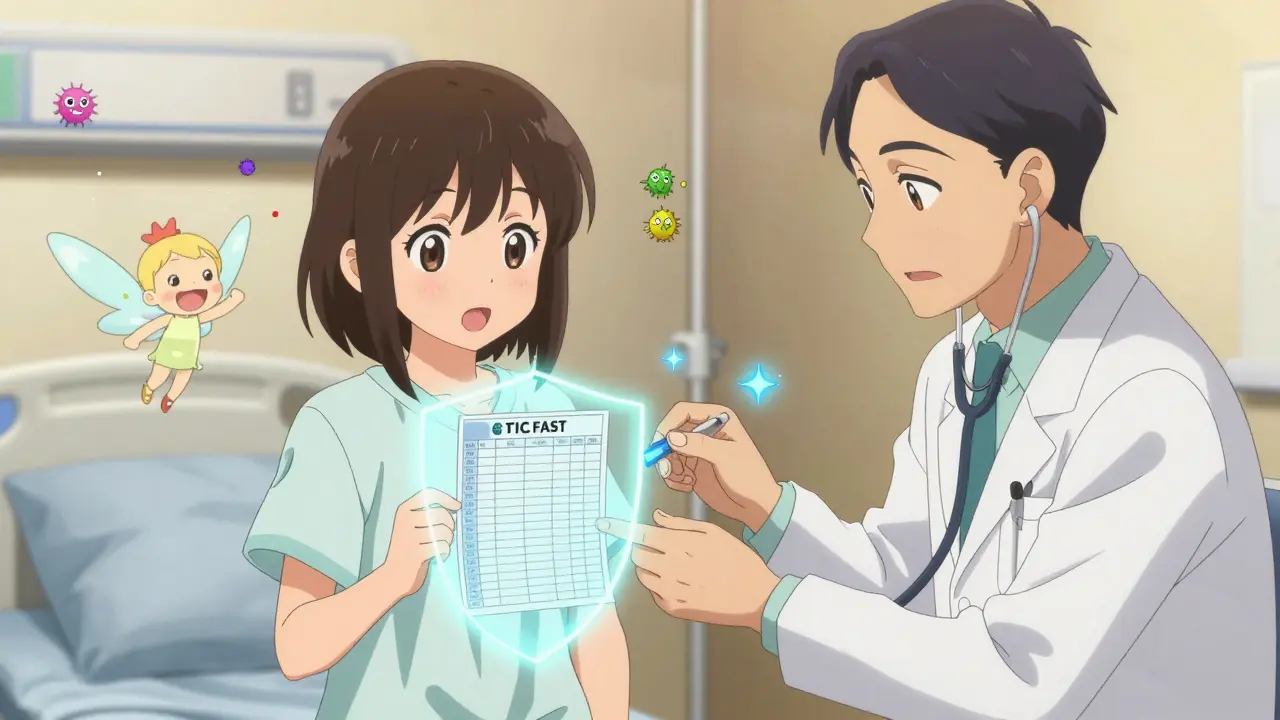
- Risk stratification: Tools like PEN-FAST (Penicillin Allergy Safety Tool) give you a score. A score of 0-2 means you’re low-risk and can safely go straight to an oral challenge. A score of 3-5 means skin testing is recommended first.
- Testing: For low-risk patients, a single dose of amoxicillin (250-500 mg) is given. You wait. No reaction? You’re cleared. For moderate-risk, skin prick and intradermal tests are done first, then a graded oral challenge.
- De-labeling: If you pass, your chart is updated. Not just to say “not allergic.” It’s updated to say “penicillin allergy ruled out” or “tolerated amoxicillin.” Precision matters-because not all penicillins are the same.
What If You React During Testing?
Reactions during testing are rare-and almost always mild. In studies, less than 2% of patients have any reaction at all. Of those, most are just a slight rash or stomach upset. Anaphylaxis? Extremely rare-less than 0.1% in controlled settings. If you do react, the team is ready. Epinephrine, oxygen, and emergency protocols are always on hand. The goal isn’t to scare you-it’s to safely confirm whether you’re truly allergic. And if you are? That’s valuable information. You’ll know exactly what to avoid, and you won’t be forced into riskier drugs unnecessarily.Real People, Real Results
One patient, a 68-year-old woman with a 40-year-old penicillin label, kept getting urinary tract infections that wouldn’t clear. She was on strong antibiotics every few months. After testing, she was cleared. Within six months, she took amoxicillin for a new infection-and it worked perfectly. Her hospital bills dropped by $28,500 over two years. On Reddit, someone wrote: “I was told I was allergic since I was five. I did the test at Mayo Clinic. Negative skin test, then a full dose. Now I can take amoxicillin instead of Z-Pak-which always gave me stomach cramps.” But not everyone has a smooth experience. One person on HealthUnlocked had a reaction during a direct challenge without skin testing. She ended up correctly labeled as allergic-but wishes they’d done skin testing first. That’s why following guidelines matters. Skipping steps increases risk.Why Isn’t Everyone Getting Tested?
The science is clear. The tools exist. The cost savings are huge. So why aren’t more people tested?- Lack of access: In rural areas, allergists are scarce. One allergist might serve 500,000 people.
- Provider hesitation: Many doctors don’t know how to do the test-or think it’s too risky.
- Patient fear: People are scared to try the drug again. They’ve lived with the label for decades.
- Electronic health record issues: Updating allergy status in some hospital systems is clunky. It takes manual work.

What You Can Do Today
If you’ve been told you’re allergic to penicillin:- Ask your doctor: “Could this label be wrong?”
- Ask if you qualify for a PEN-FAST assessment.
- Ask if you can get tested in your clinic or through a referral.
- Don’t assume the label is accurate just because it’s been there for years.
Getting tested doesn’t mean you’ll lose your allergy label. It means you’ll know the truth. And if you’re not allergic? You’ll get better care, fewer side effects, and lower costs. For your body, your wallet, and the future of antibiotics-it’s worth it.
Can I outgrow a penicillin allergy?
Yes. Most people who had a penicillin allergy in childhood lose it over time. Studies show that 80% of people who were allergic as kids are no longer allergic after 10 years. But without testing, you’ll never know for sure. Labels stick-even when the allergy doesn’t.
Is skin testing painful?
Skin testing feels like a tiny pinch, similar to a blood test. The prick test is barely noticeable. Intradermal testing involves a small injection under the skin-it stings briefly, but the discomfort lasts seconds. Most patients say it’s far less uncomfortable than they expected.
Can I be allergic to one penicillin but not another?
Absolutely. Penicillin is a class of drugs. Being allergic to amoxicillin doesn’t mean you’re allergic to ampicillin or cephalexin. Cross-reactivity between penicillins and cephalosporins is much lower than most people think-only about 2% for first-generation cephalosporins, and even less for newer ones. That’s why accurate labeling matters: you might be avoiding drugs you could safely take.
How long does the whole testing process take?
For low-risk patients, it can be done in one visit-about 1 to 2 hours total. Skin testing takes 20-30 minutes, followed by an oral challenge and 30-60 minutes of observation. Some clinics offer same-day results. For moderate-risk patients, testing may require two visits: one for skin testing, another for the challenge if the skin test is negative.
Will my insurance cover allergy testing for penicillin?
Most insurance plans, including Medicare and Medicaid, cover penicillin allergy testing when ordered by a provider. It’s considered medically necessary because it reduces long-term healthcare costs. Always check with your insurer, but in most cases, the cost of testing is far less than the cost of unnecessary antibiotics and hospitalizations.
What if I’ve had a reaction to another antibiotic? Can I still be tested for penicillin?
Yes. Many people have reactions to other antibiotics like sulfa or macrolides and still tolerate penicillin. Your history with other drugs doesn’t automatically disqualify you from penicillin testing. Each drug is evaluated separately. If your reaction to another drug was mild or non-immune (like nausea or diarrhea), it doesn’t mean you’re at higher risk for penicillin allergy.
Next Steps: What to Do After Testing
If you’re cleared:- Ask your doctor to update your electronic health record with the exact wording: “Penicillin allergy ruled out” or “Tolerated amoxicillin.”
- Carry a note or update your phone’s health app so emergency responders know.
- Keep a copy of your test results. You might need them in the future.
- Get a medical alert bracelet.
- Know which drugs to avoid-not just penicillin, but related beta-lactams if cross-reactivity is confirmed.
- Discuss alternative antibiotics with your doctor for future infections.





Comments
Christina Bischof
December 15, 2025 AT 19:37 PMI had a rash as a kid and was told I was allergic. Never thought to question it until my doctor mentioned it last year. Got tested last month. Turned out fine. Now I take amoxicillin like it's candy. Best decision ever.
Melissa Taylor
December 16, 2025 AT 03:30 AMThis is exactly why we need better education in primary care. My mom had a false label for 50 years and ended up with C. diff twice because they gave her clindamycin instead of penicillin. It’s not just about her-it’s about all of us. Testing should be routine.
Cassie Henriques
December 16, 2025 AT 16:44 PMAs an ID nurse, I’ve seen the collateral damage from mislabeled allergies. Penicillin is the gold standard for so many infections. When we default to vancomycin or azithromycin because of a 40-year-old rash, we’re playing Russian roulette with the microbiome. Skin testing is low-risk, high-reward. Why aren’t we doing this at the point of care?
Nupur Vimal
December 18, 2025 AT 05:55 AMYou people don't understand how the system works. Allergies are allergies. If you had a reaction once, you're allergic. Testing is just a waste of time and money. Why risk it? I've seen people die from penicillin. You think you're smart but you're just lucky.
RONALD Randolph
December 18, 2025 AT 21:26 PMThis is why America is falling apart! We’ve got people running around getting ‘tested’ for things that were perfectly fine as warnings! My grandfather was told he was allergic in 1962-he lived to 92 without a single infection because he listened to doctors! Now we have millennials thinking they’re doctors because they read a blog post!
Benjamin Glover
December 19, 2025 AT 10:51 AMFascinating. Though one must wonder whether this is merely a symptom of America’s broader medical overreach. In the UK, we don’t have this problem-doctors know their protocols. A rash at five? Irrelevant. No one bothers testing.
John Brown
December 19, 2025 AT 12:02 PMI did the test last year. Skin prick felt like a mosquito bite. Then I took the amoxicillin. Sat there for an hour. Nothing. My chart now says ‘tolerated amoxicillin’-and I’ve never felt more empowered. My doctor even gave me a printed card. Took me 15 minutes. Best 15 minutes of my healthcare life.
Raj Kumar
December 21, 2025 AT 08:37 AMIn India we dont have much access but i heard from cousin who did it in US. She said it was easy. No pain. Just wait. And now she can take normal medicine instead of expensive ones. Why not try if its safe? My aunt also had same label since 1980s. Maybe she should go.
Mike Nordby
December 23, 2025 AT 02:58 AMThe PEN-FAST score is a clinically validated, evidence-based tool with a sensitivity of 97% and specificity of 85% for identifying low-risk patients eligible for direct oral challenge. Its integration into EHRs like Epic has demonstrated a 32% increase in de-labeling rates in pilot populations. The data is unequivocal: failure to implement standardized protocols constitutes a systemic failure in antibiotic stewardship. Institutions must mandate provider education and patient screening.
Jocelyn Lachapelle
December 23, 2025 AT 15:41 PMI used to think allergies were forever. Then I found out my dad was labeled allergic after a rash at age 3. He never took penicillin again. Decades later, he got tested. Turned out he was fine. He took amoxicillin for a sinus infection and felt better in two days. No side effects. No drama. Just… better care. Why do we hold onto old labels like they’re sacred? They’re not. They’re mistakes. And mistakes can be fixed.
Jake Sinatra
December 24, 2025 AT 00:58 AMThe CDC’s estimate of 50,000 additional C. diff cases annually due to mislabeled penicillin allergies is not just a statistic-it’s a moral failure. Antibiotic stewardship isn’t optional. It’s foundational to public health. Hospitals that fail to implement de-labeling protocols are contributing to the antimicrobial resistance crisis. This isn’t a suggestion. It’s an imperative.