
Every year, Americans spend over $600 billion on prescription drugs. But here’s the surprising part: generic medications make up 90% of all prescriptions filled, yet they cost just 1.5% of total healthcare spending. That’s not a typo. For every dollar spent on brand-name pills, you’re spending nearly $60 on the generic version of the same medicine.
Why Generics Cost So Much Less
Generic drugs aren’t cheaper because they’re lower quality. They’re cheaper because they don’t need to repeat the billion-dollar clinical trials that brand-name companies run to get FDA approval. Once a patent expires, other manufacturers can make the same drug using the same active ingredients. The FDA requires them to prove they’re bioequivalent - meaning they work the same way in your body, with the same strength, purity, and effectiveness. The process is strict. Generics must deliver between 80% and 125% of the brand’s drug levels in your bloodstream. That’s not a wide margin - it’s tight enough to ensure consistent results. The FDA approves over 800 generic drugs every year. In 2022 alone, 831 new generics hit the market, pushing prices down even further.The Real Numbers: How Much You Save
The savings aren’t theoretical. In 2022, generic and biosimilar drugs saved the U.S. healthcare system $408 billion. That’s up from $373 billion the year before. Over the past decade, generics have saved over $2.9 trillion. That’s enough to cover the annual healthcare costs of every person in Texas and California combined. At the pharmacy counter, the difference is even starker. The average copay for a generic is $6.16. For a brand-name drug? $56.12. That’s more than nine times more. Nine out of ten generic prescriptions cost under $20. Only six out of ten brand-name prescriptions do. For common medications like sertraline (an antidepressant), patients report paying $9 for the generic versus $450 for the brand. That’s not an outlier - it’s the norm.Generics vs. Brand: The Real Comparison
Brand-name drugs make up just 10% of prescriptions but account for 82% of drug spending. Generics make up 90% of prescriptions and only 18% of spending. That’s not just efficient - it’s revolutionary. Take statins, the cholesterol-lowering drugs millions take daily. Almost all of them - 98% - are generics. That’s why heart disease patients can afford to stay on their meds year after year. But look at antiepileptic drugs. Only 67% are generics. Why? Because doctors worry about small differences in how the drug is absorbed. These are drugs where even a tiny change can trigger a seizure. That’s why the FDA still requires extra caution with these.
Therapeutic Substitution: The Hidden Savings
Most people think savings come from swapping a brand for its generic. But the biggest savings often come from swapping one generic for another. A 2022 study in Colorado looked at the top 1,000 generic drugs. They found 45 that were way more expensive than other generics treating the same condition. One drug cost $1,200 a month. A different version of the same medicine - same active ingredient, same dose - cost $50. That’s a 96% drop. In 62% of these cases, the cheaper option was just a different strength or form - like switching from a tablet to a capsule. The average discount? 95%. That’s not just savings. That’s a system that’s working - if you know how to use it.Why Some People Still Pay Too Much
Here’s the catch: even though generics are cheaper, many people still pay too much. Why? Because insurance plans have changed. Instead of low copays, many now charge high coinsurance - say, 30% of the drug’s price. If your generic costs $100, you pay $30. That sounds fine until you realize the drug should cost $15. The pharmacy paid $15, the insurer paid $85, but you’re still on the hook for $30. Some patients report paying more for a generic than they used to pay for the brand. That’s because drug manufacturers raise prices on generics when competition drops. If only one company makes a certain generic, they can hike prices. That’s why drug shortages - which hit generics harder than brands - are a growing problem. In September 2023, 78% of the 312 active drug shortages were generics.What You Can Do to Save
Ask your doctor for the generic. Always. Even if you’ve been on a brand for years, it’s worth asking. Most doctors will agree - especially if you mention cost. Ask your pharmacist: "Is there a cheaper generic version?" Pharmacists know which generics are priced lower and can often switch you without needing a new prescription. In 49 states, they can do this automatically. Only New York requires the doctor to specifically write "dispense as written." Use tools like GoodRx or SingleCare. They show real-time prices at local pharmacies. A generic that costs $50 at CVS might be $12 at Walmart. You don’t need insurance to use them. If you’re on Medicare, the Inflation Reduction Act caps your out-of-pocket drug costs at $2,000 a year starting in 2025. That’s huge. But it won’t help if you’re stuck paying $100 for a generic that should cost $10. So keep asking questions.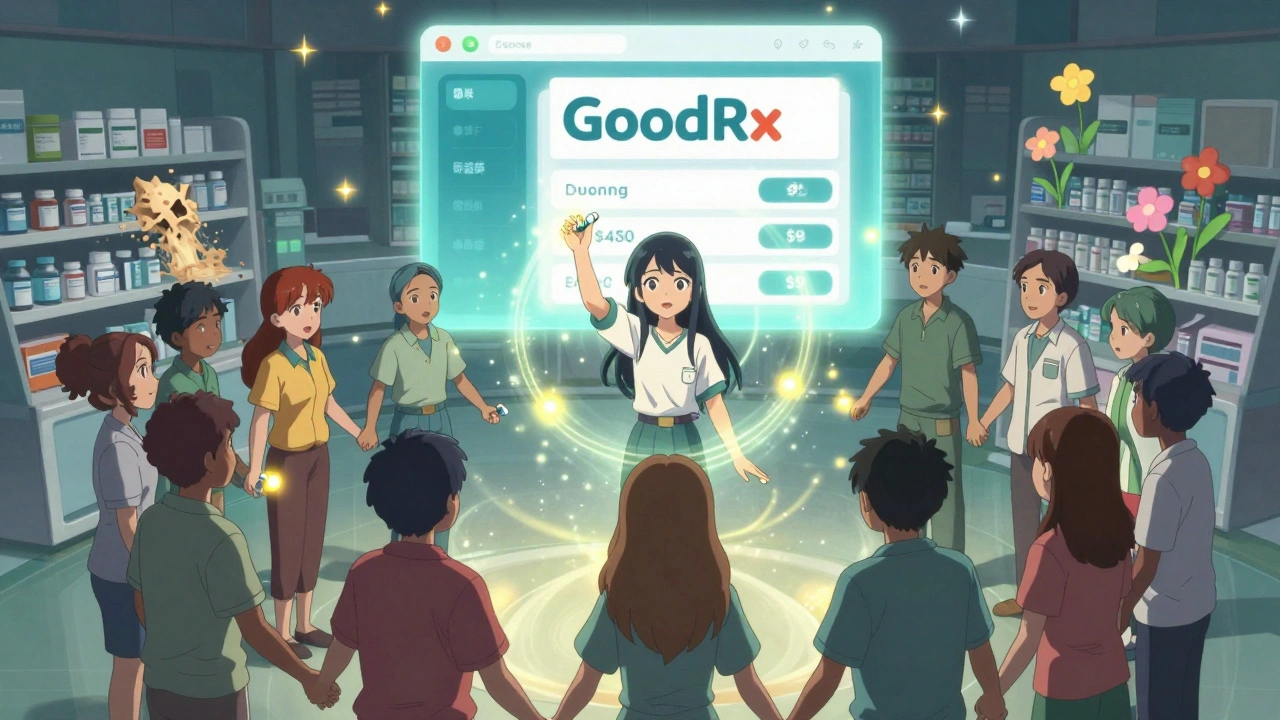
Are Generics Always Safe?
For 98% of drugs, yes. The FDA rates generics as "AB" - meaning they’re therapeutically equivalent. That’s the highest rating. There are exceptions. Drugs with a narrow therapeutic index - like warfarin, levothyroxine, or seizure meds - need extra care. A small change in how the drug is absorbed can cause serious side effects. That’s why some patients report issues switching. But these cases are rare. In a Drugs.com survey of 240 people, only 15% had problems with levothyroxine generics. Most of those issues were fixed by sticking with the same generic brand. The FDA and independent studies confirm: generics work. A Harvard Medical School survey found that when doctors explained the FDA’s bioequivalence rules, 87% of patients stopped worrying.The Bigger Picture
The U.S. pays 2.78 times more for prescription drugs than other wealthy countries. Generics are the main reason we don’t pay even more. Without them, millions would skip their meds. Hospitals would be overwhelmed. Insurance premiums would skyrocket. But generics alone can’t fix the system. Drug companies still find ways to delay competition - filing dozens of patents on minor changes to stretch monopolies. The FTC found that brand companies file an average of 17.5 patents per drug just to block generics. Biosimilars - the generic version of complex biologic drugs - are starting to make a difference. As of 2023, 41 have been approved. They’re saving billions, but adoption is slow. Doctors and patients are still learning.What’s Next?
By 2025, generics and biosimilars are projected to save $425 billion annually. If we expand therapeutic substitution - swapping expensive generics for cheaper ones - we could save another $15 billion a year. That’s enough to cover free prescriptions for 10 million people. The tools are there. The data is clear. The savings are real. The question isn’t whether generics work - it’s why more people aren’t using them to their full potential.Are generic medications as effective as brand-name drugs?
Yes. The FDA requires generics to have the same active ingredients, strength, dosage form, and bioequivalence as brand-name drugs. They must deliver the same amount of medicine into your bloodstream at the same rate. Over 98% of generics are rated "AB" - meaning they’re therapeutically equivalent. Studies show they work just as well for treating conditions like high blood pressure, diabetes, depression, and infections.
Why do some people say generics don’t work for them?
A small number of people report differences with drugs that have a narrow therapeutic index - like levothyroxine, warfarin, or seizure medications. These drugs require very precise blood levels. Even small variations in absorption can cause issues. But in most cases, switching back to the same generic brand fixes the problem. The FDA and medical experts agree these cases are rare and not due to inferior quality, but rather individual sensitivity or switching between different generic manufacturers.
Can pharmacists substitute generics without a new prescription?
In 49 states, pharmacists can automatically substitute a generic for a brand-name drug unless the doctor writes "dispense as written" on the prescription. Only New York requires the prescriber to indicate substitution. Pharmacists are trained to use the FDA’s Orange Book to find therapeutically equivalent generics. You can always ask your pharmacist to check if a cheaper generic is available - even if the prescription says "brand necessary."
Why are some generic drugs so expensive?
When only one company makes a generic, it can raise prices without competition. This often happens after a drug shortage or if manufacturers leave the market. Some generics cost hundreds of dollars because they’re made by a single supplier. The FDA tracks these shortages, and Congress is working on laws to prevent price gouging. In the meantime, using price-comparison tools like GoodRx can help you find the lowest price, even for expensive generics.
How do I know if my generic is the cheapest option?
Ask your pharmacist to check if there’s a lower-cost therapeutic alternative. For example, one generic for high blood pressure might cost $40, while another - same active ingredient, same dose - costs $8. You can also use apps like GoodRx or SingleCare to compare prices across pharmacies. Sometimes the same drug from different manufacturers varies by over 90% in price. Don’t assume your current generic is the cheapest - always ask.
Does Medicare cover generic drugs?
Yes. Medicare Part D plans cover most generic drugs, and they’re almost always cheaper than brand-name versions. In fact, 91% of prescriptions filled for Medicare beneficiaries are generics. Starting in 2025, the Inflation Reduction Act caps out-of-pocket drug costs at $2,000 per year - which will make generics even more valuable. Many Medicare plans have $0 or $5 copays for preferred generics.
What’s the difference between a generic and a biosimilar?
Generics are exact copies of small-molecule drugs - like pills for cholesterol or blood pressure. Biosimilars are copies of complex biologic drugs - like injectables for cancer, arthritis, or diabetes. They’re not exact copies because biologics are made from living cells. But they’re proven to work the same way. Biosimilars are newer and cost less than the original biologics - but more than traditional generics. As of 2023, 41 biosimilars are approved in the U.S., saving billions annually.

Comments
joanne humphreys
December 6, 2025 AT 22:03 PMGenerics have saved my life and my wallet. I’ve been on sertraline for eight years, and the generic costs me $4 at Walmart. The brand? $500. No difference in how I feel. The FDA doesn’t lie.
Clare Fox
December 8, 2025 AT 16:07 PMi mean... i dont trust generics. like... what if the filler is just sugar and lies? my cousin swears her thyroid meds made her feel like a zombie after switching. not saying it’s true, but... i dont know man.
Chris Park
December 9, 2025 AT 02:21 AMLet’s be clear: the FDA is a corporate puppet. The ‘bioequivalence’ standard? A joke. 80%-125%? That’s a 45% swing in blood concentration. If your blood pressure meds vary that much, you’re not getting treatment-you’re playing Russian roulette with your arteries. And don’t get me started on the ‘same active ingredient’ lie-excipients are unregulated, and they change absorption profiles. This isn’t science. It’s a controlled demolition of patient safety for profit.
Kay Jolie
December 9, 2025 AT 23:16 PMIt’s fascinating how the pharmaceutical-industrial complex has weaponized cost-efficiency as a virtue, while quietly eroding pharmacovigilance standards. The bioequivalence paradigm, while statistically robust, is fundamentally reductionist-it ignores inter-individual pharmacokinetic variance, especially in polymorphic CYP450 metabolizers. One must ask: when a 96% price differential exists between two AB-rated generics, is that a market failure-or a regulatory capture?
Arjun Deva
December 10, 2025 AT 14:09 PMWhy do they even bother with generics? It’s all a scam. Big Pharma owns the FDA, the pharmacies, and the insurance companies. They let you think you’re saving money, but they just raise the price on the one generic you’re stuck with when everyone else stops making it. Then you pay $120 for a pill that should cost $5. It’s not about health-it’s about control.
Jackie Petersen
December 11, 2025 AT 08:20 AMGenerics are fine for poor people, but I’ll stick with brand. I’m not risking my health for a few bucks. This country’s gone soft. If you can’t afford medicine, you shouldn’t be sick.
brenda olvera
December 12, 2025 AT 10:06 AMMy grandma in Mexico takes the same generic as I do in Texas. Same pill. Same box. Different price tag. We’re not saving money-we’re just letting corporations decide who lives and who doesn’t. I’m not mad. I’m just sad.
Akash Takyar
December 13, 2025 AT 10:24 AMIt is indeed a remarkable achievement that generic medications have enabled such substantial cost savings, while maintaining therapeutic equivalence as per the rigorous standards established by the U.S. Food and Drug Administration. Furthermore, the utilization of therapeutic substitution, as evidenced by the Colorado study, demonstrates an intelligent, data-driven approach to pharmaceutical resource allocation. One must commend the systemic efficiency, while remaining vigilant toward market monopolization risks.
Max Manoles
December 13, 2025 AT 13:04 PMI used to think generics were fine... until I switched from one to another and had a panic attack. Not the drug-something in the coating. I didn’t know pills had fillers that could trigger anxiety. I went back to the original generic brand and it was fine. So yeah, they’re ‘equivalent’ on paper. But bodies aren’t spreadsheets. I don’t want to be a lab rat.
Myles White
December 14, 2025 AT 00:23 AMLook, I get it-generics save money, and I’m all for that. But here’s the thing: when you have a chronic condition, you’re not just taking a pill, you’re building a routine, a rhythm, a relationship with your body. When you switch generics, even if the FDA says it’s the same, your body notices. It’s like changing your coffee brand-suddenly your morning feels off. And when you’re already dealing with depression or high blood pressure or seizures, that ‘off’ feeling can spiral. It’s not about distrust-it’s about stability. And the system doesn’t care about stability. It cares about the lowest bid. So yeah, I take generics. But I stick with one. Always. And I make my pharmacist document it. Because if I lose my rhythm, I lose my life.
Nigel ntini
December 15, 2025 AT 01:09 AMYou’re all missing the real win: pharmacists. They’re the unsung heroes here. They know which generic is $8 vs $120. They know which ones have the same filler as the brand you tolerated. They can switch you without a new script. Ask them. They want you to save money. They’re not in it for the commission-they’re in it because they care. Don’t just take what’s on the shelf. Ask. Always ask.