Imagine you’ve been taking a specific brand-name medication for years. Your body tolerates it perfectly, but the monthly copay is eating up your budget. Then, your doctor suggests switching to an "authorized generic." It’s the exact same drug, made by the same company, just in different packaging with a lower price tag. Sounds like a win-win, right? But when you try to fill that prescription, things get messy. Does your insurance cover it? Is it on the same tier as cheap generics or expensive brands? Why did the pharmacist look confused?
This confusion is real and widespread. Authorized generics sit in a strange middle ground between traditional brand-name drugs and conventional off-patent generics. For patients, they offer savings. For insurers, they are a tool for cost control. But for everyone else-pharmacists, doctors, and policy makers-they are often a mystery. Understanding how these drugs are placed on insurance formularies (the list of covered medications) is key to unlocking those savings without hitting coverage roadblocks.
What Exactly Are Authorized Generics?
To understand why insurance companies treat them differently, we first need to clear up what an authorized generic actually is. Unlike standard generics, which are made by third-party manufacturers who must prove their version works just as well as the brand (a process called bioequivalence testing), authorized generics are produced by the original brand manufacturer themselves.
Think of it this way: If Pfizer makes Eliquis, a popular blood thinner, they might also sell the exact same pill under a different name or plain white bottle without the Eliquis logo. That is an authorized generic. It contains the identical active ingredients and inactive fillers. It comes from the same factory. The only difference is the label and the price.
According to the U.S. Food and Drug Administration (FDA), these drugs are marketed under the brand owner's original New Drug Application (NDA). This means they bypass the lengthy regulatory hurdles that independent generic makers face. Because they are essentially the brand product rebranded, they do not need to undergo separate bioequivalence studies. This unique status creates a distinct entity in the pharmaceutical market that insurers have struggled to categorize consistently.
| Feature | Brand-Name Drug | Authorized Generic | Traditional Generic |
|---|---|---|---|
| Manufacturer | Original Brand Company | Original Brand Company | Third-Party Manufacturer |
| Regulatory Path | New Drug Application (NDA) | New Drug Application (NDA) | Abbreviated New Drug Application (ANDA) |
| Bioequivalence Test | Not Required (Reference Standard) | Not Required | Required |
| Pricing | Highest | Moderate (15-25% less than brand) | Lowest |
| Formulary Tier | Tier 3 or 4 (High Copay) | Varies (Often Tier 2 or 3) | Tier 1 or 2 (Low Copay) |
How Formularies Place Authorized Generics
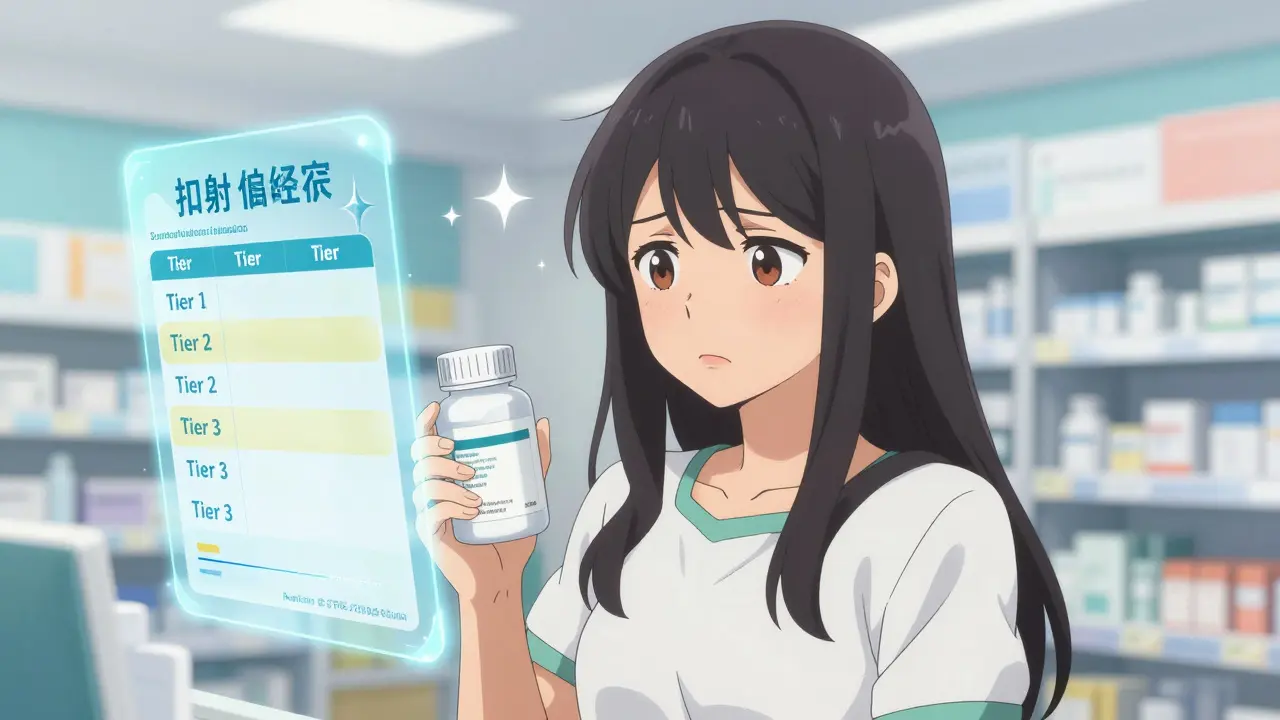
A formulary is simply the list of drugs your health plan agrees to cover. Insurance plans organize these drugs into tiers based on cost. Tier 1 usually includes the cheapest generics. Tier 2 might include preferred brands or slightly more expensive generics. Tiers 3 and 4 are reserved for non-preferred brands and specialty drugs, where your out-of-pocket costs skyrocket.
The big question is: Where do authorized generics fit? There is no federal law mandating a specific tier for them. This leaves the decision up to individual Pharmacy Benefit Managers (PBMs) and insurance carriers. However, data shows a clear trend. A 2022 study published in Health Affairs analyzed Medicare Part D plans and found that 87% of them place authorized generics in the same tier as conventional generics. Only 12% treat them as high-cost brand-name products.
Why does this matter? Let’s say your brand-name drug has a $100 copay. The traditional generic has a $10 copay. If your insurer places the authorized generic in the generic tier, you pay $10. If they place it in the brand tier, you pay $100. Since the authorized generic is pharmacologically identical to the brand, many patients prefer it over a traditional generic because they know the manufacturing quality is consistent with what they were already taking. But if the insurance doesn’t recognize it as a generic equivalent, you lose that financial benefit.
Most major PBMs, including Express Scripts and OptumRx, have updated their systems to flag authorized generics specifically. As of late 2023, Express Scripts reported that 89% of claims for authorized generics were approved on the first submission, which is significantly higher than the approval rate for new brand-name drugs but slightly lower than traditional generics. This suggests that while the infrastructure is improving, glitches still happen.
The PBM Role and Identification Challenges
Pharmacy Benefit Managers act as the middlemen between insurers, pharmacies, and drug manufacturers. They negotiate prices and build the formularies. For authorized generics to work smoothly, PBMs must correctly identify them in their databases using National Drug Codes (NDCs).
Here is where the friction occurs. Authorized generics are not always listed in the FDA’s Orange Book-the primary resource pharmacists use to check generic equivalency. Instead, they appear on a separate FDA list of authorized generic drugs. If a PBM’s database isn’t updated to cross-reference this list, the pharmacy system might see the drug as a brand-name product.
Walgreens reported a 12% error rate in processing authorized generics before they implemented specialized verification protocols in 2022. This means one in ten times a patient tried to fill an authorized generic, the system failed to apply the correct discount or tier. CVS Caremark noted that it takes about 30 to 45 days from the launch of an authorized generic to full coverage integration across their network. During this window, patients might face unexpected denials or higher copays.
To combat this, some large employers and self-insured groups are working directly with PBMs to create "preferred" lists for authorized generics. Prime Therapeutics, for example, launched an "AG Tracker" tool that covers 98% of available authorized generics, helping pharmacists quickly verify eligibility for lower-tier pricing.
Patient Experiences and Common Pitfalls
For patients, the theory sounds great, but the reality can be frustrating. On online pharmacy forums, stories abound of patients being switched to authorized generics without notice. While this is often a good thing financially, it causes anxiety for those who are sensitive to changes in medication appearance or packaging.
A 2022 survey by GoodRx found that 34% of respondents experienced confusion when their pharmacy substituted an authorized generic. Some patients thought they had received a counterfeit drug because the pill looked different or lacked the familiar branding. Worse, 18% reported temporary coverage denials until the substitution was properly documented in the insurance system.
However, there are success stories too. Patients with allergies to specific inactive ingredients (like dyes or binders) in traditional generics often find relief with authorized generics. Since the authorized generic uses the exact same formula as the brand, it avoids those allergens. One Reddit user shared how their insurance denied the brand-name thyroid medication due to cost but approved the authorized generic immediately with a low copay, saving them hundreds of dollars a month while maintaining their health stability.
If you are prescribed an authorized generic, here is what you should do:
- Check your formulary: Log into your insurance portal and search for the drug by its NDC code if possible, not just the name.
- Ask the pharmacist: Confirm whether the drug they are dispensing is an authorized generic and ask which tier it falls under.
- Appeal if denied: If your insurance charges you the brand-name copay, file an appeal citing the therapeutic equivalence and requesting tier adjustment based on PBM guidelines.
Market Trends and Future Outlook
The landscape for authorized generics is shifting rapidly. The U.S. authorized generic market reached $4.7 billion in 2022, accounting for about 3.2% of the total generic drug market. Analysts project this will grow at a compound annual rate of 8.4% through 2027. Why? Because brand manufacturers want to keep revenue streams open after patents expire, and insurers want cheaper alternatives to high-cost brands.
Regulatory bodies are paying attention. The Federal Trade Commission (FTC) has raised concerns that some companies use authorized generics to delay the entry of true, competing generics, potentially keeping prices artificially high. In 2022, the FTC identified this as a competitive concern in several cases. This scrutiny could lead to stricter rules on how long a brand can hold exclusive rights to their authorized generic.
On the positive side, the Centers for Medicare & Medicaid Services (CMS) issued guidance in 2021 clarifying that authorized generics satisfy Medicare Part D requirements for generic drug coverage. This was a huge win for seniors, ensuring they wouldn’t be penalized for using these products. With the Inflation Reduction Act pushing for lower drug costs, CMS projects a 15-20% increase in authorized generic coverage usage by 2025.
Looking ahead, we expect to see more transparency. The FDA’s recent updates to the Generic Drug User Fee Amendments (GDUFA III) aim to streamline the identification and reporting of authorized generics. This should reduce the administrative errors that currently plague pharmacy counters. For now, however, vigilance is required. Always double-check your benefits, communicate with your pharmacist, and don’t hesitate to advocate for the correct tier placement when filling your prescriptions.
Is an authorized generic the same as a regular generic?
No, they are different in origin but similar in effect. An authorized generic is made by the original brand-name manufacturer and sold under a different label. A regular generic is made by a third-party company that must prove it is bioequivalent to the brand. Both are therapeutically equivalent to the brand, but authorized generics come from the same source as the brand.
Do all insurance plans cover authorized generics?
Most major insurance plans do cover authorized generics, but the level of coverage varies. About 87% of Medicare Part D plans place them in the same low-cost tier as traditional generics. However, private commercial plans may differ, so you should always check your specific formulary to see which tier the drug is assigned to.
Why would my pharmacist substitute my brand drug with an authorized generic?
Pharmacists often substitute brand drugs with authorized generics to save you money, especially if your insurance offers a lower copay for generics. Since the authorized generic is chemically identical to the brand, it is a safe and effective alternative that reduces your out-of-pocket costs without changing the medication's performance.
Are authorized generics cheaper than brand-name drugs?
Yes, typically by 15% to 25%. While they are priced higher than traditional generics in some markets, they are almost always significantly cheaper than the corresponding brand-name drug. This price difference allows insurers to place them in lower formulary tiers, resulting in lower copays for patients.
What should I do if my insurance denies coverage for an authorized generic?
If your insurance denies coverage or charges you the brand-name copay, contact your Pharmacy Benefit Manager (PBM) or insurance provider. Ask them to verify the drug’s tier status. You can also request a manual review or appeal, citing the FDA’s classification of the drug as therapeutically equivalent to the brand and referencing CMS guidelines that support generic-tier coverage.