Every year, millions of people take generic medications because they’re affordable and effective. But what if the pill you swallowed didn’t contain what the label said? What if it had no active ingredient at all-or worse, something toxic? That’s not a horror story. It’s happening right now, and it’s getting worse.
Counterfeit generics are fake versions of real, off-patent drugs. They look identical. They come in the same packaging. Sometimes they even have the same batch numbers. But inside? They’re empty, contaminated, or filled with something completely different. And they’re flooding global markets, especially through online pharmacies and unregulated supply chains.
Why This Isn’t Just a Problem in Poor Countries
You might think this only happens in places with weak regulation. But that’s not true. In 2024, U.S. Customs intercepted over 2,400 shipments of weight-loss drugs like Ozempic and Mounjaro from Asia. Of those, nearly 200 were allowed into the country despite being illegal. An Iowa pharmacy was fined $25,000 in August 2025 for selling fake Ozempic. People in New Zealand, Canada, and Australia have reported buying counterfeit versions of erectile dysfunction pills, insulin, and antibiotics from websites that look like real pharmacies.
The problem exploded during the pandemic. Demand for treatments surged. Criminals saw an opportunity. They didn’t just make fake vaccines-they started counterfeiting everything from painkillers to cancer drugs. According to the Pharmaceutical Security Institute, global incidents of counterfeit medicine jumped 38% between 2020 and 2024. In some parts of Africa, up to 70% of medicines are estimated to be fake. But even in high-income countries, 1 in 10 medicines sold online without a verified physical address are counterfeit, according to the WHO.
What Makes a Generic Fake?
Authentic generics are not cheap knockoffs. They’re approved by agencies like the FDA or EMA. To be legal, they must prove they deliver the same amount of active ingredient into your bloodstream as the brand-name drug-within 80% to 125%. That’s called bioequivalence. It’s not guesswork. It’s science.
Counterfeit generics? They do none of that. Analysis from The American Journal of Tropical Medicine and Hygiene found that over half of the fake drugs seized contained either no active ingredient or dangerous substitutes. Some had chalk, rat poison, or industrial dyes. Others had only 10% of the needed dose. A 2022 report showed counterfeit versions of antibiotics in India contained just 3% of the required antibiotic-enough to make bacteria stronger, not kill them.
Here’s what you might find in a fake:
- Zero active ingredient (like in fake semaglutide or sildenafil)
- Too little active ingredient (say, 15% instead of 100%)
- Wrong ingredient entirely (like amphetamine instead of metformin)
- Contaminants (heavy metals, bacteria, toxic solvents)
These aren’t mistakes. They’re deliberate. Criminals know you’re looking for cheap alternatives. They exploit that. And they make money-big money. Counterfeit generics sell for 30-50% less than real ones. But they cost lives.
How to Spot a Fake Before You Take It
You can’t always tell by looking. Some fakes are nearly perfect. But there are signs-if you know what to check.
1. Check the packaging
Look closely at the box or blister pack. Misspelled words? Odd font? A logo that’s slightly off-center? These are red flags. The real manufacturer doesn’t make typos. If the expiration date is smudged or the batch number doesn’t match the one on the manufacturer’s website, walk away.
2. Verify the NDC number
In the U.S., every drug has a National Drug Code (NDC). It’s a 10- or 11-digit number on the package. Go to the FDA’s NDC Directory and type it in. If it doesn’t show up-or if it shows up as a different drug-don’t take it.
3. Look for the VIPPS seal
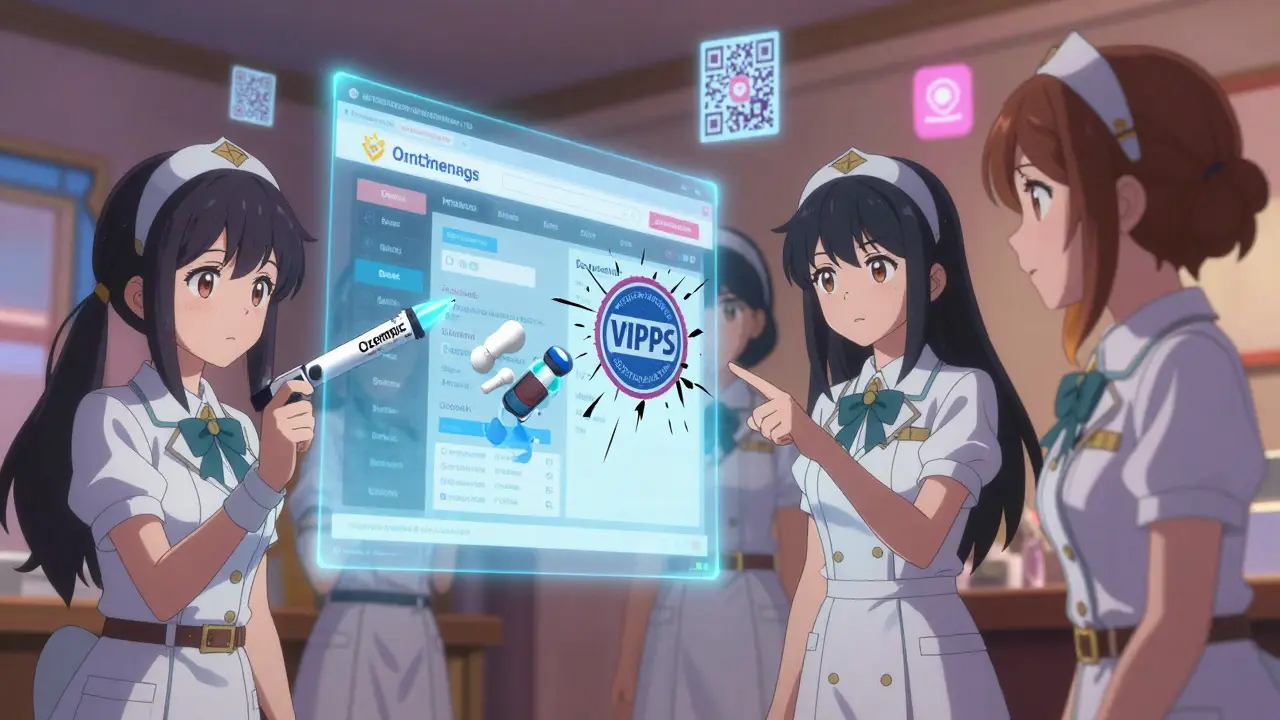
If you’re buying online, only use pharmacies with the VIPPS (Verified Internet Pharmacy Practice Sites) seal. That means they’re licensed, inspected, and legally operating. If the site doesn’t display it-or if you can’t find their physical address-don’t buy. The FDA says 50% of online pharmacies hiding their location sell fake drugs.
4. Examine the pill itself
Take a real one you’ve taken before and compare. Is the new pill a different color? Smaller? Harder to swallow? Does it have a different imprint? Real generics have consistent shape, size, and markings. If it looks off, it probably is.
5. Use manufacturer verification tools
For high-risk drugs like Ozempic, Novo Nordisk offers a free app called Verify Your Pen. Scan the QR code on the pen. It tells you if it’s real. In Q3 2025 alone, over 2 million scans were done-and 1.8% were flagged as counterfeit. That’s 36,000 fake pens stopped before they reached patients.
Where the Fake Drugs Come From
Most counterfeit generics originate from unregulated manufacturing hubs in India, China, and Southeast Asia. They’re shipped in bulk, often hidden in legitimate-looking packages. Some enter through postal services. Others are smuggled in cargo containers labeled as “medical equipment” or “cosmetic supplies.”
Once they reach a country, they’re repackaged. A fake Ozempic pen might get new labels, a new box, and even a fake QR code that looks real. Then they’re sold through:
- Online pharmacies with fake websites
- Social media sellers (Instagram, Facebook, Telegram)
- Unlicensed local pharmacies
- Black market suppliers posing as wholesalers
Even some brick-and-mortar pharmacies have been caught selling fakes. In August 2025, South African authorities seized counterfeit medicines worth over R2.2 million. The fake drugs had reached local clinics and pharmacies. People thought they were getting real insulin. They weren’t.
What Happens When You Take a Fake
Most people don’t realize they’ve taken a counterfeit until it’s too late.
One Reddit user in r/pharmacy shared in August 2025: “I took fake Ozempic for three months. No weight loss. No blood sugar drop. Just constant nausea.” Another said, “I thought I was getting better-then my glucose spiked. My doctor said it wasn’t the disease. It was the drug.”
For people with diabetes, heart disease, or HIV, taking a fake can be deadly. A counterfeit antibiotic might not cure an infection-it might make it worse, leading to sepsis. A fake erectile dysfunction pill might contain hidden stimulants that cause heart attacks. A fake cancer drug might do nothing at all, giving false hope while the disease spreads.
The WHO estimates that substandard and falsified medicines cost global health systems over $30 billion a year. But the real cost? Lives. The Review on Antimicrobial Resistance warns that ineffective antibiotics from fake drugs could cause up to 10 million deaths per year by 2050.
How to Stay Safe
You can’t eliminate the risk entirely-but you can drastically reduce it.
- Buy only from licensed pharmacies-in person or online with VIPPS certification.
- Avoid deals that seem too good-if a generic Ozempic pen costs $15, it’s fake. Real ones cost hundreds.
- Check the manufacturer’s website for verification tools. Novo Nordisk, Pfizer, and others have free apps.
- Report suspicious products to your country’s health authority. In the U.S., use FDA’s MedWatch. In New Zealand, contact Medsafe.
- Don’t buy from social media-no matter how professional the page looks.
- Ask your pharmacist if they can verify the source of a generic you’ve never taken before.
There’s also a growing number of tools to help. Blockchain tracking systems have reduced counterfeit incidents by 22% in pilot programs across 15 countries. Portable spectrometers can scan pills in seconds to confirm chemical composition. But these aren’t widely available to the public yet.
What’s Being Done
Governments and pharmaceutical companies are fighting back.
The EU requires safety features on all prescription drug packaging since 2019. India now mandates QR codes on all active ingredient containers. In 2025, the FDA issued new guidance requiring stricter checks on high-risk generics like semaglutide. Interpol shut down 13,000 illegal websites and seized over 50 million fake doses in Operation Pangea XVI.
But enforcement is uneven. Low-income countries lack resources. Online sellers operate across borders. Criminals adapt faster than regulators. And as AI improves, fake packaging is getting harder to detect.
Experts warn the threat will grow. The Pharmaceutical Security Institute predicts a 15-20% annual increase in counterfeit incidents through 2027. Criminals are using AI to generate realistic packaging, fake websites, and even fake customer reviews.
What You Can Do Right Now
Don’t wait for someone else to fix this. You’re your own first line of defense.
Next time you pick up a new generic medication, pause. Look at the packaging. Check the NDC number. Compare the pill to one you’ve taken before. If it’s an online order, verify the pharmacy’s license. Use manufacturer tools if they’re available.
And if something feels off? Trust your gut. Call your doctor. Report it. You might save your own life-or someone else’s.
Counterfeit generics don’t just steal money. They steal health. And sometimes, they steal time. Don’t let a fake pill be the reason you lose either.
How can I tell if my generic medication is fake?
Look for inconsistencies in packaging-misspelled words, mismatched fonts, or smudged labels. Check the National Drug Code (NDC) on the FDA’s database. Compare the pill’s color, shape, and imprint to a previous batch. If you bought it online, confirm the pharmacy has the VIPPS seal. For high-risk drugs like Ozempic, use the manufacturer’s verification app-Novo Nordisk’s system flagged 1.8% of scans as counterfeit in late 2025.
Are fake medications only a problem in developing countries?
No. While 10% of medicines in low- and middle-income countries are estimated to be fake, counterfeit drugs are crossing borders. In 2025, U.S. Customs intercepted hundreds of illegal shipments of fake Ozempic, Botox, and erectile dysfunction drugs from Asia. A pharmacy in Iowa was fined for selling fake semaglutide. Online pharmacies without physical addresses are often fake-and they sell to customers worldwide.
Can I trust online pharmacies that offer huge discounts?
No. Legitimate generics cost 80-85% less than brand-name drugs-but counterfeit versions sell for 30-50% below even that. If a generic Ozempic pen costs $20, it’s fake. Real ones cost $400-$800. Legitimate online pharmacies never offer discounts that defy basic economics. Always check for the VIPPS seal and a verifiable physical address.
What should I do if I think I took a fake drug?
Stop taking it immediately. Contact your healthcare provider and explain your concerns. Save the packaging and pill. Report it to your national health authority-like the FDA’s MedWatch in the U.S. or Medsafe in New Zealand. If you’re on a life-saving drug like insulin or HIV medication, get tested right away to check for treatment failure or adverse reactions.
Why are counterfeit generics so dangerous?
They contain no active ingredient, too little of it, or harmful substitutes. A fake antibiotic might not kill an infection-it might make bacteria stronger. A fake diabetes drug might cause dangerous spikes in blood sugar. Fake cancer drugs give false hope while the disease spreads. The WHO estimates 1 in 10 medicines in low-income countries are falsified, costing billions and killing thousands annually.

Comments
Milad Jawabra
March 6, 2026 AT 00:39 AMI just got back from my pharmacy and checked my metformin. The batch number didn't match the website. I called them out. They said it was a 'system glitch.' Bullshit. I'm filing a report with the FDA tomorrow. This isn't just about money-it's about survival. 🚨
marjorie arsenault
March 6, 2026 AT 23:09 PMI used to buy my insulin online because it was cheaper. Then my son had a seizure. Turns out the pen had zero insulin. We almost lost him. Now I only get meds from the clinic. Don't risk it. Your life isn't a gamble. 💔
Donna Zurick
March 8, 2026 AT 12:06 PMI work in a pharmacy and we had a shipment of fake Ozempic come in last month. The packaging looked perfect. Even the QR code scanned. But the pill dissolved in water like chalk. We threw it all out. No one noticed until we tested it. Scary stuff.
Tobias Mösl
March 9, 2026 AT 15:19 PMThis whole thing is a government cover-up. The FDA lets this stuff in because Big Pharma wants you dependent on their $800 pens. They know if you buy real generics, you'll stop paying for brand names. This isn't about safety-it's about profit. They're poisoning us to keep the cash flowing. And they call it 'regulation.' LOL.
tatiana verdesoto
March 10, 2026 AT 18:51 PMI just read this and I'm so glad I always check my NDC number now. Last year I bought a generic blood pressure med and the pill was a weird yellow instead of white. I didn't think twice-I took it back. My pharmacist said 3 other people had brought in the same fake batch that week. Thank god I listened to my gut.
Darren Torpey
March 11, 2026 AT 20:58 PMMan, I used to think fake meds were some overseas horror story. Then my buddy took a fake ED pill from Instagram. Ended up in the ER with a heart attack. He's fine now but he's got a new rule: 'If it's not from my doctor's pharmacy, it's not getting near my body.' That's wisdom.
Lebogang kekana
March 13, 2026 AT 07:16 AMIn South Africa, we see this every day. Fake insulin. Fake ARVs. People die because they can't afford the real stuff. But here's the thing-no one talks about how pharma companies jack up prices so high that people have no choice. This isn't just about criminals. It's about greed. And we're all paying for it.
Jessica Chaloux
March 13, 2026 AT 13:03 PMI found a fake Ozempic pen on my doorstep. I was so scared I cried. I didn't even know I was supposed to be getting one. I think someone hacked my prescription. I'm terrified. 😭
Justin Rodriguez
March 13, 2026 AT 17:21 PMThe NDC check is the most reliable thing. I've verified over 200 pills in the last year for friends. If the number doesn't show up in the FDA database, it's fake. Simple. No need for apps or scanners. Just go to the site. Takes 30 seconds. Save your life.
Raman Kapri
March 15, 2026 AT 13:17 PMThe claim that 70% of medicines in Africa are counterfeit is statistically dubious. The WHO's methodology is flawed. Most of these numbers are extrapolated from small, non-random samples. Furthermore, the FDA's 1 in 10 statistic applies only to unverified online pharmacies-not the entire supply chain. This article sensationalizes data to drive clicks.
Divya Mallick
March 16, 2026 AT 14:39 PMIndia produces 40% of the world's generics. You think we're the villains? You Americans import 90% of your meds from us and then call us 'counterfeiters' when your own supply chain is full of loopholes. You want cheap drugs? Fine. But don't blame us when you buy from shady websites. Your greed is the problem, not our production.
Pankaj Gupta
March 17, 2026 AT 07:52 AMWhile the dangers of counterfeit drugs are real, we must also acknowledge that regulatory barriers in high-income countries drive people toward unregulated channels. The cost of a single Ozempic pen exceeds the monthly income of millions. This is not merely a crime issue-it is a systemic failure of equitable access. Solutions must address pricing, not just policing.
Alex Brad
March 17, 2026 AT 20:01 PMCheck the NDC. That's it.