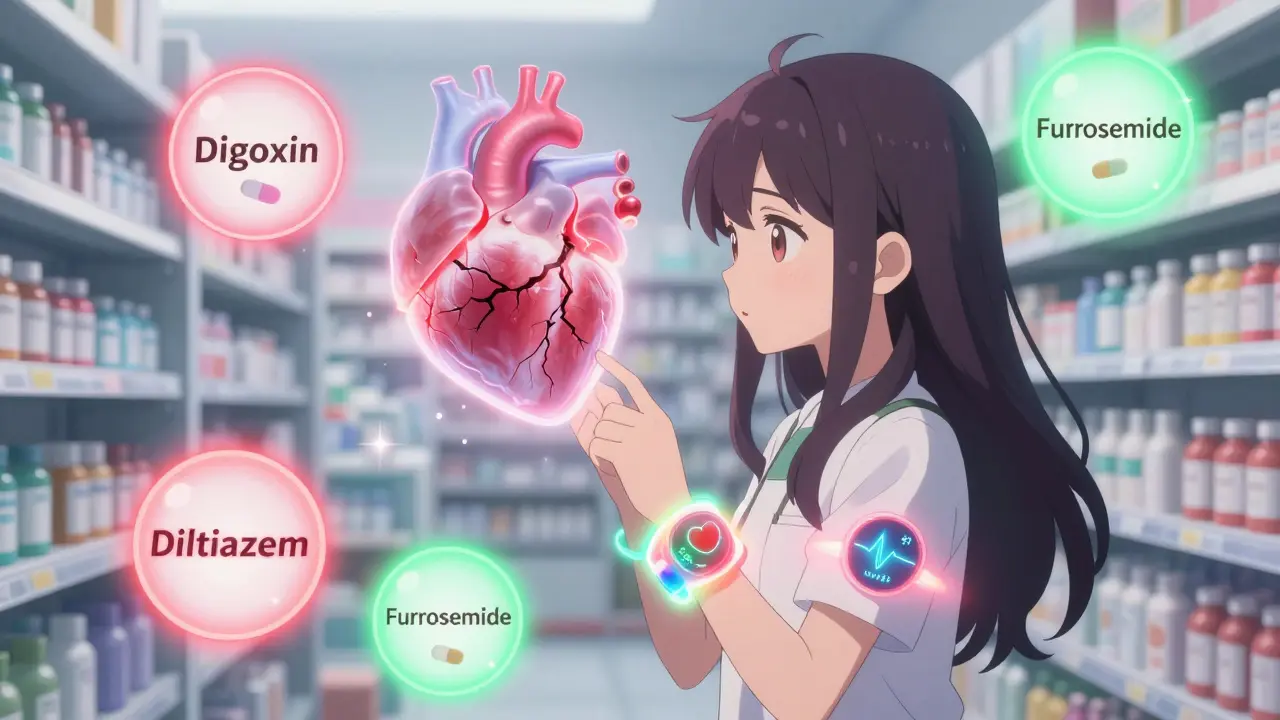
Many heart patients take digoxin to manage heart failure or irregular heartbeats like atrial fibrillation. It’s been used for decades, and it still works - but only if you know what to watch for. The problem isn’t the drug itself. It’s what happens when it meets other medicines, foods, or even supplements. Digoxin has a narrow therapeutic window: too little, and it doesn’t help; too much, and it can send you to the ER with nausea, blurred vision, or even dangerous heart rhythms. About 1 in 25 people on digoxin will experience toxicity, even when they’re taking the right dose. And it’s not random. Most cases are caused by interactions you can prevent.
Why Digoxin Is So Sensitive
Digoxin works by slowing down the sodium-potassium pump in heart cells. This lets more calcium build up, making each heartbeat stronger. Simple, right? But that same mechanism makes it easy to tip out of balance. Your body clears digoxin mostly through the kidneys. If your kidneys aren’t working well - which is common in older adults or those with heart failure - digoxin builds up. Even a small drop in potassium can make digoxin more toxic. That’s why a potassium level below 3.5 mmol/L is a red flag. A single dose of a diuretic like furosemide can lower potassium enough to trigger toxicity, even if you’ve been on digoxin safely for months.Biggest Drug Interactions to Watch For
Some medications are known to dangerously raise digoxin levels. These aren’t rare cases - they’re common and predictable.- Diltiazem and verapamil: These calcium channel blockers, often prescribed for high blood pressure or chest pain, can increase digoxin levels by 30-50%. The result? Heart rates can plunge below 40 beats per minute. Some patients need a pacemaker because of this combo.
- Dronedarone: Used for atrial fibrillation, this drug can raise digoxin levels by more than 50%. The PALLAS trial found patients on both had a 2.5 times higher risk of sudden death. If you’re starting dronedarone, your digoxin dose must be cut in half - and monitored weekly.
- Amiodarone: A powerful antiarrhythmic, amiodarone can spike digoxin levels by up to 100%. One patient on Reddit reported his levels jumped from 0.8 to 1.9 ng/mL within two weeks - leading to vomiting and seeing halos around lights. His doctor had to slash his dose by half.
- Erythromycin and tetracycline: These antibiotics change the bacteria in your gut that normally break down digoxin. Without those bacteria, digoxin sticks around longer. A simple 10-day course of antibiotics can push you into toxicity.
- Quinidine: This older antiarrhythmic can increase digoxin levels by up to 100% by blocking kidney clearance. It’s rarely used now, but if you’re on it, your digoxin dose needs immediate adjustment.
- St. John’s wort: This popular herbal supplement for mood can reduce digoxin levels by 25% by speeding up its removal from the body. You might think your meds aren’t working - but it’s not the disease. It’s the supplement.
- Rifampin: Used for tuberculosis, this drug can cut digoxin levels by 35-45%. If you’re being treated for TB and take digoxin, your heart failure could worsen without anyone realizing why.
Food and Supplements That Interfere
You might not think your oatmeal or licorice candy matters - but they do.- High-fiber foods: Oatmeal, bran, and psyllium fiber supplements can reduce digoxin absorption by 20-40%. If you take digoxin with breakfast, you’re not getting the full dose. The fix? Take digoxin at least two hours before or after eating these foods.
- Black licorice: It’s not just a sweet treat. The glycyrrhizin in black licorice causes your body to lose potassium. Combine that with digoxin, and you’re playing Russian roulette with your heart rhythm. One study found patients who ate just two ounces a week had dangerous arrhythmias.
- Antacids: Aluminum- or magnesium-based antacids (like Maalox or Mylanta) can block digoxin absorption. A Mayo Clinic study showed 22% of digoxin-related ER visits were tied to these over-the-counter meds.
- Milk: Surprisingly, milk can reduce digoxin absorption by up to 25%. Don’t take your pill with a glass of milk - even if it’s part of your morning routine.

Who’s at Highest Risk?
Not everyone on digoxin is equally vulnerable. Some people need extra attention.- Age over 75: Older adults clear digoxin slower. They’re nearly three times more likely to have toxicity than younger patients.
- Low body weight: If you weigh less than 60 kg (132 lbs), standard doses can be too high. Dosing should be based on weight, not age.
- Kidney problems: If your creatinine clearance is below 50 mL/min, you’re at high risk. That’s common in heart failure patients. Your dose may need to be cut by 30-50%.
- Low potassium or magnesium: Even mild imbalances make digoxin more toxic. Diuretics are the usual culprit.
- Pre-existing heart block: If you already have slow heart rhythms or AV block, digoxin can push you into dangerous heart stoppage. The risk is 4.3 times higher.
How to Stay Safe: A Simple Checklist
You don’t need to memorize every interaction. Just follow this routine:- Take digoxin at the same time every day - preferably in the morning, on an empty stomach.
- Avoid high-fiber foods, milk, and antacids within two hours of your dose.
- Never eat black licorice - not even once a week.
- Check your potassium monthly. If it’s below 3.5 mmol/L, tell your doctor.
- Report any new symptoms: Nausea, vomiting, blurred vision, seeing yellow or green halos, or a slow heartbeat.
- Keep a list of every medicine and supplement - including herbal teas, vitamins, and OTC painkillers - and show it to every doctor.
- Get your digoxin level checked every 3-6 months. If you start a new drug, check it within 7-10 days.

What to Do If You Think You’re Toxic
Symptoms of digoxin toxicity don’t always come on fast. Nausea, fatigue, and blurry vision are easy to ignore. But if you notice:- Heart rate below 50 bpm
- Seeing colored halos or blurred vision
- Severe nausea or vomiting
- Irregular heartbeat (palpitations or skipped beats)
The Bottom Line
Digoxin isn’t going away. Even with newer drugs, it’s still used in about 12% of heart failure patients in the U.S. - and nearly 1 in 3 elderly patients with atrial fibrillation. It’s cheap, effective, and when used right, life-saving. But it’s also unforgiving. One wrong pill, one new supplement, one missed potassium test - and things can go downhill fast. The key isn’t avoiding digoxin. It’s knowing exactly what to watch for. Stay alert. Keep your list updated. Test your levels. And never assume a new medicine is safe just because your doctor didn’t mention it.Can I take ibuprofen with digoxin?
Ibuprofen and other NSAIDs can reduce kidney function, which may cause digoxin to build up in your blood. While not as dangerous as some other interactions, it’s still risky - especially if you’re older or have kidney issues. Talk to your doctor before using ibuprofen regularly. Acetaminophen (Tylenol) is usually a safer choice for pain relief.
How often should digoxin levels be checked?
For stable patients on the same dose, every 3-6 months is enough. But if you start a new medication, change your dose, or develop kidney problems, check levels within 7-10 days. After any major change, weekly checks for 2-4 weeks are recommended. Your doctor should also check your potassium and creatinine levels at the same time.
Is digoxin safe if I have kidney disease?
It can be, but only with strict monitoring. If your creatinine clearance is below 50 mL/min, your dose must be lowered - often by half. If it’s below 15 mL/min, many guidelines recommend avoiding digoxin entirely. Your doctor may switch you to a different medication or use a lower dose with weekly blood tests. Never adjust your dose yourself.
Can I take vitamin D or calcium with digoxin?
Vitamin D and calcium supplements are generally safe with digoxin - but only if your potassium is normal. High calcium levels can worsen digoxin toxicity, especially if you’re also on diuretics. Always have your blood levels checked before starting supplements. If your potassium is low, calcium can be dangerous. Your doctor should guide this.
Why do some patients still take digoxin if it’s so risky?
Because for some people, it’s the only thing that works. Newer drugs like sacubitril/valsartan or SGLT2 inhibitors help many, but not all. Digoxin still improves symptoms and reduces hospital visits in patients who remain fatigued despite other treatments. It’s not first-line anymore, but for elderly patients with persistent symptoms and limited options, it’s a valuable tool - if used carefully.
What should I do if I miss a dose of digoxin?
If you miss a dose and remember within 12 hours, take it right away. If it’s been more than 12 hours, skip it and take your next dose at the regular time. Don’t double up. Missing one dose won’t cause harm, but taking two can push you into toxicity. Consistency matters more than perfection.




Comments
Fabian Riewe
December 30, 2025 AT 17:40 PMJust had my digoxin level checked last week after starting a new antibiotic - scary how fast things can shift. I didn’t realize even a 10-day course of amoxicillin could mess with my levels. My doc had me cut my dose by 25% and retest in 5 days. Honestly, I’m glad I caught it before I started seeing halos around streetlights. Don’t ignore nausea or dizziness - it’s not just ‘getting old.’
Duncan Careless
December 31, 2025 AT 20:14 PMThank you for this incredibly thorough breakdown. As someone who’s been on digoxin for 8 years, I can’t stress enough how vital it is to track potassium levels monthly. I lost mine once after a bad bout of diarrhea and didn’t realize until I nearly passed out during my morning walk. Now I keep a little potassium supplement on hand - but only after checking with my cardiologist. Knowledge really is power here.
Amy Cannon
January 1, 2026 AT 08:48 AMSo i was just reading this and like… wow. i had no idea that like, oatmeal could mess with digoxin?? i eat like 3 bowls a week. and black licorice?? i love that stuff. my grandma used to give me it when i was sick. now im like… am i slowly poisoning myself?? this is wild. also i take maalox for heartburn like every other day. oh god. i need to call my dr tomorrow. thanks for the heads up??
Sharleen Luciano
January 1, 2026 AT 14:03 PMIt’s amusing how people treat digoxin like it’s some mysterious poison. It’s been around since the 1700s. The problem isn’t the drug - it’s that modern medicine has turned patients into passive consumers who don’t read the damn leaflet. If you’re taking digoxin, you owe it to yourself to understand pharmacokinetics. Not every patient needs a hand-holding guide. Some of us were raised to read the fine print.
Nicole K.
January 2, 2026 AT 13:43 PMThis is why I hate doctors. They give you this dangerous drug and then act like it’s your fault if you get sick. I took my pill like always, ate my oatmeal, and then got dizzy. No one warned me. No one said anything. Now I’m stuck with a pacemaker because of their negligence. I’m not stupid. I followed the rules. Someone should be held accountable.
Jasmine Yule
January 2, 2026 AT 18:49 PMThank you for sharing this 💙 I’ve been on digoxin for 6 years and my potassium is always borderline. I finally started eating bananas every day and drinking coconut water - life changed. Also, I stopped taking St. John’s wort after reading this. My mood didn’t crash, and my digoxin levels stabilized. You’re not alone. We’ve all been scared. You’re doing great.
Joe Kwon
January 4, 2026 AT 17:54 PMBig +1 to the digoxin immune Fab point. I had a near-death experience last winter when my nephrologist added a new diuretic without checking my levels. My digoxin spiked to 2.7 ng/mL - classic toxicity. They gave me Digibind and I was out of the ICU in 36 hours. Bottom line: if you’re on digoxin and your med list changes, demand a level check. It’s not optional. It’s survival.
Greg Quinn
January 6, 2026 AT 10:21 AMIt’s strange how we treat medications like they’re magic bullets. Digoxin isn’t a cure - it’s a tool. And like any tool, it requires understanding. The real tragedy isn’t the drug’s toxicity - it’s the assumption that ‘if it’s prescribed, it’s safe.’ We outsource our health to professionals and then wonder why things go wrong. Maybe the real solution isn’t more monitoring… but more responsibility. On both sides.
Lisa Dore
January 8, 2026 AT 08:56 AMJust wanted to say - if you’re reading this and feeling overwhelmed, you’re not alone. I’ve been managing digoxin for 12 years, and I still keep a little notebook with my meds, supplements, and symptoms. I take a photo every morning before I take my pill. It sounds silly, but it’s saved me twice. You don’t have to be perfect. You just have to be consistent. And you’re doing better than you think.
Himanshu Singh
January 9, 2026 AT 23:53 PMHey, i just want to say thank you for this post. i’m from india and we dont have access to good cardiologists here. i found this by accident and it saved me. i was taking licorice tea for ‘digestion’ and didn’t know it was dangerous. i stopped it today. also, i forgot to mention my doctor gave me ibuprofen for joint pain - now i’m switching to tylenol. your post helped me so much. thank you from the bottom of my heart.
Samar Khan
January 10, 2026 AT 06:59 AMEveryone’s so worried about digoxin… but have you checked your thyroid? 😏 I’ve seen 7 patients with ‘digoxin toxicity’ who actually had untreated hypothyroidism. The symptoms are identical - fatigue, nausea, bradycardia. Your doctor didn’t test TSH? Classic. You’re not toxic - you’re just undiagnosed. Fix the thyroid first. Then retest digoxin. Otherwise, you’re just chasing ghosts.
Russell Thomas
January 11, 2026 AT 07:15 AMOh wow. So the ‘natural’ supplement you took for ‘anxiety’ is literally trying to kill you? And the ‘healthy’ oatmeal? Also a villain? Who wrote this, a pharmaceutical rep? Next you’ll tell me water is dangerous if you drink it at the wrong time. This is fear-mongering disguised as education. If you’re that scared of your meds, maybe you shouldn’t be on them at all.
Jim Rice
January 11, 2026 AT 21:46 PMSo let me get this straight - you’re telling me I can’t have milk with my pill, can’t take ibuprofen, can’t eat oatmeal, and now I can’t even enjoy licorice? What’s next? No breathing? No sunlight? This isn’t medicine - it’s a prison sentence. If I have to live like this, I’d rather just die faster. Thanks for the guilt trip, doc.
Alex Ronald
January 12, 2026 AT 18:46 PMMissed a dose? Don’t panic. I used to double up - bad idea. Now I just skip it. My levels are stable. Consistency > perfection. Also - if you’re on digoxin and you’re over 70, get a 24-hour Holter monitor once a year. I caught my own intermittent bradycardia that way. No symptoms. Just a weird blip on the screen. Saved me. Don’t wait for nausea to act.