When your doctor switches your prescription from a brand-name drug to a generic, it’s usually because of cost - yours and the system’s. But behind that simple change is a quiet storm of science, patient stories, and conflicting data. Is it safe? Does it work the same? And why do some people end up back on the brand-name pill after switching? The answer isn’t black and white. Clinical studies show that for most people, generics work just fine. But for others - especially those taking drugs with narrow therapeutic windows - the switch can be risky.
What Does "Bioequivalent" Really Mean?
The U.S. Food and Drug Administration (FDA) says a generic drug must be bioequivalent to the brand-name version. That means it delivers the same active ingredient into your bloodstream at the same rate and in the same amount. The acceptable range? Between 80% and 125% of the brand-name drug’s performance. Sounds strict, right? But here’s the catch: that 45% window is wide. For a blood pressure pill, it might not matter. For a seizure medication, it can mean the difference between control and a hospital trip.Most generics pass this test in healthy volunteers. But those volunteers aren’t you. They’re young, healthy, and not taking five other medications. Real people - especially older adults or those with liver or kidney issues - process drugs differently. And when you switch from one generic to another generic (yes, that happens), your body gets thrown off again.
When Generics Work Better - And When They Don’t
Let’s look at the data. A massive 2020 study in Nature Scientific Reports analyzed over 8.5 million people in Austria. It found that for most heart medications - like statins and beta-blockers - generics were linked to fewer deaths and fewer heart attacks than brand-name versions. Why? Probably because people stuck with them. Generics cost less, so patients refill them more often.But not all drugs play nice. Take antiepileptic drugs. A 2017 study tracked 760 patients on generic levetiracetam. Nearly 1 in 5 reported worse side effects: blurred vision, memory loss, mood swings, even seizures. In one group, 48.6% of patients who had breakthrough seizures had lower drug levels in their blood than when they were on the brand-name version. That’s not a fluke. Generic phenytoin, another epilepsy drug, showed 22% to 31% lower blood levels than the brand. For someone whose life depends on stable drug levels, that’s dangerous.
Even blood pressure meds aren’t all safe. A Canadian study found a 5.4% spike in emergency room visits within six months of switching from brand-name to generic blood pressure pills. Another U.S. study showed generic amlodipine had a 12.3% higher rate of side effects. These aren’t rare cases. These are real people, in real clinics, with real consequences.
The Switching Chaos Nobody Talks About
Here’s something most patients don’t realize: you might not even know what you’re taking. A 2023 study found that only 19.7% of patients who switched from one generic to another could tell you what their medication was for. The rest identified pills by color, shape, or markings. One patient thought they were on the same drug for years - until they realized they’d been switched between five different generic manufacturers.That’s not just confusing. It’s dangerous. Medication duplication happens. Dosing errors happen. And when you’re on a tightrope - like someone with epilepsy or heart failure - that’s a fall waiting to happen.
Worse, some pharmacies automatically substitute generics without telling you. In 49 U.S. states, pharmacists can switch your brand-name drug for a generic unless you opt out. But most patients don’t know they can say no. And if they do, they’re often pressured: "It’s the same thing. It’s cheaper. Why pay more?"
Who Should Be Worried?
Not everyone needs to panic. For most people on common drugs - like metformin, lisinopril, or sertraline - switching to generic is safe and smart. The savings are real. The outcomes? Usually the same.But if you’re on one of these, tread carefully:
- Antiepileptic drugs - levetiracetam, phenytoin, carbamazepine
- Certain heart meds - digoxin, warfarin, some beta-blockers like bisoprolol
- Thyroid meds - levothyroxine
- Immunosuppressants - cyclosporine, tacrolimus
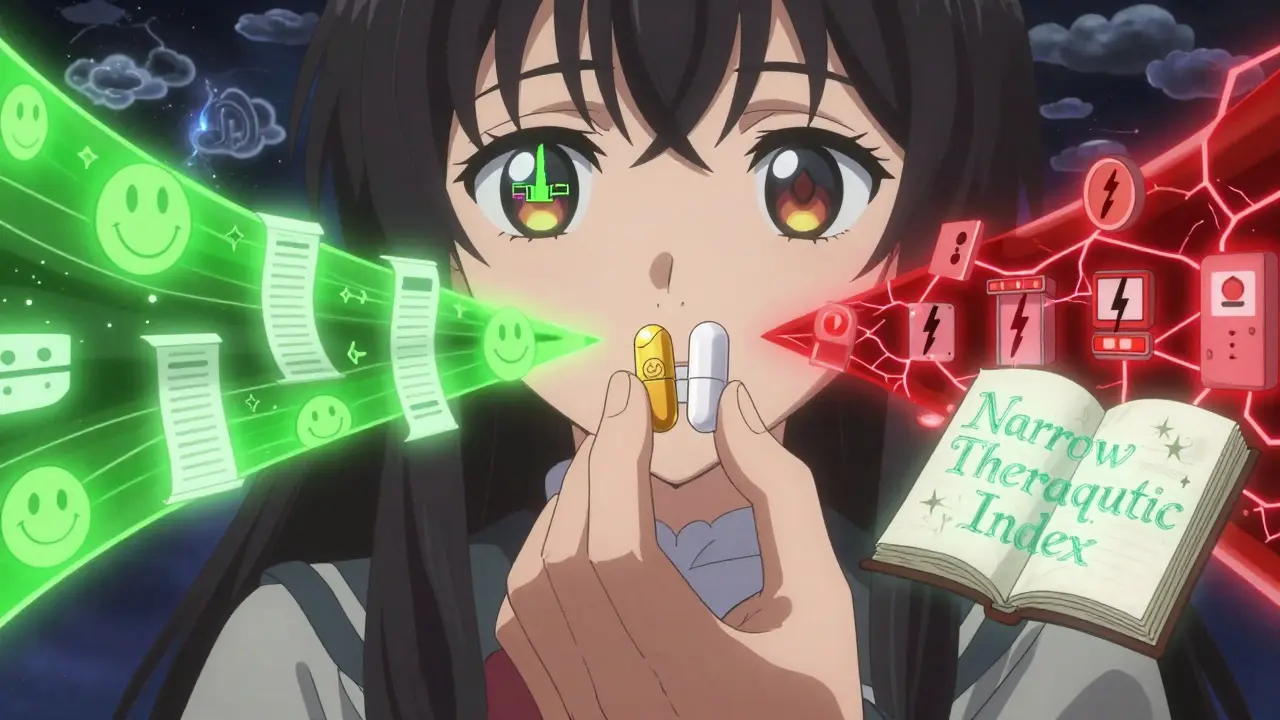
These drugs have a "narrow therapeutic index" - meaning the gap between a helpful dose and a toxic one is tiny. Even a 10% drop in blood levels can cause failure. A 10% rise can cause poisoning. That’s why therapeutic drug monitoring (blood tests) is critical if you’re switching.
What Doctors and Pharmacists Aren’t Telling You
Most clinicians assume the switch is harmless. But research shows they’re often wrong. A 2014 study found that when patients were switched without discussion, adherence dropped. They stopped taking the pills. Or they got scared. Or they had side effects they didn’t understand.One key finding: patients who were told about the switch and given a chance to ask questions were far more likely to stick with the generic. Simple conversations - "This is the same drug, but cheaper. I’ll check in with you in a few weeks." - made all the difference.
And here’s the truth: pharmacists aren’t trained to catch subtle differences in how a drug affects a person. They fill prescriptions. They don’t monitor your seizures, your heart rhythm, or your mood swings. That’s your doctor’s job. But many doctors don’t ask. They assume the system works.

What You Can Do
If you’re on a high-risk medication:- Ask before the switch. Say: "Is this a generic? Can we stick with the brand if it’s been working?"
- Know your pill. Take a picture of your pill. Note the color, shape, and imprint. If it changes, ask why.
- Track your symptoms. Keep a simple log: "On 3/15, I felt dizzy after switching. On 3/22, I had a seizure."
- Request blood tests. If you’re on a narrow-therapeutic-index drug, ask your doctor to check your drug level before and after the switch.
- Know your rights. In most places, you can refuse a generic substitution. Just say: "I need the brand-name version for medical reasons."
And if you’ve been switched and feel off - don’t ignore it. Don’t assume it’s "just in your head." It might be your drug level dropping.
The Bigger Picture
Generics save the U.S. healthcare system $370 billion a year. That’s huge. But savings shouldn’t come at the cost of safety. The FDA’s 2023 draft guidance now recommends extra testing for generics of drugs like antiepileptics. That’s progress. But it’s not enough.The real problem isn’t the science. It’s the system. We treat drug substitution like a vending machine: insert cash, get pill. But for some people, it’s not a vending machine. It’s a life-support system.
The data is clear: for most, generics are safe. For some, they’re not. The difference isn’t in the chemistry. It’s in the care.
Don’t let cost savings silence your body. If something feels off after a switch - speak up. Your health isn’t a line item on a balance sheet.
Are generic drugs always as effective as brand-name drugs?
For most medications, yes - generics work just as well. The FDA requires them to deliver the same active ingredient at the same rate and amount as the brand. But for drugs with a narrow therapeutic index - like antiepileptics, warfarin, or digoxin - even small differences in absorption can lead to treatment failure or side effects. Clinical studies show that some patients on generics for these drugs have lower blood levels or more seizures, hospital visits, or adverse reactions.
Why do some people switch back from generic to brand-name drugs?
Many patients switch back because they experience new or worsening symptoms - seizures, dizziness, mood changes, or fatigue - after the switch. Studies show that up to 12.8% of patients on generics eventually return to the brand-name version. In epilepsy, for example, 48.6% of patients who had breakthrough seizures after switching had lower drug levels than when they were on the brand. Often, it’s not that the generic is "bad" - it’s that their body responded differently to the change.
Can pharmacists switch my brand-name drug to a generic without asking me?
In 49 U.S. states, yes - unless your doctor writes "dispense as written" or you specifically opt out. Pharmacists are legally allowed to substitute generics unless instructed otherwise. Many patients don’t know they have this right. If you’re on a critical medication, always ask whether a generic will be dispensed and whether you can refuse it.
Should I get a blood test after switching to a generic?
If you’re on a drug with a narrow therapeutic index - such as levetiracetam, phenytoin, warfarin, or digoxin - yes. Blood level monitoring before and after the switch can catch dangerous drops or spikes in concentration. Even if you feel fine, a change of 10-20% in drug levels can mean the difference between control and crisis. Ask your doctor if therapeutic drug monitoring is appropriate for your medication.
Do generic drugs cost less because they’re lower quality?
No. Generic drugs must meet the same manufacturing standards as brand-name drugs. The difference in cost comes from lower research, marketing, and patent expenses. The active ingredient is identical. But inactive ingredients (fillers, dyes, coatings) can vary, and these sometimes affect how the drug is absorbed - especially in sensitive patients. The issue isn’t quality - it’s variability and individual response.
Is there a way to avoid being switched to a generic without asking?
Yes. Ask your doctor to write "dispense as written" or "no substitution" on your prescription. This legally prevents the pharmacist from switching your drug. You can also request the brand-name version if you’ve had problems with generics in the past. Insurance may require prior authorization, but many plans will approve it for medical necessity.




Comments
Stacie Willhite
February 11, 2026 AT 18:54 PMMy grandma switched to a generic blood pressure pill last year and started fainting at breakfast. No one told her it could happen. She didn’t even know she’d been switched until I checked the bottle. Took three weeks and a doctor’s note to get her back on the brand. Don’t let cost savings silence your body - I mean it.
Stephon Devereux
February 12, 2026 AT 15:09 PMThe real issue isn’t generics - it’s the lack of follow-up. Doctors prescribe, pharmacists dispense, and patients are left in the dark. If you’re on warfarin or levetiracetam, you need a plan: baseline blood test, symptom log, 2-week check-in. That’s not extra work - that’s standard care. We treat diabetes like this. Why not epilepsy or heart failure?
Generics aren’t the enemy. The system is. We treat meds like cereal - grab a box, pour, go. But for some, it’s a life-support system. A 10% dip in concentration can mean a seizure. Or a stroke. Or death.
Jason Pascoe
February 12, 2026 AT 22:54 PMAs an Aussie, I’ve seen this play out in our public system. We push generics hard - and for good reason. But we also have mandatory monitoring for drugs like phenytoin and cyclosporine. No exceptions. It’s not about trust - it’s about data. If your body reacts differently, you get tested. Not blamed. Not ignored. Just monitored.
Why don’t we do that here? Because it costs money. And we’ve decided that for most people, the risk is worth it. But for the 5%? They’re just collateral.
steve sunio
February 14, 2026 AT 01:51 AMgeneric drugs are just brand name with cheaper fillers and the same active ingredient so its all a scam the fda is in bed with big pharma and the pharmas are just trying to make you dependent on their overpriced pills
Robert Petersen
February 15, 2026 AT 04:26 AMMy cousin’s a pharmacist in Ohio. She says 70% of patients don’t even know they’ve been switched. She tries to flag it - but if the script doesn’t say "do not substitute," she’s legally bound to swap. She’s frustrated. We’re all frustrated. But the fix isn’t to ban generics - it’s to require a patient notification sticker. Like a warning label. "This is a generic. Monitor for changes. Talk to your doc." Simple. Human.
Neha Motiwala
February 16, 2026 AT 00:59 AMI switched to generic levetiracetam and had a seizure in the shower. My husband found me on the floor. They told me it was "just stress." But my blood level was 30% lower than before. Now I’m on the brand again. My insurance won’t cover it. So I’m paying $800 a month out of pocket. And they call this healthcare?
Craig Staszak
February 16, 2026 AT 09:58 AMI've been on generic lisinopril for 8 years no issues but I know people who switched and ended up in the hospital so its a gamble really but for most its fine just dont be lazy and monitor yourself if you feel off its probably not in your head
athmaja biju
February 17, 2026 AT 11:29 AMIndia produces 60% of the world's generics and we do it better than anyone. If you're having issues with your generic, it's not the drug - it's the pharmacy. American pharmacies cut corners. In India, we test every batch. You want safety? Go Indian. Or at least demand batch testing. This isn't about nationalism. It's about science.
Rachidi Toupé GAGNON
February 18, 2026 AT 03:10 AMGenerics? More like "guess-tics" 😅 I’ve had pills change color 3 times in 6 months and still no one told me why. One time I thought I was on my epilepsy med - turned out I was on a weight-loss supplement. My brain was like "whoa, what’s this buzz?" 🤯 Bottom line: if your pill looks different, ASK. Don’t assume. Don’t panic. Just ask.
Vamsi Krishna
February 19, 2026 AT 08:03 AMYou think this is bad? Try living in a country where you get a different generic every month because the government keeps changing suppliers. I’ve been on the same epilepsy drug for 12 years. I’ve had 7 different generics. My EEG looks like a Jackson Pollock painting. My therapist says I’m traumatized. I say I’m just tired of being a lab rat. No one listens. No one cares. Until you have a seizure in front of your kid. Then suddenly, someone asks if you’re okay.
Stacie Willhite
February 20, 2026 AT 22:22 PMReading this, I’m reminded of my mom. She’s on levothyroxine. She didn’t notice the switch until her hair started falling out. Her doctor said it was "aging." We pushed back. Blood test showed her TSH was off the charts. Switched back. Hair grew back in 4 months. She’s still on the brand. Insurance fights it every time. But she’s alive. And that’s worth more than a copay.
andres az
February 22, 2026 AT 15:28 PMThe FDA’s 80-125% window is a joke. That’s a 45% swing. Imagine if your insulin dose could vary that much. Or your chemo. But no - we let pharmacists gamble with people’s lives because it’s cheaper. And the real kicker? The same companies that make the brand-name drugs often make the generics. So it’s not about cost. It’s about control.
alex clo
February 23, 2026 AT 16:43 PMThe data is clear: for the vast majority, generics are safe and effective. The problem isn’t the science - it’s the implementation. We need mandatory patient education at the pharmacy counter. A one-page handout. A simple checklist: "Did you notice changes in mood, energy, or symptoms? Have you been tested?" This isn’t about distrust. It’s about responsibility. We can do better. We must.