
Feverfew & Anticoagulant Safety Checker
Disclaimer: This tool is for educational purposes only. It is not a substitute for professional medical advice. Always consult your doctor before starting or stopping any supplement.
| Key Risk | Primary Cause | Critical Warning |
|---|---|---|
| Increased Bleeding | Antiplatelet effect of parthenolide | Stop 2-3 weeks before surgery |
| Drug Metabolism | CYP450 enzyme inhibition | May increase warfarin levels |
| Withdrawal | Post-feverfew syndrome | Taper dosage; do not stop abruptly |
Why Feverfew Affects Your Blood Clotting
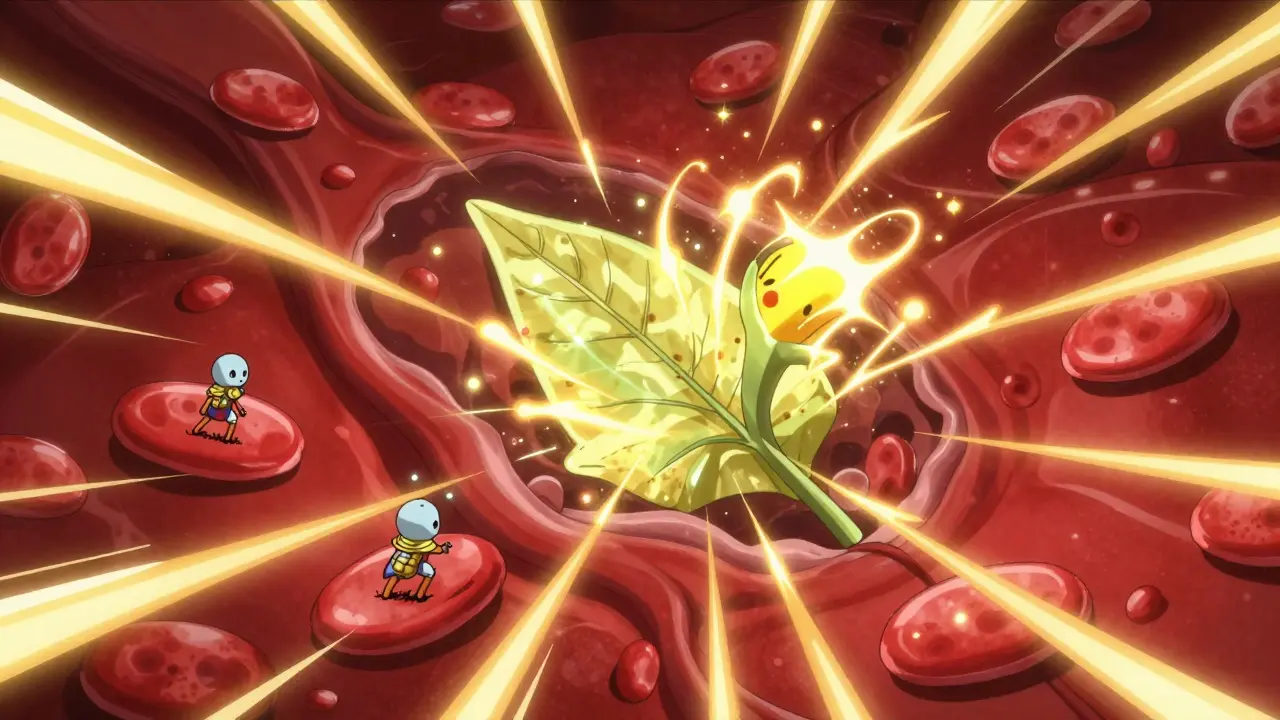
To understand the risk, we have to look at the chemistry. The heavy hitter in feverfew is a compound called parthenolide, which is the primary active sesquiterpene lactone that inhibits serotonin-induced platelet aggregation. In simpler terms, it stops your platelets-the tiny cells that plug leaks in your blood vessels-from sticking together when serotonin is present. If you're already taking a medication to prevent clots, adding parthenolide is like adding more fuel to the fire.
It's not just about the platelets, though. Feverfew also messes with your liver's cleanup crew. It inhibits several cytochrome P450 enzymes, specifically a group of enzymes (including CYP3A4 and CYP2C9) responsible for metabolizing most drugs in the body. Because these enzymes break down many anticoagulants, feverfew can cause the medication to stay in your system longer and at higher concentrations. For someone on warfarin, this could theoretically increase the drug's plasma concentration by up to 22%, making your blood much thinner than your doctor intended.
The 'Few Gs' and Your Risk Profile
In medical school, many students learn a mnemonic called the "Few Gs." This is a shortcut to remember herbs that increase bleeding risk: feverfew, ginger, ginkgo biloba, garlic, and ginseng. But not all "Gs" are created equal. Unlike ginkgo biloba, which has a long list of documented cases causing a spike in INR (International Normalized Ratio), feverfew's risk is often seen as more theoretical-until it isn't.
A striking case reported by the NIH involved a 36-year-old woman who developed abnormal coagulation. Her prothrombin time (PT) jumped to 27.3 seconds (where 11-16 is normal), and her hemoglobin dropped to 10 g/dL. The most alarming symptom? Disproportionate vaginal bleeding. The scary part is that her blood markers didn't return to normal until she had been off the supplement for four full months. This shows that feverfew isn't something that just "washes out" of your system in a few days.
Comparing Feverfew to Other Blood-Thinning Herbs
If you're choosing between supplements, it's important to know how feverfew stacks up against its cousins. While herbs like dong quai contain coumarin derivatives that directly mimic the action of some anticoagulants, feverfew works primarily by blocking the serotonin pathway. This means it has a more targeted effect, but it comes with its own set of complications.
| Herb | Mechanism | Surgery Stop-Date | Risk Level |
|---|---|---|---|
| Feverfew | Serotonin-platelet inhibition | 14-21 Days | Moderate |
| Ginkgo Biloba | Platelet Activating Factor (PAF) | 14 Days | High |
| Garlic | Allicin-based antiplatelet | 7 Days | Moderate |
| Ginseng | Complex interaction | 7 Days | Low/Moderate |
Warning Signs: When to Call Your Doctor
How do you know if your supplement is interacting with your medication? You have to look for the small things before they become big problems. Some users in online communities like r/herbalremedies have reported that their nosebleeds, which usually lasted 10 minutes, suddenly stretched to 45 minutes after starting feverfew alongside low-dose aspirin. That's a red flag.
Keep an eye out for these signs:
- Unexpected Bruising: Large bruises from minor bumps that wouldn't normally leave a mark.
- Prolonged Bleeding: Small cuts or gums that bleed significantly longer than usual.
- Epistaxis: Frequent or unusually long-lasting nosebleeds.
- Internal Signals: For women, unusually heavy menstrual flow or unexpected vaginal bleeding.
Also, be careful about how you take it. While capsules are generally safer, chewing fresh feverfew leaves can cause mouth sores and oral inflammation in about 11% of users. If you're seeing ulcers in your mouth and you're on a blood thinner, those sores might bleed more than they should.
The Danger of Quitting Cold Turkey
You might think, "I'll just stop taking feverfew immediately to be safe." Stop right there. Doing this can trigger what's known as "post-feverfew syndrome." This is a withdrawal reaction that can make your recovery from a surgery or a medication change much more stressful.
Research shows that nearly 41% of people who stop abruptly experience return-of-migraine headaches. Even more frustrating are the physical symptoms: 87% of case reports mention muscle stiffness, and about 73% report increased anxiety. To avoid this, the clinical consensus is to taper your dose over 2 to 3 weeks. This allows your body to adjust while slowly letting the antiplatelet effects wear off.
Pre-Surgery and Medication Protocols
If you have a surgery scheduled, the clock is ticking. The American Society of Anesthesiologists suggests stopping feverfew at least 14 days before your procedure. However, if you're undergoing a high-risk surgery-like brain or spinal surgery-you should aim for 21 days. Because feverfew stays in the system longer than something like garlic, a shorter window could lead to complications on the operating table.
For those starting a new anticoagulant or platelet therapy, the protocol is similar. You should taper and then completely discontinue feverfew 2-3 weeks before the first dose of the new medication. If you're already on a thinner and want to start feverfew, your doctor should establish a baseline using PT/INR and PTT tests, then monitor those levels every two weeks for the first month to ensure your blood doesn't get too thin.
Can I take feverfew with aspirin?
While there are few formal clinical trials, anecdotal evidence and the antiplatelet properties of parthenolide suggest an additive effect. Many users report increased bruising and longer nosebleeds when combining the two. It is best to consult a doctor to avoid excessive thinning of the blood.
What is the safest form of feverfew for those on anticoagulants?
Encapsulated forms are generally preferred over fresh leaves because they avoid oral ulcerations. Some future standards suggest formulations with less than 0.2% parthenolide may be safer for those on blood thinners, but currently, any form requires medical supervision.
How long does it take for feverfew to leave my system?
Unlike some herbs that clear in 72 hours, feverfew can have long-lasting effects. In one documented case, it took four months for coagulation parameters to fully normalize after the supplement was stopped.
Does feverfew interact with apixaban (Eliquis)?
Research is currently ongoing. A 2023 multicenter clinical trial is specifically looking at the interaction between feverfew and apixaban in healthy volunteers. Until those results are fully analyzed, a cautious approach is recommended.
What are the symptoms of post-feverfew syndrome?
Stopping feverfew abruptly can lead to insomnia (32%), joint pain (27%), nervousness (24%), and a significant return of headaches (41%), along with muscle stiffness and anxiety.
Next Steps for Safety
If you are currently taking both feverfew and an anticoagulant, don't panic and stop immediately-that could trigger the withdrawal syndrome mentioned above. Instead, schedule an appointment with your healthcare provider to get a baseline PT/INR test. Be honest about the exact dosage and formulation you're using.
If you're a caregiver for an elderly patient, check their supplement cabinet for any "migraine relief" or "natural inflammatory" blends. Many of these contain feverfew as a secondary ingredient, which could explain a sudden, mysterious increase in bruising or a spike in their blood-thinning medication levels.
Categories
tag
- online pharmacy
- generic drugs
- drug interactions
- bioequivalence
- generic substitution
- medication adherence
- erectile dysfunction medication
- side effects
- medication safety
- adverse drug reactions
- generic medications
- FDA MedWatch
- medication errors
- Tadalafil
- drug safety monitoring
- blood thinners
- drug side effects
- benzodiazepines
- pharmacist substitution
- narrow therapeutic index





Comments
mimi clouet
April 13, 2026 AT 01:51 AMOmg this is so important!! 🌸 Most people don't realize that "natural" doesn't always mean "safe" and the CYP450 enzyme part is literally the most critical bit for anyone on meds 💊✨
Clint Humphreys
April 13, 2026 AT 12:57 PMIt's funny how they present this as a "medical warning" when it's really just another way for Big Pharma to keep us terrified of anything that grows in the ground so we keep paying for those expensive synthetic anticoagulants that they control the patent on anyway and they'll probably tell you that the post-feverfew syndrome is just a way to keep you dependent on the system while they hide the real data about how these plants actually regulate the body's homeostasis without the need for a chemical cocktail developed in a lab in New Jersey
Billy Wood
April 14, 2026 AT 23:18 PMStay safe everyone!!! Always talk to your doctor first!!!
Anurag Moitra
April 15, 2026 AT 08:52 AMThe mention of the "Few Gs" mnemonic is quite helpful for those of us in the healthcare field to ensure patient safety during medication reconciliation
Shaylia Helland
April 16, 2026 AT 12:08 PMi honestly think it is so wild how we just walk into health food stores and grab things without knowing they might interact with our prescription meds and i've seen so many people just assume that if it comes in a brown bottle with a leaf on the label it's basically just a vitamin and cannot possibly cause a major bleeding event or mess with their liver enzymes but then you read about someone's nose bleeding for forty five minutes and it really puts the whole risk into perspective for those of us who are just trying to manage chronic pain naturally
Haley Moore
April 16, 2026 AT 16:31 PMUgh, imagine actually chewing the leaves like some peasant 🙄 just get the capsules and stop complaining about mouth sores 💅✨
Jasmin Stowers
April 17, 2026 AT 08:31 AMgood point about the tapering. stopping cold turkey sounds rough
Ikram Khan
April 18, 2026 AT 01:39 AMWhoa!! That 36-year-old woman's case is absolutely terrifying! 😱 Four months to normalize?? That's insane!!
Brooke Mowat
April 18, 2026 AT 08:29 AMnature is so mysterious and powerfull but we gotta be carful with how we use it in this concrete jungle. it's like a dance between the earth and the chem lab and we just gotta find the right rhythm so we dont end up bleedin' out over a migraine remedy 🌿✨
john chiong
April 19, 2026 AT 03:21 AMabsolutely scandalous that people think they can play doctor with weeds and then act shocked when their blood turns to water it's sheer negligence
Clare Elizabeth
April 20, 2026 AT 18:53 PMlets just focus on the positive that we have this info now!! keep shining and stay healthy everyone!!
Sam Dyer
April 22, 2026 AT 04:38 AMOnly a complete moron would ignore a 21-day surgery window 🤡 this stuff is basic biology and if you can't handle a taper you're just weak. Typical of people today to want the magic pill without reading the manual - get your act together before you end up as a leak on a surgical table :P