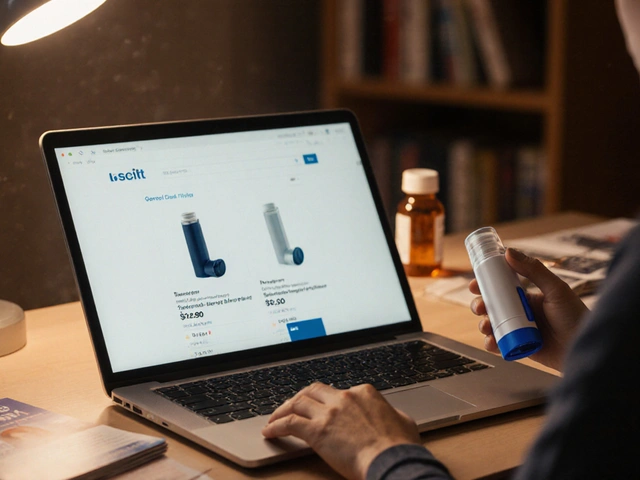
Imagine paying $10 for a medication that used to cost $100, without sacrificing a single bit of quality or effectiveness. That is the core promise of generic drugs is a pharmaceutical product that contains the same active chemical substance as a proprietary brand-name drug, becoming available after the original patent expires. While the packaging and the name on the bottle change, the medicine inside does the exact same job in your body.
The bottom line on generics
- They use the same active ingredients, strength, and dosage form as brand-name drugs.
- They are significantly cheaper because manufacturers don't have to repeat expensive clinical trials.
- Regulatory bodies like the FDA ensure they are bioequivalent, meaning they work in the body the same way.
- Some "narrow therapeutic index" drugs require closer monitoring when switching.
What exactly is a generic drug?
When a company develops a new medicine, they get a patent. This gives them exclusive rights to sell it for a set time-usually 20 years from the filing date, as per the TRIPS Agreement. This high cost of entry is why brand-name drugs are so expensive; the company needs to recover the billions spent on research and development.
Once that patent expires, other companies can apply to make a generic version. In the US, this process was streamlined by the Hatch-Waxman Act of 1984. This law created the Abbreviated New Drug Application (or ANDA), which allows generic makers to skip the animal and human trials that the original company already completed. They only need to prove the generic is the same as the original.
The core characteristics: How they match up
A generic drug isn't just "similar"-it's designed to be a mirror image of the original in the ways that actually matter for your health. To get approval, a generic must be identical in several key areas:
- Active Ingredients: The chemical that treats the condition must be the same.
- Strength: If the brand is 50mg, the generic must be 50mg.
- Dosage Form: A tablet cannot be replaced by a liquid unless specifically approved.
- Route of Administration: If the original is an injection, the generic must be an injection.
You might notice the pill is a different color or shape. This is because of trademark laws-generics aren't allowed to look exactly like the brand-name version. While the inactive ingredients (excipients) like binders, flavors, or dyes might differ, they cannot change how the drug works in your system.
The science of bioequivalence
The most technical part of the approval process is proving bioequivalence. This is the fancy way of saying the drug gets into your bloodstream at the same rate and in the same amount as the brand name.
The FDA uses strict math to verify this. They look at the "Area Under the Curve" (AUC) and the "Maximum Concentration" (Cmax). Basically, for a drug to be approved, the 90% confidence interval for these values must fall between 80% and 125% of the brand-name drug's performance. If it falls outside this window, the drug isn't considered bioequivalent and can't be sold as a generic substitute.
| Feature | Brand-Name Drug | Generic Drug |
|---|---|---|
| Active Ingredient | Original patented formula | Identical to original |
| Clinical Trials | Full preclinical & clinical studies | Bioequivalence studies only |
| Manufacturing Standard | cGMP Compliant | cGMP Compliant |
| Price | Higher (covers R&D costs) | Lower (usually 80-85% less) |
| Appearance | Unique trademarked look | Different color/shape |
Why are generics so much cheaper?
It’s a common myth that generics are cheaper because they are made with lower-quality ingredients. In reality, the price drop is purely an economic shift. The original company spent an average of $2.6 billion to bring a drug to market. Once the patent is gone, the generic manufacturer doesn't have that massive debt. They don't have to run years of trials or spend millions on initial marketing.
Competition also drives the price down. When one company releases a generic, prices drop. When five or more companies compete, the price can plummet to as little as 9% of the original brand price. This is why generics now make up about 90% of all prescriptions filled in the US, while only accounting for a small fraction of the total cost.
Are there any exceptions or risks?
For 99% of medications, the switch is seamless. However, there is a small group called narrow therapeutic index drugs. These are medicines where a tiny difference in dose can lead to a big difference in how the patient reacts. Examples include warfarin (a blood thinner) or levothyroxine (for thyroid issues).
Because these drugs are so sensitive, switching from a brand name to a generic (or between two different generic manufacturers) can occasionally cause a shift in the drug's effect. In these specific cases, doctors usually monitor the patient more closely during the transition to make sure the dosage remains stable.
Biosimilars: A different kind of generic
It is important to distinguish between traditional generics and biosimilars. Standard drugs are made from chemicals (small molecules) that are easy to copy exactly. Biologics, however, are made from living cells and are far more complex.
You can't make an "identical" copy of a living cell product. Instead, the FDA approves biosimilars if they are "highly similar" and have no clinically meaningful differences in safety or effectiveness. Because they are harder to make, biosimilars aren't as cheap as traditional generics, usually offering a 20-30% discount rather than the massive 80% drop we see with chemical drugs.
The road to your pharmacy shelf
The journey from a patent expiry to your pharmacy involves several strict steps. First, the manufacturer submits an ANDA with detailed chemistry and manufacturing controls. Then, they conduct bioequivalence studies, usually with 24 to 36 healthy volunteers, to prove the drug reaches the blood correctly.
The FDA doesn't just trust the paperwork; they perform thousands of unannounced inspections every year to ensure facilities follow Current Good Manufacturing Practices (cGMP). These inspections check 177 different quality parameters. If a factory in India or China doesn't meet the same standards as a plant in New York, the drug doesn't get approved.
Do generic drugs take longer to work than brand names?
No. Because of bioequivalence requirements, generic drugs must deliver the active ingredient into your bloodstream in the same amount of time as the brand-name drug. They are designed to have the same onset and duration of action.
Why does my generic pill look different from the original?
Trademark laws prevent generic manufacturers from making their pills look exactly like the brand-name version. This is why you'll see different colors, shapes, or markings, even though the active medicine is identical.
Are generic drugs safe if they are made overseas?
Yes, provided they are FDA-approved. The FDA conducts thousands of inspections globally to ensure that any facility producing drugs for the US market adheres to the same cGMP (Current Good Manufacturing Practices) regardless of location.
Can my pharmacist switch my drug to a generic automatically?
In most US states, yes, unless your doctor explicitly writes "dispense as written" on the prescription. This is part of state substitution laws designed to save patients money.
What happens if I can't find the generic version of my medicine?
Drug shortages can happen due to manufacturing issues or supply chain disruptions. If a generic is unavailable, your pharmacist may suggest an "authorized generic" (a generic version sold by the original brand company) or consult your doctor for an alternative.


Comments
Goodwin Colangelo
April 4, 2026 AT 04:27 AMJust a heads up for anyone switching, always tell your pharmacist if you have a preference for a specific manufacturer. Sometimes the filler ingredients can mess with your stomach even if the active drug is the same. Just a little tip to keep things smooth.
Will Baker
April 4, 2026 AT 16:10 PMOh sure, let's just trust that the 80% to 125% window is 'close enough' for everyone. I love how we just accept these arbitrary numbers and pretend it's perfectly safe for every single human body. Truly fascinating logic.
Divine Manna
April 5, 2026 AT 12:55 PMThe intellectual dishonesty of assuming a generic is identical simply because the active moiety is the same is staggering. One must consider the pharmacokinetics of the excipients, which are often overlooked by the layman. The nuance of bioavailability is not a mere suggestion but a complex chemical reality that determines the efficacy of the therapeutic intervention. To suggest that a pill's color is the only meaningful difference is a reductionist fallacy of the highest order. We are dealing with stochastic biological systems, not simple Lego blocks. The interplay between the drug delivery system and the gastric environment is where the actual battle is fought. Most people lack the foundational chemistry knowledge to understand why a slight variance in the binder can alter the dissolution rate. It is an exercise in mediocrity to accept the status quo without questioning the rigorousness of the ANDA process. True medical excellence requires an adherence to the gold standard of the original formulation. Anything less is a gamble with one's own physiology. The systemic failure to educate the public on the subtleties of bioequivalence is a tragedy of modern medicine. We have traded precision for profit under the guise of accessibility. It is high time we stop pretending that a generic is a perfect mirror image.
Joseph Rutakangwa
April 5, 2026 AT 22:10 PMgood info keep it simple
The Charlotte Moms Blog
April 6, 2026 AT 06:33 AMAbsolutely ridiculous!!! Who cares about the ANDA process when my kid has a reaction to a generic??? The lack of transparency is appalling!!!!
Rob Newton
April 7, 2026 AT 17:03 PMBioequivalence is a joke.
Joey Petelle
April 8, 2026 AT 09:53 AMImagine thinking some lab in a jungle is doing the same job as our glorious US plants. Please, tell me more about how these "standards" are the same while our economy is basically funding the whole game. Absolute joke.
HARSH GUSANI
April 9, 2026 AT 15:36 PMIndia makes the most medicines for the world and we are the best at it! 🇮🇳 You people just hate that we are cheaper and better! 💊💪
sophia alex
April 9, 2026 AT 20:53 PMUmm, as someone with actual standards, I only use brand name. Generics are for people who don't care about their aesthetic or prestige 🙄💅
Sakshi Mahant
April 10, 2026 AT 06:46 AMIt is wonderful to see the focus on affordability. In India, we have a very strong generic industry that helps millions of people access life-saving medicine who otherwise could not afford it.
Dipankar Das
April 10, 2026 AT 18:16 PMI must insist that we recognize the absolute brilliance of the Indian pharmaceutical sector! It is an objective fact that we lead the world in providing affordable healthcare options through rigorous generic production!
Beth LeCours
April 11, 2026 AT 15:53 PMtoo long didnt read
Hope Azzaratta-Rubyhawk
April 12, 2026 AT 15:21 PMWe must push for even more generics to break the monopoly of these greedy big pharma companies! It is the only way to ensure everyone gets their fair share of health!
angel sharma
April 13, 2026 AT 02:10 AMI truly believe that the shift toward generic medication is one of the most positive developments in global health history because it allows the underprivileged to finally breathe a sigh of relief knowing they can afford their monthly prescriptions without choosing between medicine and food for their families!
Dee McDonald
April 14, 2026 AT 17:54 PMLet's get fired up about this! Who else has successfully switched to generics and saved a ton of money? Tell us your wins!