Gut Microbiome Medication Impact Checker
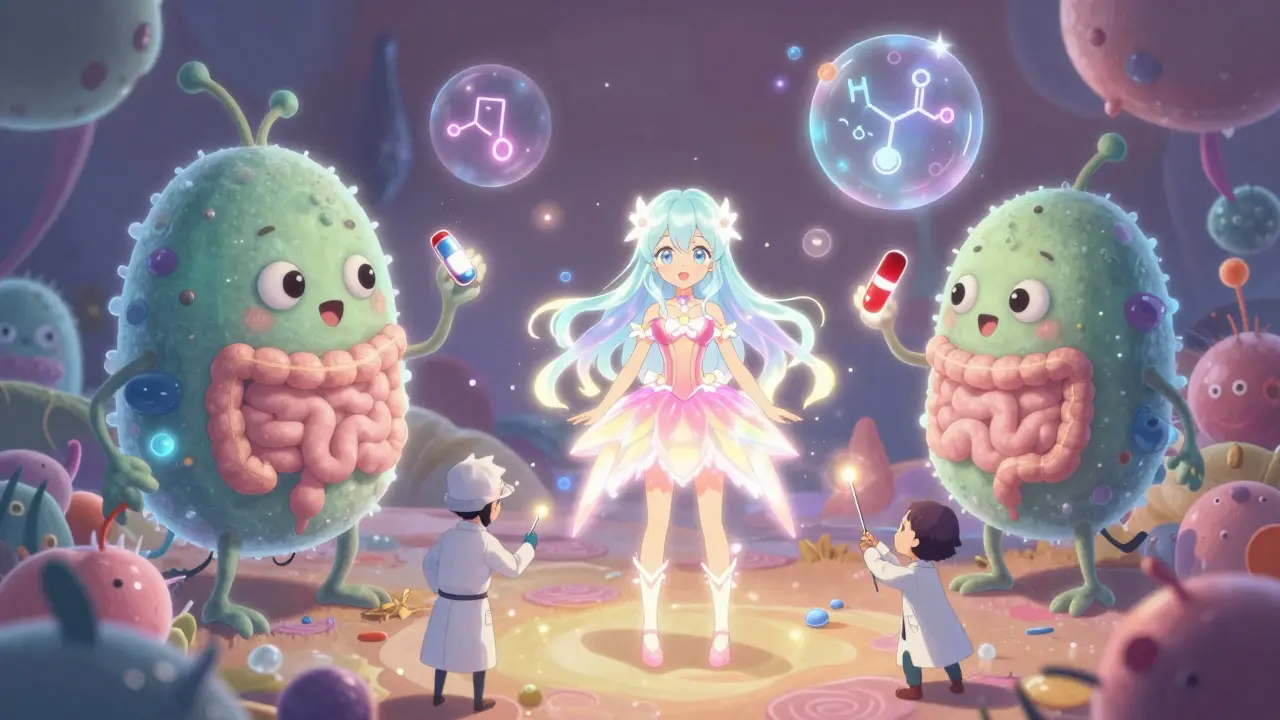
This tool helps you understand how your gut microbiome might be affecting your medication. Based on the latest research, different gut bacteria can transform drugs into active or toxic forms.
Results
Have you ever taken a medication that worked perfectly for someone else but left you feeling awful? You weren’t alone. For years, doctors assumed side effects were just bad luck - a matter of individual tolerance or dosage. But now we know something deeper is going on: your gut bacteria are actively changing how drugs work in your body. And in some cases, they’re turning safe medications into toxic ones.
What You Don’t Know About Your Gut Bacteria
Your gut is home to trillions of bacteria - more than the number of human cells in your body. These microbes don’t just help digest food. They’re chemical factories. And they’re constantly interacting with the drugs you take. A landmark 2019 study from Yale showed that gut bacteria transform at least three common drugs into harmful compounds, accounting for 20% to 80% of the toxic metabolites found in patients’ blood. That’s not a side note. That’s the main reason some people get sick from medications others handle fine.This isn’t theory. It’s measurable. In mice engineered to lack drug-transforming bacteria, toxic metabolite levels dropped by 55% to 82%. In humans, researchers found that 73% of the toxic byproduct from a certain antiviral drug came directly from gut microbes. That’s not a minor factor. That’s the dominant source.
How Bacteria Change Drugs
Your body breaks down drugs using liver enzymes. But your gut bacteria? They use completely different tools. They have their own enzymes - enzymes your liver doesn’t have. And they’re good at it. Seven major types of chemical reactions are known to happen in the gut, including:- Hydrolysis - breaking bonds with water
- Deconjugation - stripping off sugar groups
- Reduction - adding electrons to molecules
- Demethylation - removing methyl groups
- Dehalogenation - pulling out chlorine or fluorine atoms
- Acetylation - adding acetyl groups
- Decarboxylation - removing carbon dioxide
One of the most dangerous examples is irinotecan, a chemotherapy drug. After the liver processes it, it becomes a compound called SN-38-glucuronide - which is harmless. But gut bacteria, especially those producing beta-glucuronidase, strip off the sugar group and turn it back into SN-38. That’s the toxic version. It burns through the lining of the intestines. This causes severe diarrhea in 25% to 40% of patients. Studies show the severity of the diarrhea directly links to how much of that enzyme is present - correlation of r=0.87. That’s a very strong link.
Then there’s digoxin, a heart drug. About 30% of people have bacteria called Eggerthella lenta in their gut. These bacteria inactivate digoxin. So if you have them, the drug doesn’t work as well. You might think your dose is too low - but really, your bacteria are neutralizing it.
And it’s not just about toxicity. Some drugs need bacteria to work at all. Prontosil, an early antibiotic, is a prodrug. It’s inactive until gut bacteria break it down and release the real active ingredient, sulfanilamide. Without those bacteria, the drug fails. In antibiotic-treated mice, efficacy dropped from 90% to 12%.

Why This Matters for Real Patients
The implications aren’t abstract. They’re in emergency rooms. In the U.S., over 1.3 million ER visits each year are caused by bad drug reactions. We’ve been blaming patients - “you didn’t take it right,” “you’re sensitive,” “it’s just bad luck.” But now we see: it’s often your microbiome.Take clonazepam, an anti-seizure drug. Germ-free mice (raised without any gut bacteria) had 40% to 60% higher levels of the drug in their blood than normal mice. That means in people with low microbial activity - maybe after antibiotics - the drug could build up to dangerous levels. A dose that’s safe for most could cause dizziness, confusion, or even respiratory depression in others.
Even statins - drugs like lovastatin used to lower cholesterol - are affected. A 2014 study showed long-term antibiotic use cut statin effectiveness by 35%. Why? Because gut bacteria help metabolize and activate the drug. Remove them, and the drug doesn’t work. Patients might think their treatment failed - when really, their microbiome was wiped out.
This explains why two people on the same drug, at the same dose, have totally different experiences. It’s not just genetics. It’s not just liver function. It’s what’s living in your colon.
What’s Being Done About It?
Scientists aren’t just observing - they’re acting. In 2022, the FDA started recommending microbiome interaction studies for drugs with narrow therapeutic windows. The EMA followed in early 2023, requiring microbiome testing for all new cancer drugs. Pfizer and Merck now screen for microbiome effects in Phase I trials. That adds about $2.5 million to development costs - but it saves hundreds of millions by avoiding post-market disasters.Researchers have built a roadmap to test these interactions:
- In vitro screening - Mix fecal samples with drugs in a lab. See which bacteria break them down. Takes 48 hours, needs 3 mL of stool.
- Gnotobiotic mice - Mice raised with known bacteria. Test drug effects in controlled settings. Costs $850-$1,200 per mouse, takes 8 weeks.
- Human trials - Track how drug levels change with microbiome profiles. Requires at least 50 people over 12 weeks.
Diagnostic tools are emerging. Metagenomic sequencing can now identify drug-metabolizing genes in your stool for $300-$500. Accuracy is 95% for known pathways. Fecal transplants cost $3,000-$6,000 but are being tested as a way to reset a patient’s metabolism before chemotherapy.
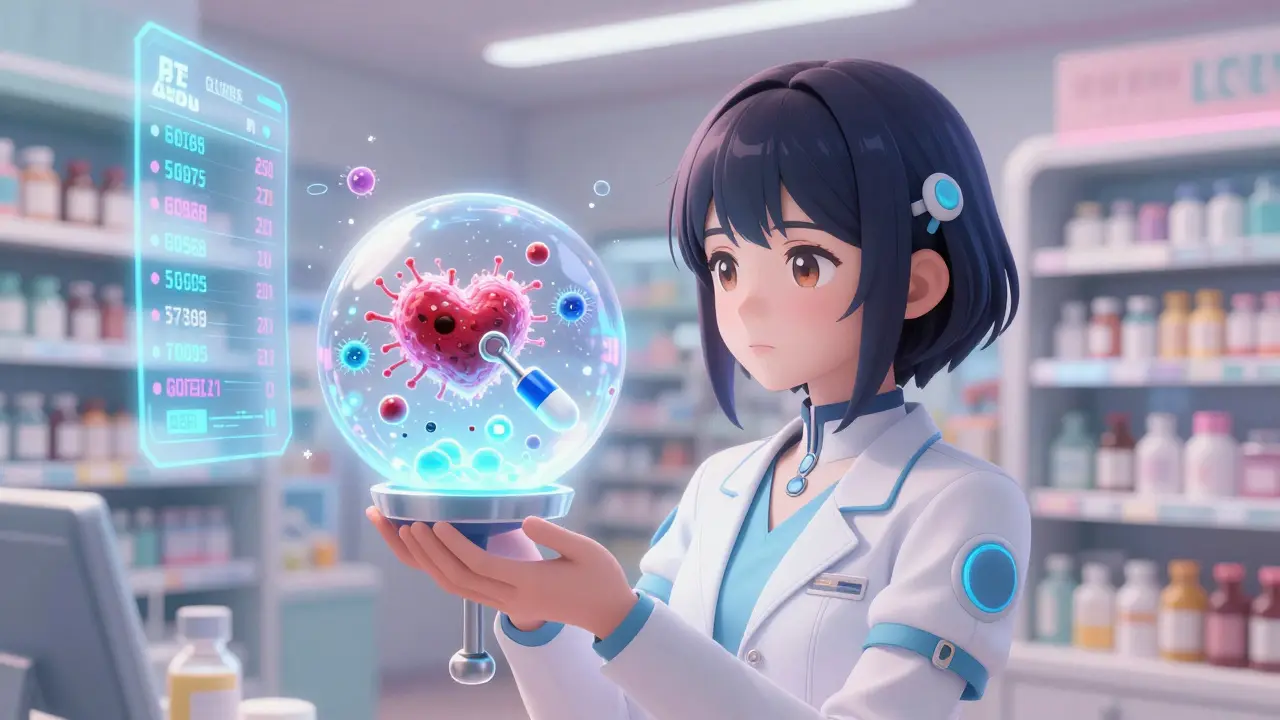
The most promising near-term solution? Beta-glucuronidase inhibitors. These drugs block the enzyme that turns SN-38-glucuronide back into poison. In Phase II trials (NCT04216417), they cut chemotherapy-induced diarrhea by 60%. Imagine: a simple pill you take with your chemo that prevents one of its worst side effects.
The Future: Personalized Medicine Starts in Your Gut
We’re moving toward a future where your drug prescription includes a microbiome profile. Imagine this:- You get a colon cancer diagnosis. Your doctor doesn’t just prescribe irinotecan - they test your stool for beta-glucuronidase levels. If it’s high, they give you an inhibitor alongside the chemo.
- You’re on digoxin. A simple test reveals you have Eggerthella lenta. Your dose is adjusted - or you’re switched to a different drug.
- You’re prescribed a new antidepressant. Your microbiome is known to slow its breakdown. Your doctor starts you on a lower dose.
Personalized probiotics are already in Phase I trials (NCT05102805). These aren’t generic yogurt cultures. They’re engineered strains designed to either block harmful metabolism or boost activation of a specific drug. The NIH has invested $14.7 million into this research between 2023 and 2025. The goal? Reduce adverse drug reactions by 25-35% within five years.
What You Can Do Now
Right now, this isn’t routine. But you can be informed:- If you’ve had recent antibiotics and are on a long-term medication, ask your doctor if your gut bacteria might be affecting it.
- If you’re on chemotherapy and get severe diarrhea, ask whether microbiome testing is available.
- Don’t assume side effects are “just part of treatment.” They might be caused by your gut - and fixable.
The era of “one-size-fits-all” prescriptions is ending. The next leap in medicine isn’t just about new drugs - it’s about understanding the trillions of tiny partners living inside you. They’re not just passengers. They’re pharmacists. And now, we’re finally learning how to talk to them.
Can gut bacteria make my medication less effective?
Yes. Certain gut bacteria can break down or inactivate drugs before they’re absorbed. For example, the bacterium Eggerthella lenta inactivates digoxin, a heart medication. Studies show patients with high levels of this bacteria need higher doses - or a different drug - for the treatment to work. Antibiotics can also wipe out these bacteria, which might unexpectedly increase drug levels and cause toxicity.
Do all people have the same gut bacteria that affect drugs?
No. Gut microbiomes vary wildly between people. One person might have high levels of bacteria that activate a drug, while another has none. That’s why two people on the same dose can have completely different outcomes. Studies show up to 70% of drug-metabolizing bacterial genes are unique to individuals. This variation is why personalized medicine is becoming essential.
Can probiotics help with drug side effects?
Standard probiotics from the store won’t help - they don’t target drug metabolism. But engineered probiotics are being tested right now. In trials, scientists are designing bacteria that either block harmful enzymes (like beta-glucuronidase) or enhance drug activation. These aren’t available yet, but Phase I trials are underway. The goal is to give patients a custom bacterial supplement that protects them from side effects.
Are antibiotics dangerous if I’m on medication?
Yes, in some cases. Antibiotics can wipe out bacteria that help metabolize your drugs. For example, long-term antibiotic use has been shown to reduce the effectiveness of statins by 35%. It can also cause drugs like clonazepam to build up to toxic levels because the bacteria that normally break them down are gone. Always tell your doctor what antibiotics you’ve taken - especially if you’re on a drug with a narrow safety range.
Will doctors test my gut bacteria before prescribing drugs?
Not yet - but they will soon. Oncology is leading the way: over 65% of new cancer drug applications now include microbiome data. Regulatory agencies like the FDA and EMA now recommend testing for drugs that are toxic or have narrow therapeutic windows. In the next 5-7 years, stool tests for drug-metabolizing bacteria will become part of routine prescribing for chemotherapy, heart drugs, and psychiatric medications.


Comments
Tim Schulz
March 13, 2026 AT 08:41 AMOh. My. GOD. 🤯 So my gut is basically a rogue chem lab? I took that chemo last year and thought I was just "sensitive"... turns out my microbiome was staging a coup. 🍿 I’m just here waiting for the Netflix docuseries: Microbiome: The Silent Saboteurs. #GutBetrayal
douglas martinez
March 13, 2026 AT 23:46 PMThis is a profoundly important development in pharmacology. The implications for personalized medicine are not merely theoretical-they are clinically urgent. We must move beyond the assumption that pharmacokinetics are uniform across individuals. The gut microbiome is not a peripheral factor; it is a core variable in therapeutic outcomes. Healthcare systems must adapt accordingly.
Sabrina Sanches
March 14, 2026 AT 11:40 AMThis changed everything for me I never thought my gut could be the reason my meds didn’t work I’ve been on statins for 8 years and now I get why I felt so tired all the time I’m scheduling a stool test this week
Shruti Chaturvedi
March 15, 2026 AT 09:22 AMSo many of us in developing countries don’t even have access to basic meds let alone microbiome testing but this research gives me hope that one day we won’t have to guess what’s wrong with our bodies we just need to make it affordable and accessible
Jimmy V
March 16, 2026 AT 21:53 PMThe FDA’s move is long overdue. If you’re not screening for microbiome interactions in Phase I, you’re gambling with human lives. Statins failing by 35%? Clonazepam toxicity? This isn’t science fiction. It’s negligence. Fix the pipeline now. No more "oops, side effects."
Richard Harris
March 17, 2026 AT 19:01 PMFascinating stuff... i had no idea gut bugs could do this. i’ve been on digoxin for years and always thought my dose was just "off". maybe i’ve got eggerthella lenta lurking in there. gonna ask my doc about testing. thanks for sharing this!
Kandace Bennett
March 18, 2026 AT 13:09 PMAmerica’s medical system is finally catching up to what we’ve known for decades. Europe? Still playing catch-up. 🇺🇸 This is why American science leads. Those FDA guidelines? Pure genius. Meanwhile, other countries are still debating if bacteria even exist. 🤦♀️ #PatriotScience
Jinesh Jain
March 20, 2026 AT 08:31 AMI’ve always thought of my gut as just a digestive tube. Now I see it as a bio-reactor. Wild. I wonder if my kombucha habit affects my meds. Probably not. But still. Mind blown.
Katherine Rodriguez
March 20, 2026 AT 22:01 PMThis is just another way for pharma to make money selling tests and pills to fix pills they made in the first place. Just stop prescribing so many drugs. Eat real food. Stop being lazy. End of story.
Devin Ersoy
March 21, 2026 AT 21:15 PMOh wow, so the real reason your antidepressant didn’t work is because your colon has a vendetta? I’m not surprised. I’ve always said modern medicine is just a pyramid scheme built on placebo effects and gut bacteria sabotage. The real cure? Fasting. Or maybe just moving to a cabin in the woods. Either way, no more pills. 🌲🍃