
PAMORA Selector Tool
Find Your Best PAMORA Option
This tool helps select the most appropriate PAMORA based on your medical condition and kidney function.
Recommendation Will Appear Here
Choose your options above to see personalized PAMORA recommendations
When you're on opioids for chronic pain, cancer, or after surgery, constipation isn't just an inconvenience-it's often a dealbreaker. Up to 80% of patients on long-term opioids develop opioid-induced constipation (OIC), and many stop taking their pain meds because of it. Traditional laxatives? They rarely cut it. Studies show less than 30% of chronic opioid users get consistent relief from stool softeners, fiber, or stimulant laxatives. That’s where peripherally acting mu-opioid receptor antagonists, or PAMORAs, come in. These aren’t just another laxative. They’re the first class of drugs designed to fix the root cause of OIC without touching your pain relief.
How Opioids Cause Constipation
Opioids don’t just block pain signals in your brain. They bind tightly to mu-opioid receptors all over your body-including your gut. Your intestines have a dense network of these receptors, controlling how fast food moves, how much fluid gets absorbed, and how strongly muscles contract. When opioids latch on, they slow everything down. Stool sits longer, water gets sucked out, and things get stuck. It’s not a side effect you can outwork with more water or prunes. It’s a direct, biological blockade.What Are PAMORAs and How Do They Work?
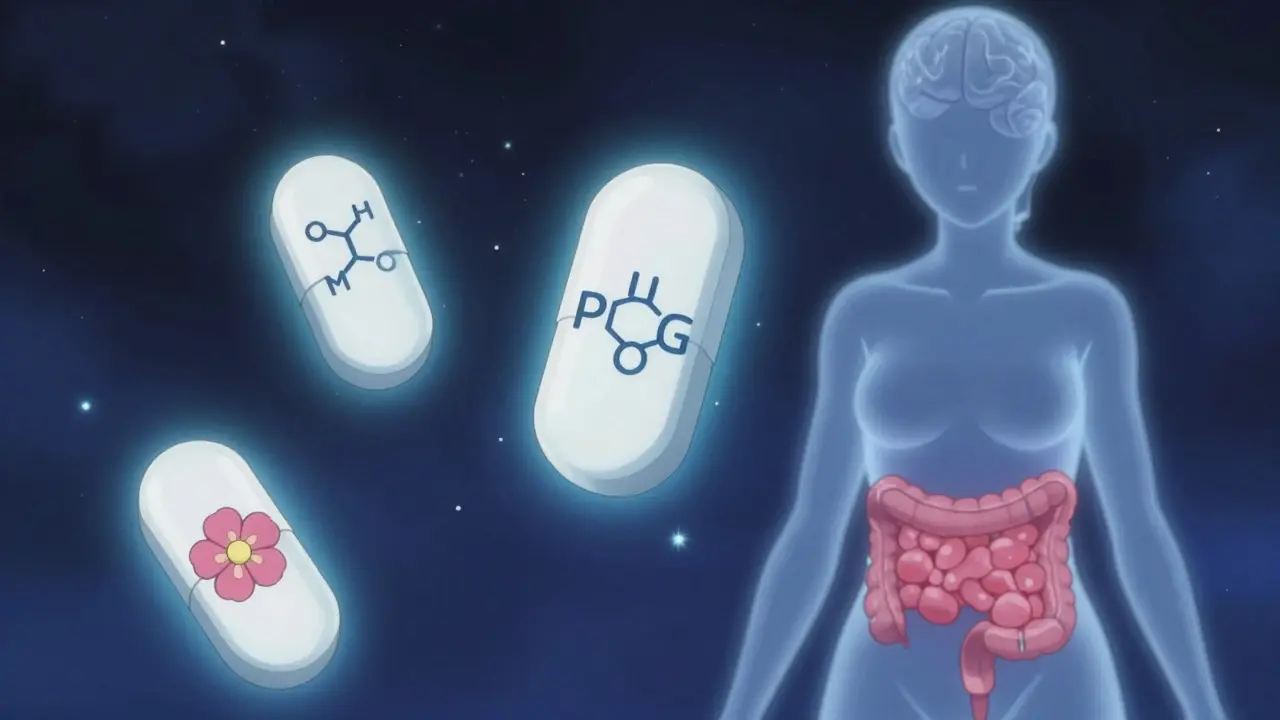
PAMORAs are engineered to block opioid receptors only in the gut. They’re designed not to cross the blood-brain barrier, so they leave your pain control untouched. Think of them as targeted keys that unlock only the gut’s opioid locks-leaving the brain’s locks alone. There are three main PAMORAs approved in the U.S.:- Methylnaltrexone (RELISTOR): A quaternary amine with a molecular weight of 429.32 g/mol. Its charged structure prevents it from entering the brain. Given as a subcutaneous injection or oral tablet.
- Naloxegol (MOVANTIK): A modified version of naloxone with a polyethylene glycol chain. Oral only. Weight: 503.62 Da.
- Naldemedine (SYMPROIC): Also oral, with a PEG chain to keep it out of the brain. Approved in 2017.
None of these are metabolized by the liver’s CYP3A4 system, so they don’t interact badly with most other drugs. That’s a big plus for patients on multiple medications.
How Effective Are They?
Clinical trials show clear results:- Methylnaltrexone: In one trial of 330 patients, 52.4% had a bowel movement within 4 hours after a single dose-compared to just 30.2% on placebo.
- Naloxegol: In the COMPOSE trials (over 1,300 patients), 44.4% had spontaneous bowel movements at 12 weeks, versus 30% on placebo.
- Naldemedine: In the COMPOSE-3 trial, 47.6% responded at 12 weeks, compared to 34.6% on placebo.
These aren’t small gains. For someone who hasn’t had a bowel movement in 5 days, getting one in 4 hours can be life-changing.
Who Gets Which One?
Not all PAMORAs are the same in use:- Methylnaltrexone is the only one approved for both cancer patients in palliative care and those with chronic noncancer pain. It’s also the only one with an injectable form, which is critical for patients who can’t swallow pills or need fast relief.
- Naloxegol is oral-only and requires a lower dose in people with moderate liver problems. Not recommended if kidney function is severely impaired (CrCl under 30 mL/min).
- Naldemedine is also oral-only and generally well-tolerated, but like the others, it’s contraindicated if you have a mechanical bowel obstruction.
Alvimopan (ENTREGOR) is another PAMORA, but it’s only for short-term use in hospitals after bowel surgery. It’s not used for chronic OIC because of heart risks.
Real Patient Experiences
Patient reviews tell a mixed story. On Drugs.com, methylnaltrexone has a 5.8/10 rating, with 38% saying it worked. Naloxegol scores slightly higher at 6.2/10, with 45% reporting effectiveness. The complaints? Abdominal cramping (reported in 32% of negative reviews), and cost.One 67-year-old with osteoarthritis on Healthgrades wrote: “Naloxegol worked for two weeks, then stopped. Cost me $450 a month for nothing.”
But in cancer and palliative care communities, the tone shifts. On Reddit’s r/palliativecare, 65% of 120 respondents said methylnaltrexone “significantly improved quality of life” without hurting pain control. One user said: “Finally able to have regular bowel movements without stopping my pain medication.” That’s the sweet spot PAMORAs were built for.

Cost and Access
Here’s the hard truth: PAMORAs are expensive. Annual cost without insurance? $5,000 to $6,000. Even with coverage, copays can hit $200-$400 per month. That’s why many patients stop using them after a few months.Market data shows methylnaltrexone held 45% of the OIC drug market in 2022, with $1.26 billion in sales. Naloxegol and naldemedine split the rest. But with biosimilars entering phase 3 trials in China, prices could drop in the next 3-5 years.
How to Use Them Right
Timing matters. The best results happen when you take the PAMORA about an hour before your opioid dose peaks. That’s when gut receptors are most active. Many prescribers underdose at first-78% of pain specialists admit to starting too low in surveys.For methylnaltrexone injections: The first dose is usually given in a clinic. After that, patients can self-administer. Oral tablets can be started at home. Dose adjustments are needed for kidney problems: methylnaltrexone requires a 50% reduction if CrCl is under 30 mL/min. Naloxegol is outright not recommended in severe kidney impairment.
It takes 2-3 weeks to find the right dose. Don’t give up after one try. Some patients need a higher dose of methylnaltrexone-Salix Pharmaceuticals got FDA approval in January 2023 for a new 300 mg tablet for those who don’t respond to the standard 450 mg.
What’s Next?
Research is moving fast. The NIH is testing a new combo drug that combines a PAMORA with a 5-HT4 agonist (a gut stimulant). Early results show a 68% response rate-higher than any single agent.The American Gastroenterological Association warns that without price cuts, only 35-40% of eligible patients will ever get access. Meanwhile, non-opioid pain options like gabapentin, duloxetine, and physical therapy are gaining ground, reducing the need for opioids altogether.
But for now, if you’re stuck with opioids and stuck without bowel movements, PAMORAs are the only treatment that targets the actual cause-not just the symptoms. They’re not perfect. They’re not cheap. But for many, they’re the only thing that lets them keep their pain control and still live normally.
Can PAMORAs make my pain worse?
No, not at therapeutic doses. PAMORAs are designed not to cross the blood-brain barrier, so they don’t interfere with pain relief. Early concerns about triggering acute pain crises were based on theoretical models, not real-world data. Large clinical trials have shown no significant drop in pain control when PAMORAs are used correctly.
Why don’t laxatives work for opioid constipation?
Laxatives try to force stool out, but they don’t fix the underlying problem: opioids are slowing down your gut’s natural movement. Stimulant laxatives might give a temporary push, but they don’t restore normal motility. Studies show less than 30% of chronic opioid users get consistent relief from traditional laxatives, while PAMORAs restore natural bowel function in over 45% of patients.
Are PAMORAs safe for long-term use?
Yes, for methylnaltrexone and naldemedine. Long-term studies show they’re well-tolerated over years. Alvimopan is the exception-it’s only approved for short-term hospital use because of increased heart attack risk in prolonged use. All PAMORAs are contraindicated if you have a mechanical bowel obstruction, but for most patients with functional constipation, long-term use is safe and effective.
Which PAMORA is best for cancer patients?
Methylnaltrexone is the only PAMORA approved for both cancer and noncancer patients. Its injectable form is especially valuable for patients who are nauseated, vomiting, or unable to swallow pills. In palliative care settings, it’s the most commonly used and preferred option because it works fast and doesn’t interfere with pain management.
Can I take a PAMORA with other medications?
Yes, generally. Methylnaltrexone isn’t broken down by liver enzymes like CYP3A4, so it doesn’t interact with most pain meds, antidepressants, or blood pressure drugs. Naloxegol and naldemedine have fewer interactions too, but always check with your pharmacist. Avoid combining with other strong laxatives unless directed-overstimulating the gut can cause cramping or diarrhea.




Comments
Herman Rousseau
December 23, 2025 AT 01:13 AMPAMORAs are a game-changer for people stuck between chronic pain and constipation. I’ve seen patients cry tears of relief when they finally poop without stopping their meds. It’s not just about comfort-it’s about dignity. And yeah, the cost sucks, but if you’re one of the 80% who can’t get relief from laxatives, this is the only real solution. Seriously, if your doctor doesn’t mention these, ask for them. No shame.
Tarun Sharma
December 23, 2025 AT 12:32 PMThank you for this detailed overview. The pharmacokinetic distinctions between PAMORAs are clinically significant and often overlooked in primary care.
Art Van Gelder
December 24, 2025 AT 07:44 AMLet me tell you something about the gut-it’s not just a pipe for food. It’s a second brain, wired with opioid receptors like a nervous system all its own. Opioids don’t just dull pain; they turn your intestines into a fossilized tomb. And PAMORAs? They’re like tiny ninjas slipping past the blood-brain barrier, unlocking the gut’s prison without touching the brain’s throne. It’s poetry in pharmacology. The fact that we can now separate pain relief from bowel shutdown? That’s not medicine-that’s evolution. And yet, we still treat it like a side note. Imagine if we gave this same attention to depression or insomnia. We wouldn’t be here talking about $450 pills. We’d be redesigning healthcare.
Jeremy Hendriks
December 25, 2025 AT 16:32 PMAnyone who says PAMORAs are overhyped hasn’t lived through 7 days without a BM while on oxycodone. I’ve tried everything-flaxseed, magnesium, senna, enemas. Nothing worked. Methylnaltrexone? First dose, I was in the bathroom in 3 hours. No pain flare. No brain fog. Just normal. And yeah, it’s expensive-but so is missing your kid’s graduation because you’re too constipated to leave the house.
Vikrant Sura
December 27, 2025 AT 15:31 PMAnother pharma scam. Why not just fix the opioid problem instead of making more drugs to undo it?
jenny guachamboza
December 28, 2025 AT 00:14 AMso like... are u telling me the drugs are designed to NOT go to the brain?? 😱 like... how is that even possible?? also why is it so expensive?? like i get it but like... WHO IS PROFITING?? 💸 #pharmabro #fixtheproblem
Johnnie R. Bailey
December 29, 2025 AT 17:41 PMThere’s a quiet revolution happening here. PAMORAs aren’t just drugs-they’re a redefinition of patient autonomy. For decades, we told people to choose: pain or bowel function. Now we’re offering both. That’s not just pharmacology-it’s ethics. And the fact that methylnaltrexone works for cancer patients who can’t swallow? That’s equity in action. The real tragedy isn’t the cost-it’s that so many clinicians still don’t know these exist. We need mandatory training in pain management residencies. This isn’t niche-it’s standard.
Julie Chavassieux
December 31, 2025 AT 16:22 PMThey’re not perfect. But they’re the best we’ve got. And honestly? After watching my mom suffer through 14 months of this, I’d pay $10,000 a year if it meant she could eat dinner without dreading the next three days.
Jim Brown
January 1, 2026 AT 10:45 AMOne cannot help but reflect upon the metaphysical implications of pharmaceutical intervention: the body as a battlefield, the mind as sovereign, and the gut as the forgotten frontier. To pharmacologically partition the periphery from the central nervous system is not merely a technical triumph-it is an ontological assertion that the self may be divided, yet preserved. The PAMORA, in its elegant molecular architecture, becomes a symbol of modern medicine’s aspiration: to heal without violating. Yet, we must not mistake the tool for the truth. The true cure lies not in antagonizing receptors, but in preventing the need for opioids altogether.
Ajay Brahmandam
January 1, 2026 AT 14:40 PMMy dad’s on naldemedine and it’s been a miracle. He’s 72, has arthritis, and was barely eating because he was so bloated. Now he’s back to his Sunday pancakes. No cramps, no drama. Just normal. The only downside? He forgets to take it sometimes. So we put it on his phone calendar. Simple fix.
Candy Cotton
January 2, 2026 AT 01:19 AMIt's clear that the pharmaceutical industry has engineered this entire market to maximize profit. The fact that these drugs are not available as generics after 10+ years of approval is unconscionable. This is not healthcare-it is corporate exploitation dressed in white coats. The FDA should be ashamed.
Sai Keerthan Reddy Proddatoori
January 3, 2026 AT 11:29 AMWhy are Americans always blaming drugs? In India, we use natural methods: castor oil, triphala, hot water. No $5000 pills. This is what happens when you over-medicalize everything. Western medicine is broken.