
Opioid-Induced Hyperalgesia Risk Assessment Tool
This tool helps assess your risk of developing opioid-induced hyperalgesia (OIH) based on treatment factors. Results are for informational purposes only and should not replace professional medical advice.
Your Risk Assessment
Recommended Actions
What if the very medication meant to relieve your pain is actually making it worse? This isn’t a hypothetical scenario-it’s a real and underrecognized condition called opioid-induced hyperalgesia (OIH). While most people assume that taking more opioids means better pain control, the opposite can happen. Over time, some patients experience a paradoxical increase in pain sensitivity, where even light touches or routine movements become painful. This isn’t tolerance. It’s not the original injury flaring up. It’s your nervous system rewiring itself in response to opioids-and the result is more pain, not less.
How Opioid-Induced Hyperalgesia Works
Opioid-induced hyperalgesia isn’t just a side effect-it’s a neurological adaptation. When you take opioids regularly, especially at high doses or over long periods, your body’s pain-processing system starts to overcompensate. The brain and spinal cord become hyper-responsive to pain signals. This happens because opioids trigger a cascade of chemical changes, especially in the NMDA receptors, which are normally involved in learning and memory but also play a key role in amplifying pain.Here’s what’s happening inside your nerves: Opioids bind to μ-receptors, which then activate nitric oxide and protein kinase C pathways. These molecules crank up the activity of NMDA receptors, making neurons more excitable. As a result, pain signals get louder, spread farther, and last longer. What used to be a dull ache in your lower back might now feel like burning pain radiating down your leg-even if the original injury has healed.
This isn’t just theory. Animal studies from the 1970s showed rats given repeated morphine injections became more sensitive to heat and pressure. Since then, human studies have confirmed the same pattern. Patients on long-term opioids for chronic back pain, cancer pain, or post-surgical recovery often report pain that spreads beyond the original area, becomes more intense with higher doses, and responds poorly to additional medication.
Differentiating OIH from Tolerance and Disease Progression
One of the biggest challenges in managing chronic pain is telling the difference between opioid tolerance and opioid-induced hyperalgesia. They look similar: both involve needing more medication for less relief. But they’re fundamentally different.Tolerance means your body has adapted to the drug’s pain-relieving effect. You need a higher dose to get the same level of comfort, but the pain itself hasn’t changed in nature or location. You still feel the same kind of pain, just less effectively blocked.
OIH means your nervous system has become sensitized. The pain changes-it becomes more widespread, more intense to light touch (allodynia), and often feels different-burning, shooting, or electric. You might notice that even a gentle hug or brushing your hair triggers pain where it never did before.
Doctors also have to rule out other causes: Is the original condition worsening? Are you experiencing withdrawal symptoms between doses? Is there a new injury or infection? OIH is a diagnosis of exclusion. If your pain keeps getting worse despite higher opioid doses, and there’s no clear medical reason for it, OIH should be suspected.
Who’s Most at Risk?
Not everyone who takes opioids develops OIH. But certain factors increase the risk:- High-dose, long-term opioid therapy (especially daily use for more than 3-6 months)
- Use of potent opioids like morphine, hydromorphone, or fentanyl
- Renal impairment-metabolites like morphine-3-glucuronide build up and directly stimulate pain pathways
- Genetic factors-people with low-activity variants of the COMT gene break down stress-related neurotransmitters slower, making them more prone to central sensitization
- Previous history of chronic pain or neuropathic conditions
Studies estimate that 2% to 10% of patients on long-term opioids develop OIH, but this number is likely underestimated. Many cases are misdiagnosed as tolerance or disease progression, leading to dangerous cycles of dose escalation.
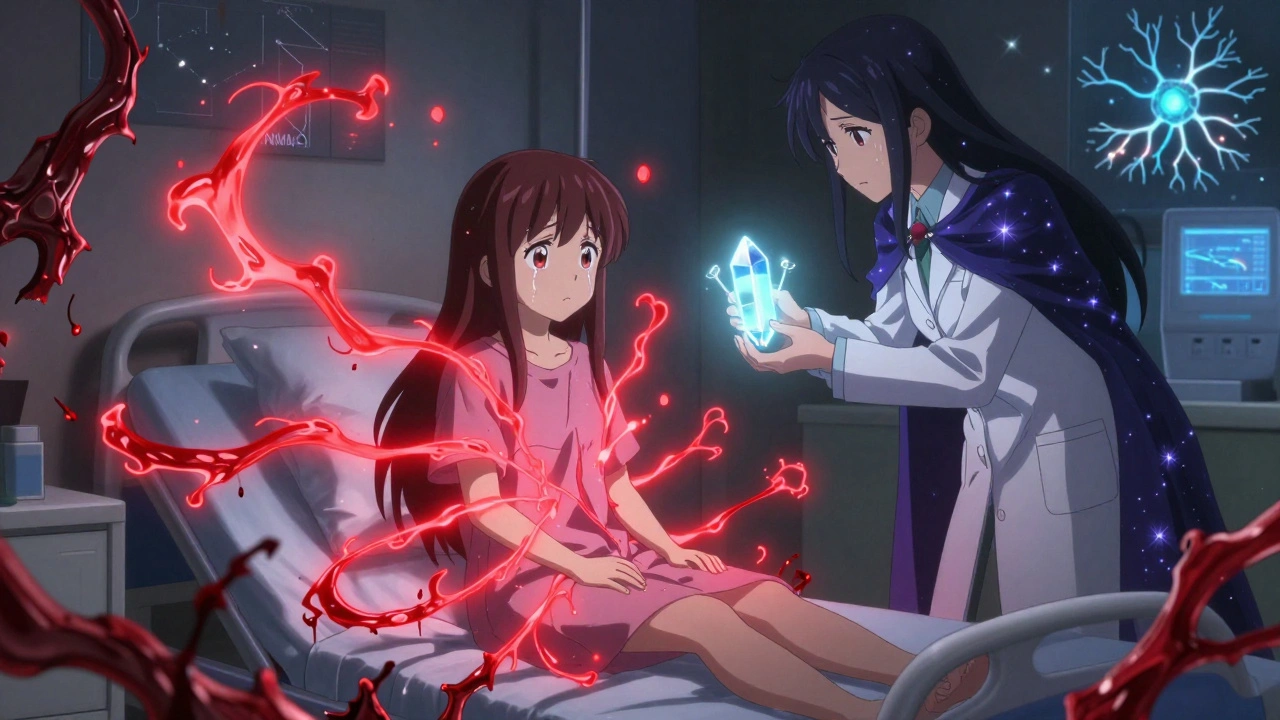
Signs You Might Have Opioid-Induced Hyperalgesia
If you’re on opioids and notice any of these changes, talk to your doctor:- Pain is getting worse even though you’re taking more medication
- Pain is spreading to areas that weren’t originally affected
- Light touch, clothing, or wind causes pain (allodynia)
- You’re experiencing new types of pain-burning, tingling, or shooting sensations
- Traditional painkillers (including higher opioid doses) aren’t helping like they used to
- You feel more sensitive to pain in general, even outside the original injury site
These signs don’t mean you’re addicted. They mean your nervous system has changed. And that change can be reversed.
How OIH Is Treated
The good news? OIH is treatable. The key is to break the cycle of escalating doses and target the underlying mechanisms.1. Reduce the opioid dose-This sounds counterintuitive, but lowering the dose often reduces pain. When you remove the stimulus that’s causing sensitization, your nervous system can begin to reset. Studies show patients report less pain after gradual tapering, even if they were previously convinced they needed higher doses.
2. Switch opioids-Not all opioids are created equal. Methadone is particularly useful because it blocks NMDA receptors in addition to activating opioid receptors. This dual action helps counteract the hyperalgesic effect. One study found patients who switched to methadone needed 40% less postoperative pain medication compared to those who stayed on morphine.
3. Add NMDA antagonists-Drugs like ketamine (given at low, non-anesthetic doses) and magnesium sulfate can block the overactive NMDA receptors driving OIH. These aren’t first-line treatments, but they’re effective for patients who haven’t responded to other approaches.
4. Use alpha-2-delta ligands-Gabapentin and pregabalin calm overactive nerves by regulating calcium channels. They’re commonly used for neuropathic pain and work well alongside opioid reduction in OIH cases. Typical doses range from 900-3600 mg/day for gabapentin and 150-600 mg/day for pregabalin.
5. Non-drug therapies-Cognitive behavioral therapy helps retrain how the brain processes pain signals. Physical therapy, especially graded movement programs, can reduce fear of movement and reverse the cycle of avoidance and sensitization. These aren’t just supportive-they’re essential.

The Controversy Around OIH
Despite solid biological evidence, OIH remains controversial. Some clinicians argue it’s rare or overdiagnosed. Others say it’s ignored because it complicates pain management. The American Pain Society acknowledges OIH as real but admits most providers struggle to identify it. In a 2020 survey, only 35% of pain specialists felt confident diagnosing it.Part of the problem is overlap. OIH looks like withdrawal. Like tolerance. Like disease progression. Like depression. Like fibromyalgia. Without clear diagnostic tests, it’s easy to misattribute worsening pain to something else.
But the stakes are high. Continuing to increase opioids in someone with OIH can lead to dangerous dose escalation, increased risk of overdose, and worsening quality of life. Recognizing OIH isn’t about stopping opioids-it’s about using them smarter.
What to Do If You Suspect OIH
If you’re on long-term opioids and your pain is getting worse:- Keep a pain diary: Note when pain worsens, what triggers it, and how your medication affects it.
- Don’t increase your dose on your own. Talk to your prescriber.
- Ask specifically about opioid-induced hyperalgesia. Use the term.
- Request a review of your medication regimen. Ask if switching to methadone or adding gabapentin is an option.
- Consider a multidisciplinary pain assessment. A team that includes a pain specialist, psychologist, and physical therapist can offer the most complete picture.
There’s no magic test for OIH, but clinicians can use quantitative sensory testing to measure pain thresholds in areas outside the original injury. If your pain threshold is lower in distant areas, that’s a strong clue.
The Bigger Picture
Opioid-induced hyperalgesia is a reminder that the body doesn’t respond to drugs in simple, linear ways. What we thought was a straightforward tool for pain relief turns out to be a complex signal that can flip the nervous system into overdrive. This isn’t a failure of the patient. It’s a failure of oversimplified thinking.For too long, chronic pain has been treated as a problem of insufficient medication. But sometimes, the solution isn’t more drugs-it’s less. Or different ones. Or none at all.
As research continues, new drugs targeting kappa-opioid receptors and other pathways may offer pain relief without triggering hyperalgesia. Until then, awareness and careful management are the best tools we have.
Is opioid-induced hyperalgesia the same as opioid tolerance?
No. Tolerance means you need higher doses to get the same pain relief because your body has adapted to the drug’s effect. Opioid-induced hyperalgesia means your nervous system has become more sensitive to pain, so even though you’re taking more opioids, your pain is actually worse. The pain changes in quality and spread, not just intensity.
Can OIH happen with low doses of opioids?
Yes, though it’s less common. OIH is most often seen with high or long-term use, but cases have been reported even with moderate doses over months. Individual factors like genetics and kidney function play a big role. Someone with a COMT gene variant or renal impairment may develop OIH at lower doses than others.
How long does it take to develop opioid-induced hyperalgesia?
There’s no fixed timeline. Some patients develop signs within weeks, especially with high-dose intravenous opioids. Others take months or even years. It depends on the drug, dose, route, genetics, and overall health. The longer you’re on opioids, the higher the risk.
Will stopping opioids make the pain worse?
Initially, yes-withdrawal can cause temporary increases in pain and discomfort. But unlike tolerance, where stopping opioids just brings back the original pain, OIH often improves after dose reduction. Many patients report less pain overall within weeks of tapering, even if they still have their original condition. The key is tapering slowly and with support.
Are there any tests to confirm OIH?
No single blood test or scan can diagnose OIH. Diagnosis is based on clinical signs: worsening pain with higher doses, diffuse pain patterns, allodynia, and ruling out other causes. Some clinics use quantitative sensory testing to measure pain thresholds in areas distant from the original injury-a drop in threshold supports the diagnosis.





Comments
Rudy Van den Boogaert
December 4, 2025 AT 21:14 PMI’ve been on opioids for three years for a herniated disc, and honestly? My pain got worse the more I took. I thought I was just getting used to it, but then I started feeling burning in my feet-way outside the original area. My doc finally listened when I brought up OIH. We tapered slowly, and within six weeks, my pain dropped 40%. Not cured, but I can walk again without wincing.
It’s wild how we assume more = better. Sometimes less is the real medicine.
Chad Handy
December 4, 2025 AT 22:42 PMLet’s be real-this whole OIH thing is just the pharmaceutical industry’s way of guilt-tripping doctors into cutting prescriptions. They’ve been pushing non-opioid alternatives for a decade now, and suddenly everyone’s an expert on NMDA receptors? The truth is, most of these patients just want to get off opioids because they’re addicted, and now they’re dressing it up as some neurological phenomenon. There’s no solid diagnostic criteria, no biomarker, no imaging test. It’s all subjective. And if you’re telling me my pain is ‘in my head’ because I’m on morphine, I’ve got news for you-my back still hurts when I sit down.
The real problem? Doctors are too scared to prescribe anymore. So they blame the drug instead of admitting they don’t know how to treat chronic pain anymore.
Augusta Barlow
December 6, 2025 AT 04:18 AMDid you know the FDA quietly approved ketamine for pain in 2019 but buried the report? And that the same companies pushing opioids also own the patents on NMDA antagonists? This isn’t medicine-it’s a money play. They make billions off opioids, then sell you $800/month ketamine infusions to ‘fix’ the damage they caused.
And don’t get me started on gabapentin. It’s basically a sedative with a fancy name. Used to be for seizures, now it’s for ‘nerve pain’? My cousin’s grandma got prescribed 1200mg a day and started hallucinating. They call it ‘treatment’-I call it chemical sedation to keep people quiet.
They’re not trying to help. They’re trying to control. And OIH? Just another buzzword to make you feel crazy for wanting relief.
Joe Lam
December 7, 2025 AT 23:48 PMOh, so now we’re treating chronic pain like it’s a glitch in the nervous system’s firmware? How quaint. The fact that you need a 2,000-word essay to explain why opioids might backfire speaks volumes. This isn’t neuroscience-it’s armchair neurobabble dressed up as clinical insight.
Let’s not pretend we’re not just rebranding addiction as a ‘neurological adaptation.’ You don’t need a PhD to understand that if you give someone a drug that feels good and makes pain disappear, they’ll want more. And when it stops working? Blame the biology. Convenient.
Meanwhile, real patients are getting denied care because doctors are terrified of being labeled ‘enablers.’ This article isn’t helping-it’s enabling fear.
Jenny Rogers
December 8, 2025 AT 19:24 PMIt is both lamentable and profoundly disconcerting that the medical establishment has, for decades, prioritized pharmacological intervention over holistic, patient-centered paradigms in the management of chronic pain. The doctrine of opioid-centric analgesia, rooted in a reductionist biomedical model, has demonstrably failed to account for the phenomenological complexity of human suffering.
One cannot reduce nociceptive pathways to mere receptor binding without invoking a Cartesian fallacy that divorces the embodied self from its neurochemical substrate. Opioid-induced hyperalgesia, therefore, is not merely a physiological phenomenon-it is an ethical indictment of a system that commodifies relief while neglecting the existential dimensions of pain.
It is incumbent upon clinicians to abandon the illusion of chemical mastery and embrace integrative modalities: mindfulness, somatic therapy, and the quiet dignity of human presence. The body does not heal through dosage adjustments alone. It heals through meaning.
Rachel Bonaparte
December 9, 2025 AT 00:49 AMI read this and immediately thought of my aunt. She was on oxycodone for 5 years after a car accident. Then she started screaming if her blanket touched her legs. She’d cry when the wind blew. Her doctor kept upping the dose. She ended up in the ER three times in six months because they thought she was overdosing. Turns out? She had OIH.
They switched her to methadone and added gabapentin. She cried when she realized she could hug her grandkids again without pain. That’s not magic-that’s science. But no one talks about it because it’s uncomfortable. We’d rather blame the patient than admit our tools are broken.
And yes, I know people think this is just ‘opioid withdrawal.’ But withdrawal doesn’t make your skin feel like it’s on fire. That’s your nerves screaming. And we’re ignoring it because we don’t want to admit we’ve been wrong for years.
Also, if you’re a doctor reading this and you don’t know what OIH is? You need to go back to school. Not just for your patients-for your own integrity.
Scott van Haastrecht
December 9, 2025 AT 23:16 PMThis is why we’re in the opioid crisis. Every time someone says ‘it’s not addiction, it’s OIH,’ they’re giving people a free pass to keep using. You think your pain is ‘worse’ because of your nerves? Or because you’re addicted and your brain is screaming for more? The difference is semantics. The outcome is the same-you’re still dependent.
And don’t give me that ‘tapering helps’ nonsense. Tapering is torture. People die during tapering. People OD when they relapse after being cut off. You think this article is helping? It’s just another excuse to deny people medication.
Stop pretending this is science. It’s moral panic with footnotes.
Chase Brittingham
December 10, 2025 AT 13:51 PMMy dad had OIH. He was on high-dose morphine after spinal surgery and started having pain all over-hips, hands, even his scalp. He was terrified he was getting worse. We were all ready to sign him up for more pills.
Then his pain specialist asked, ‘What if we cut it in half?’ We were horrified. But after three weeks of tapering, he said, ‘I feel like I can breathe again.’ He still has pain, but it’s his pain-not the opioid kind. He’s off opioids now, on gabapentin and physical therapy, and he’s happier than he’s been in years.
This isn’t about taking away drugs. It’s about giving people back their lives. If you’ve ever been told ‘it’s all in your head’-this isn’t that. This is your body saying, ‘I can’t take this anymore.’
Listen to your body. And if your doctor doesn’t know what OIH is? Find someone who does.
Bill Wolfe
December 11, 2025 AT 09:07 AMLet’s be honest-this whole OIH narrative is just the latest iteration of the ‘pain is psychological’ myth, repackaged with fancy neuroscience jargon to make it sound legitimate. You want to know who really benefits from this? The insurance companies. They don’t want to pay for opioids, so they fund studies that make opioids look dangerous, then push you toward gabapentin (which costs less) and CBT (which they don’t have to cover).
And don’t even get me started on methadone. You’re telling me switching from oxycodone to methadone is a ‘solution’? Methadone is a maintenance drug for heroin addicts. Now it’s a pain medication? That’s like replacing a Ferrari with a used Civic and calling it an upgrade.
Meanwhile, real patients who need opioids to function are being labeled as ‘hyperalgesic’ so their prescriptions can be denied. This isn’t medicine. It’s economic triage disguised as science. And if you’re a doctor who buys into this, you’re not helping-you’re complicit.
Also, quantitative sensory testing? That’s a $2,000 machine that 98% of clinics don’t have. So you’re diagnosing a condition that can’t be confirmed? Brilliant. 🤡