Heartburn Risk Calculator
Your Risk Level
Analysis based on current medical guidelines
Personalized Recommendations:
That familiar burning sensation rising up your chest after a spicy meal is more than just discomfort-it’s a signal that your digestive system is struggling. For many people, the combination of spicy foods and GI-irritating medications creates a perfect storm for heartburn. You might be taking necessary prescriptions for blood pressure or pain, only to find they worsen when paired with your favorite chili dish. Understanding this interaction isn’t about giving up flavor forever; it’s about managing timing, dosage, and personal triggers to keep symptoms under control.
Why Spicy Food Triggers Heartburn
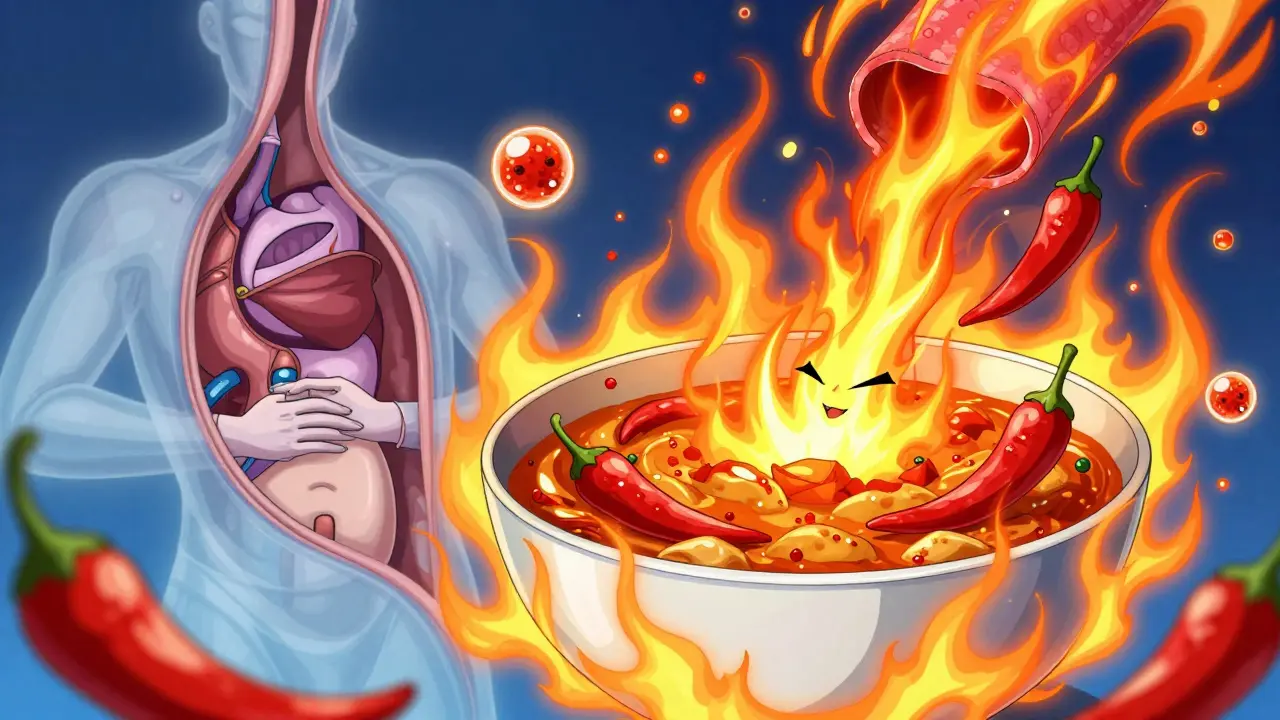
To understand why that bowl of curry causes trouble, we need to look at what happens inside your body. The key player here is capsaicin, the active compound in chili peppers responsible for their heat. When you consume capsaicin, it doesn't just burn on contact; it affects the muscles controlling your digestion.
Specifically, capsaicin can relax the lower esophageal sphincter (LES), a circular muscle at the junction of the esophagus and stomach that acts as a valve. In healthy individuals, this valve stays tight to keep stomach acid where it belongs. However, research cited by Dr. David Johnson from Eastern Virginia Medical School shows that in sensitive individuals, LES pressure can drop by 30-40% within 30 minutes of eating spicy food. This relaxation allows gastric acid to flow backward into the esophagus, causing the painful burning sensation known as gastroesophageal reflux disease (GERD), a chronic condition characterized by frequent acid reflux.
It’s important to note that not everyone reacts the same way. Dr. Anish Sheth from Yale University points out that individual variability is significant. Some people can eat extremely hot food without issue, while others react to mild spices. This sensitivity ranges widely, with some patients reacting to as little as 10 mg of capsaicin equivalent per meal, while others tolerate up to 100 mg. Identifying your personal threshold is the first step in management.
Medications That Worsen Acid Reflux
If spicy food is one half of the problem, certain medications are the other. Many common drugs have side effects that directly impact the gastrointestinal tract. These medications generally cause issues through two mechanisms: increasing stomach acid production or relaxing the LES further.
| Medication Class | Primary Use | Effect on Digestion | Risk Level |
|---|---|---|---|
| NSAIDs (e.g., Ibuprofen) | Pain relief, inflammation | Increases acid production, irritates lining | High (40-60% increased risk) |
| Beta Blockers | Hypertension, heart conditions | Relaxes LES muscle | Moderate (22% increased risk) |
| Anticholinergics | Seasickness, overactive bladder | Decreases LES pressure by 25% | Moderate-High |
| Bisphosphonates | Osteoporosis | Causes erosive esophagitis | High (15-30% incidence) |
| Theophylline | Asthma, COPD | Relaxes LES by 28% | Moderate |
For example, nonsteroidal anti-inflammatory drugs (NSAIDs) like ibuprofen are notorious for irritating the stomach lining. According to Dr. Gary W. Falk from the University of Pennsylvania, chronic use of NSAIDs increases GERD risk by 40-60%. Similarly, beta blockers, commonly prescribed for high blood pressure, were linked to a 22% increase in GERD risk in the Framingham Heart Study update published in JAMA Cardiology in January 2023. If you are taking any of these medications, adding spicy food to the mix significantly amplifies the strain on your digestive system.
The Interaction: Why Timing Matters
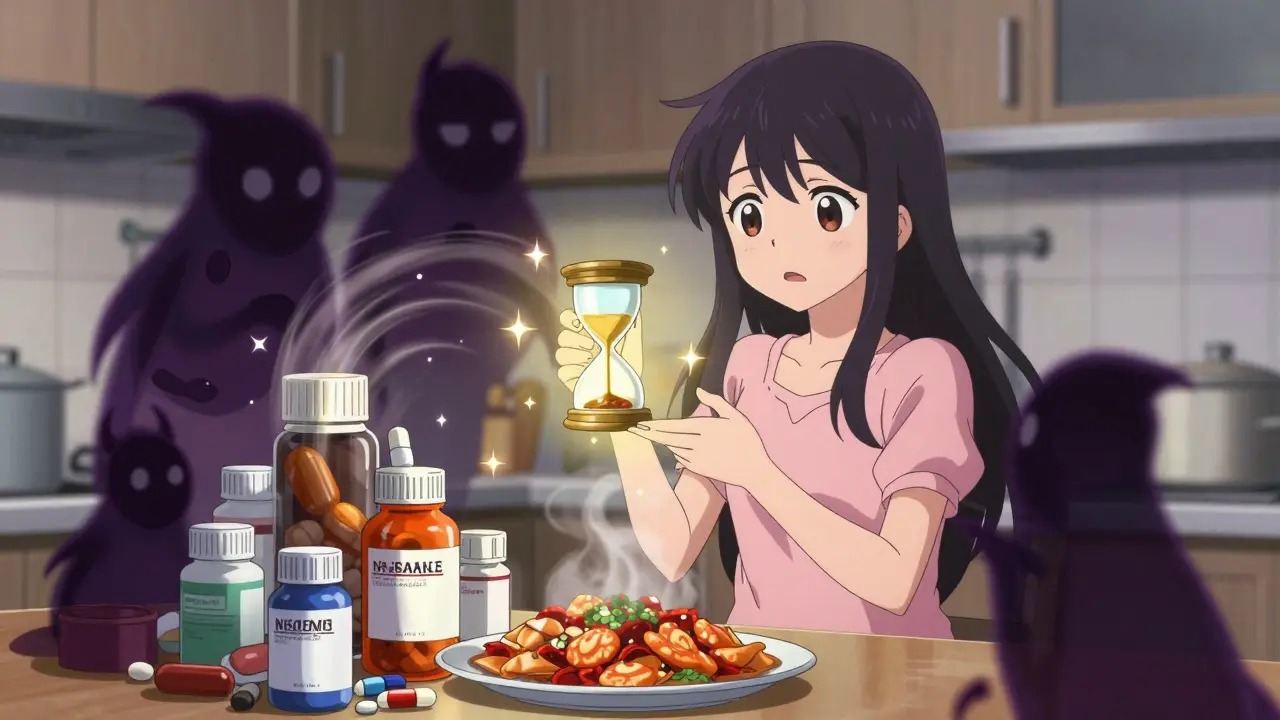
The danger lies in the combination. When you take a medication that relaxes the LES or increases acid, and then eat a meal high in capsaicin, you are essentially removing your body’s natural defenses against reflux. This is particularly problematic for patients using proton pump inhibitors (PPIs), medications that reduce stomach acid production like pantoprazole.
While PPIs are effective, their efficacy can be compromised by dietary choices. Ellie Stamerjohn, MS, RDN, LD, notes that absorption rates of PPIs can decrease by 18-23% when taken within two hours of consuming trigger foods like spicy dishes, fatty meals, or alcohol. This means the medication isn’t working as well as it should, leaving you vulnerable to breakthrough symptoms.
Furthermore, antacids, which provide immediate but short-term relief, can interfere with the absorption of other essential medications. Aluminum-containing antacids can reduce the absorption of tetracycline antibiotics by 50% and fluoroquinolones by 30-90% if taken simultaneously. The Cleveland Clinic advises taking antacids either one hour before or at least four hours after other medications to prevent these dangerous interactions.
Evidence-Based Strategies to Reduce Risk
You don’t necessarily have to eliminate spicy food or stop your medications. Instead, you can manage the risk through strategic adjustments. Here are practical steps backed by clinical data:
- Implement an Elimination Diet: The Kingsley Clinic recommends a 3-7 day elimination period for suspected trigger foods. Remove spicy foods completely, then reintroduce them gradually. This helps identify your personal sensitivity threshold. Studies show 82% of patients report improved symptom control within two weeks of this protocol.
- Optimize Medication Timing: Take PPIs 30-60 minutes before your first meal of the day for maximum effectiveness. Avoid taking antacids close to the time you take other prescription drugs. Space them out by at least two hours.
- Practice Meal Spacing: Eat smaller, more frequent meals rather than large ones. The American College of Gastroenterology suggests maintaining three-hour intervals between meals to allow gastric emptying, which reduces reflux risk by 35%.
- Stay Upright After Eating: Gravity is your friend. Avoid lying down for at least three hours after a meal. A 2022 study in Neurogastroenterology & Motility found this simple habit reduces nocturnal reflux by 60%.
- Elevate Your Bed Head: Raise the head of your bed by 6-8 inches using blocks or a wedge pillow. This physical adjustment can reduce nighttime symptoms by 45% without the need for additional medication.

Comparing Relief Options
When symptoms do strike, choosing the right relief method matters. Not all treatments work the same way or last the same amount of time.
| Treatment Type | Onset Time | Duration | Best For |
|---|---|---|---|
| Antacids (e.g., Tums, Rolaids) | 2-5 minutes | 30-60 minutes | Immediate, occasional relief |
| H2 Blockers (e.g., Famotidine) | 30-60 minutes | Up to 12 hours | Prevention before meals |
| Proton Pump Inhibitors (e.g., Pantoprazole) | 2-3 days | 24 hours | Chronic, severe GERD |
Dr. Lauren B. Gerson’s 2023 meta-analysis highlights a crucial insight: while 87% of patients get immediate relief from antacids, only 42% achieve sustained control without changing their diet. In contrast, combining medication with trigger avoidance yields a 78% success rate. Relying solely on antacids often leads to "rebound acid hypersecretion," where stopping the medication causes worse symptoms because your body has adapted to producing more acid.
New Developments in Treatment
The landscape of GERD treatment is evolving. In August 2023, the FDA approved Vonoprazan (Voquezna), a potassium-competitive acid blocker. Unlike traditional PPIs, Vonoprazan provides more consistent acid suppression regardless of your genetic metabolism type. Phase 3 trials showed 89% of patients achieved symptom control, addressing a major limitation of older drugs.
Additionally, researchers at Johns Hopkins University presented promising results for capsaicin desensitization protocols. In a 12-week trial, 65% of participants successfully increased their tolerance to spicy food without worsening symptoms. This suggests that for some, gradual exposure rather than total avoidance might be a viable long-term strategy.
Can I still eat spicy food if I take proton pump inhibitors?
Yes, but you may experience reduced effectiveness. Studies show PPI absorption can drop by 18-23% if you consume spicy foods within two hours of taking the medication. To minimize risk, try to separate your medication dose from spicy meals by at least two hours, or consider adjusting your meal timing.
Which medications are most likely to cause heartburn?
Common culprits include NSAIDs (like ibuprofen), beta blockers, anticholinergics, bisphosphonates, and theophylline. These drugs either increase stomach acid production or relax the lower esophageal sphincter, making reflux more likely.
How long should I wait after eating before lying down?
You should wait at least three hours after a meal before lying down. This allows gravity to help keep stomach contents in the stomach and reduces the risk of nocturnal reflux by up to 60%.
Is it safe to take antacids with other medications?
Not immediately. Antacids can interfere with the absorption of many drugs, including antibiotics. It is recommended to take antacids either one hour before or at least four hours after other medications to avoid interactions.
Does everyone react to spicy food the same way?
No, individual variability is significant. Sensitivity to capsaicin ranges widely among people. Some may tolerate high levels of spice without issues, while others react to mild amounts. Keeping a food-symptom diary can help identify your personal triggers.





Comments
Elizabeth Fandry
May 28, 2026 AT 22:20 PMOne must consider the existential dread inherent in the relaxation of the lower esophageal sphincter. It is a metaphor for the human condition, where our defenses fail against the acidic truths of existence. 🧐✨ The capsaicin does not merely burn; it reveals the fragility of our biological barriers. We are but vessels, leaking our essence into the void of the esophagus. How poignant that we seek relief through elevation and timing, as if gravity itself could absolve us of our dietary sins. 😌📉
Madeline Petes
May 30, 2026 AT 21:34 PMhonestly this is super helpful info!! i always thought it was just me being weak to spice but now i know its the meds making it worse. thanks for sharing this!! 🙌💖
Ramanath Rao
June 1, 2026 AT 20:20 PMThis article is fundamentally flawed because it ignores the cultural context of spicy food consumption. In India, we eat chili daily without such excessive medicalization. The problem is not the food; it is your weak digestive system caused by processed Western diets. You should stop blaming capsaicin and start respecting traditional culinary practices. Stop treating food as an enemy. It is an insult to our heritage to suggest that spice causes disease when it has been used for healing for millennia.
irine sabrina
June 2, 2026 AT 22:11 PMI really appreciate this detailed breakdown! It’s so important to listen to our bodies and make small adjustments rather than feeling like we have to give up everything we love. I’ve started spacing out my meals and it has made such a difference in how I feel during the day. Let’s be kind to ourselves and find what works for us individually! 💕✨
Gary Helminiak
June 4, 2026 AT 19:19 PMAs someone who has dealt with GERD for years, I can confirm that the timing of PPIs is absolutely critical. Many patients take them with their meal or after, which drastically reduces efficacy. The prodrug requires activation in the parietal cells, which only occurs when they are actively secreting acid, hence the pre-meal requirement. Also, the interaction between antacids and antibiotics is often overlooked by general practitioners, leading to treatment failures. Always space them out! 🩺💊📚
Angela Niculescu
June 5, 2026 AT 11:47 AMActually, I disagree with the idea that you need to avoid spicy food entirely. My gut feels better when I eat hot peppers. This whole thing is overblown.
Victoria Mangiapane
June 7, 2026 AT 09:27 AMugh another article telling me what i can't eat. life is so hard sometimes. why do they even bother writing these things if everyone is going to ignore them anyway? whatever. 😒
Nivetha Narayanan
June 7, 2026 AT 20:42 PMhey guys!! just wanted to say that i tried the wedge pillow trick and it actually works wonders for night time reflux. no more waking up with that burning chest feeling. hope this helps anyone else struggling! ✨😊
Frank Arlyss
June 8, 2026 AT 18:18 PMWhy are you all talking about pills and pillows? I had a dream last night that my stomach was eating me alive. It felt so real. I think the heartburn is coming from my subconscious trying to tell me something about my mother. Does anyone else feel like their digestion is linked to unresolved childhood trauma?
Tim Reynolds
June 9, 2026 AT 21:19 PMThe FDA approval of Vonoprazan is suspicious. Big Pharma wants you dependent on new drugs. They hide the side effects. Trust no one. Wake up. ;)
Groman Neta
June 11, 2026 AT 03:34 AMThis article is poorly written and lacks depth. Most people reading this probably don’t even understand basic physiology. It is insulting to assume that simple lifestyle changes will fix complex medical issues without professional intervention. Typical internet advice nonsense.