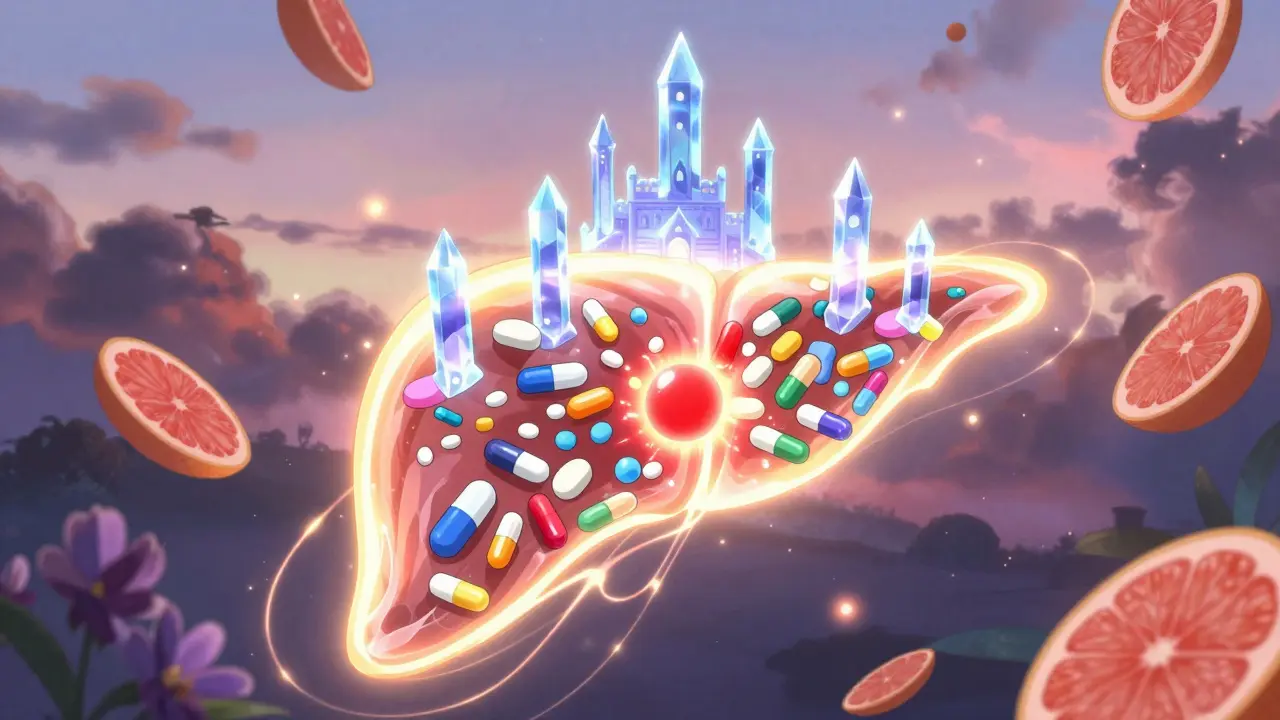
CYP450 Drug Interaction Checker
Select a medication you're taking to check for potential CYP450 enzyme interactions with common drugs. This tool helps identify dangerous combinations that could lead to toxicity or reduced effectiveness.
When you take multiple medications, your body doesn’t treat them like separate guests at a dinner party. It treats them like people all trying to use the same bathroom at once. The bottleneck? CYP450 enzymes. These liver and gut proteins handle about 90% of the drugs you swallow - from statins and antidepressants to painkillers and blood thinners. But when two or more drugs need the same enzyme to get processed, they fight for space. And when one wins, the other can build up to dangerous levels… or vanish before it even works.
Who’s in Charge? The Big Six CYP Enzymes
Not all CYP450 enzymes are created equal. Six of them do the heavy lifting for most medications. CYP3A4 alone handles half of all drugs - think simvastatin, cyclosporine, and most opioids. CYP2D6 is next, processing a quarter of prescriptions, especially antidepressants, beta-blockers, and codeine. CYP2C9 manages warfarin and NSAIDs like ibuprofen. CYP2C19 breaks down clopidogrel and some proton-pump inhibitors. CYP1A2 and CYP2E1 round out the top six, handling caffeine, theophylline, and alcohol-related metabolism.Here’s the catch: if you’re taking two drugs that rely on the same enzyme, they compete. It’s not about dosage - it’s about binding strength. A drug with 10 times higher affinity for CYP3A4 can slash the metabolism of another drug by 90%, even if it’s given in a tiny dose. That’s why grapefruit juice - which blocks intestinal CYP3A4 - can turn a safe statin dose into a rhabdomyolysis risk. One glass can reduce drug clearance by 30-80% for hours.
How Drugs Fight: Inhibition vs. Induction
There are two main ways drugs interfere with each other’s metabolism: inhibition and induction. Inhibition is the more common and immediate threat. It happens when one drug physically blocks the enzyme’s active site - like jamming a key into a lock so another key can’t turn. This is called competitive inhibition. Drugs like clarithromycin, fluconazole, and fluoxetine are strong inhibitors of CYP3A4 and CYP2D6. They can cause drug levels to spike within days.Then there’s irreversible inhibition - where a drug permanently damages the enzyme. Clarithromycin does this to CYP3A4. Recovery takes 3 to 7 days because the liver has to make new enzyme from scratch. That’s why a patient on simvastatin who starts clarithromycin can end up in the hospital with muscle breakdown. Their simvastatin levels didn’t just rise - they exploded by 10-fold.
Induction is slower but just as dangerous. It’s like training the enzyme to work overtime. Drugs like rifampin, St. John’s wort, and carbamazepine activate nuclear receptors (PXR and CAR) that tell the liver to produce more CYP450 enzymes. It takes 3 to 14 days for this effect to peak. But once it does, your drug might get cleared too fast. A patient on oral contraceptives who starts St. John’s wort can get pregnant - not because they missed a pill, but because the birth control got metabolized before it could work.
Genetics: Your Personal Metabolism Blueprint
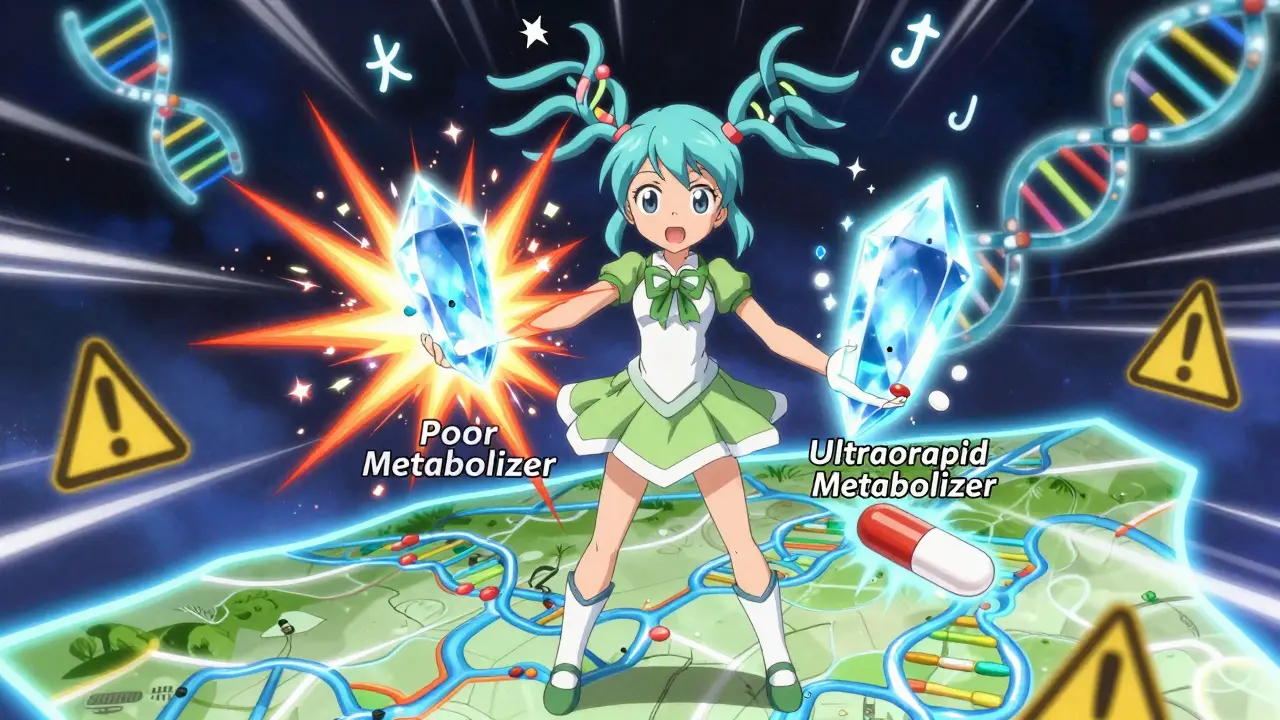
Two people can take the exact same drugs, at the same doses, and have wildly different outcomes. Why? Genetics. CYP2D6, for example, has over 100 known variants. People fall into four categories:- Poor metabolizers (PMs): 5-10% of Caucasians. Their enzyme barely works. They get high drug levels from normal doses - risk of toxicity.
- Intermediate metabolizers (IMs): 35-40%. Slower than average. Often need lower doses.
- Extensive metabolizers (EMs): 45-50%. The "normal" group. Standard doses work.
- Ultrarapid metabolizers (UMs): 1-10%, higher in some populations. They break down drugs too fast. Prodrugs like codeine turn into morphine too quickly and get flushed out - leaving them in pain.
For codeine, UMs don’t get pain relief - they get opioid toxicity. For tamoxifen (used in breast cancer), poor metabolizers have 30-50% lower active drug levels, raising relapse risk. The same goes for clopidogrel: 30% of Caucasians and 60% of Asians are poor or intermediate metabolizers of CYP2C19. They don’t get enough active drug to prevent clots - even if they take the pill every day.
Real-World Cases: When Theory Becomes Emergency
In 2022, a 72-year-old woman in New Zealand was on simvastatin for cholesterol. Her doctor added clarithromycin for a sinus infection. Three days later, she was admitted with severe muscle pain and kidney failure. Her simvastatin level was 10 times higher than normal. Both drugs used CYP3A4. The interaction was predictable. It happened anyway.Another case: a 45-year-old man with chronic back pain was prescribed codeine. He took it as directed - but felt nothing. His pharmacist later learned he was a CYP2D6 ultrarapid metabolizer. The codeine turned into morphine too fast, and his body cleared it before it could help. He needed a different painkiller - not more codeine.
Then there’s the theophylline story. A patient on theophylline for asthma started fluvoxamine for depression. Within 48 hours, his theophylline level jumped from 10 mcg/mL to 25 mcg/mL - above the toxic threshold. He had a seizure. Fluvoxamine is a strong CYP1A2 inhibitor. Theophylline is almost entirely cleared by that enzyme. No one checked.
What Makes an Interaction Dangerous?
Not every interaction matters. Three things decide if it’s a real threat:- Therapeutic index: Drugs with a narrow window - like warfarin, digoxin, or lithium - are high risk. A small change in level = bad outcome.
- Potency of the inhibitor/inducer: Strong inhibitors (like ketoconazole) raise drug levels by 5-fold or more. Strong inducers (like rifampin) drop levels by 50-90%.
- Fraction metabolized: If 75% of a drug is cleared by CYP3A4, even a moderate inhibitor can cause trouble. If only 5% is handled that way, the risk is low.
That’s why combining fluoxetine (a moderate CYP2D6 inhibitor) with metoprolol (a CYP2D6 substrate) is so common in clinics. Nurses report bradycardia in 15-20% of patients on this combo. The metoprolol builds up. The heart slows. It’s not rare. It’s predictable.
What’s Being Done? Tools, Testing, and Triggers
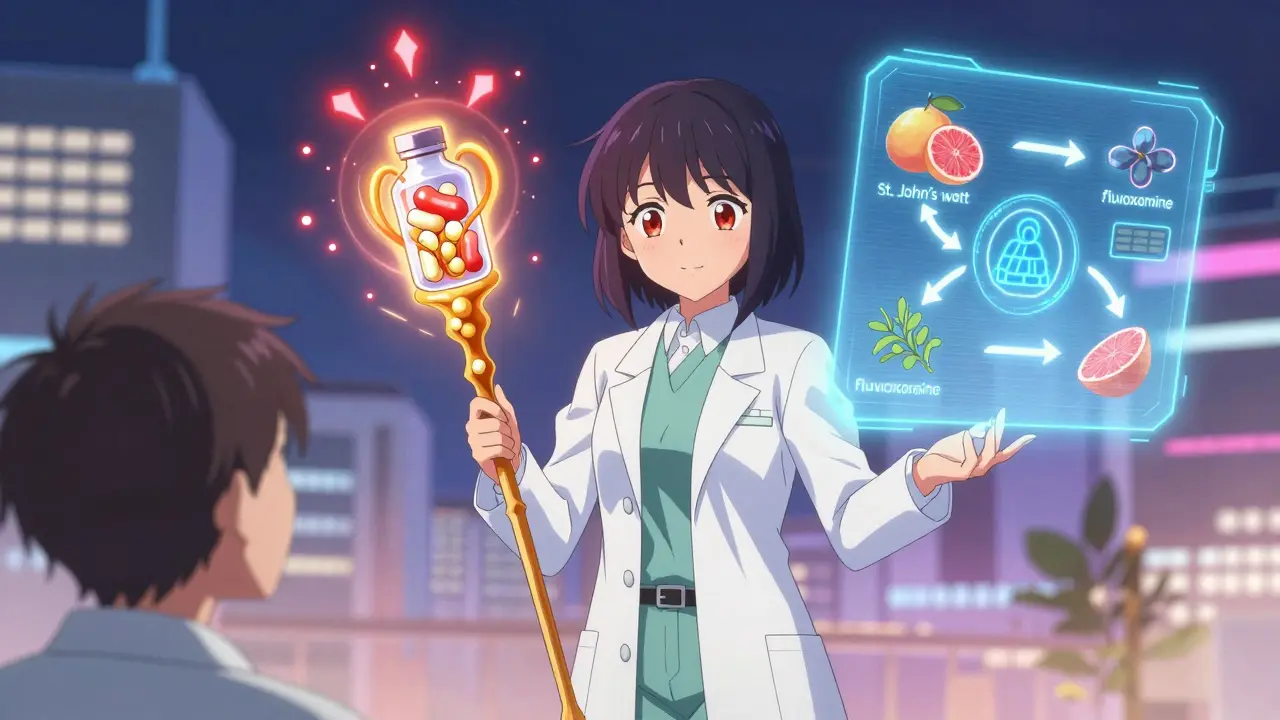
Hospitals are waking up. The FDA now requires CYP450 interaction data on every new drug label. Clinical decision support tools like Lexicomp catch 95% of major interactions. EHR systems like Epic and Cerner now flash red alerts when a prescriber tries to pair a CYP3A4 substrate with a strong inhibitor.Pharmacogenomic testing is growing. Panels now test for 5-12 CYP genes. Costs? $250-$500. Turnaround? 3-7 days. More hospitals are offering it before starting high-risk drugs like clopidogrel or SSRIs. The NIH’s PharmVar initiative is standardizing gene naming by 2025 - so a PM in Wellington and a PM in Chicago are talking the same language.
AI is stepping in, too. IBM Watson’s drug interaction model hit 89% accuracy in beta testing. It doesn’t just check CYP450 - it weighs herbals, supplements, and even food. Grapefruit? Check. St. John’s wort? Check. Smoking? It induces CYP1A2. Coffee? It’s a substrate.
What You Can Do
If you take three or more medications, here’s what you need to know:- Ask your pharmacist: "Do any of my drugs compete for the same enzyme?" They have tools you don’t.
- Don’t assume natural = safe. St. John’s wort, goldenseal, and grapefruit juice are potent CYP modulators.
- Track new prescriptions. The biggest risk isn’t long-term use - it’s adding one new drug to an existing list.
- If you’re on warfarin, clopidogrel, or an SSRI, ask about genetic testing. It’s not sci-fi - it’s standard care now.
- Report odd side effects. A sudden headache, muscle pain, or dizziness after starting a new drug? It might be an interaction.
Medication safety isn’t about avoiding drugs. It’s about understanding how your body handles them. CYP450 enzymes aren’t the whole story - transporter proteins and kidney clearance matter too. But right now, they’re the biggest hidden risk in your medicine cabinet.
What are the most common CYP450 drug interactions in real life?
The most common interactions involve CYP3A4 and CYP2D6. Examples include: simvastatin + clarithromycin (CYP3A4 inhibition), metoprolol + fluoxetine (CYP2D6 inhibition), and warfarin + amiodarone (CYP2C9 inhibition). St. John’s wort with birth control pills (CYP3A4 induction) is another frequent issue. These combinations are so common that nurses and pharmacists see them weekly.
Can herbal supplements really affect CYP450 enzymes?
Yes - and often more strongly than prescription drugs. St. John’s wort is a potent CYP3A4 inducer, reducing levels of cyclosporine, oral contraceptives, and some HIV drugs by 40-60%. Grapefruit juice inhibits intestinal CYP3A4, increasing statin levels by 30-80%. Goldenseal blocks CYP2D6 and CYP3A4. Even green tea can interfere with CYP1A2. These aren’t myths - they’re documented in clinical case reports.
Why do some people need lower doses of the same drug?
Genetics. About 5-10% of people are poor metabolizers for key enzymes like CYP2D6 or CYP2C19. For example, poor metabolizers of CYP2D6 need 50% less of drugs like metoprolol or tramadol to avoid side effects. Ultrarapid metabolizers, on the other hand, may need higher doses - or a different drug entirely - because their bodies clear the medicine too fast. This isn’t about weight or age - it’s about your DNA.
How long does it take for CYP450 interactions to show up?
It depends. Inhibition can happen within hours to days - like when you add fluoxetine to a beta-blocker. Induction takes longer: 3-14 days for enzymes to ramp up. But the effects last even longer. After stopping a strong inducer like rifampin, enzyme levels can stay elevated for 1-3 weeks. That’s why you can’t just stop the drug and expect things to go back to normal right away.
Is CYP450 testing covered by insurance?
In many cases, yes - especially for high-risk drugs. Medicare and private insurers in the U.S. and New Zealand now cover CYP2C19 testing before clopidogrel, and CYP2D6 testing before certain antidepressants or tamoxifen. Costs range from $250-$500, and many hospitals offer testing through pharmacy services. It’s not routine for everyone - but it’s recommended if you’re on multiple medications or have had unexplained side effects.
Can I avoid CYP450 interactions by taking drugs at different times?
No. If two drugs compete for the same enzyme, spacing them out won’t help. The enzyme doesn’t reset between doses - it’s either inhibited or induced. Taking simvastatin at night and clarithromycin in the morning still leads to dangerous buildup. The issue is the enzyme’s capacity, not timing. The only safe solution is to avoid the combo, switch one drug, or adjust the dose based on testing.


Comments
Jacob Hessler
March 25, 2026 AT 08:45 AMthis whole article is just big pharma trying to scare people so they buy more drugs. i take 5 meds and i dont need some nerd with a lab coat telling me my body cant handle it. we been doing fine for centuries before they started overcomplicating everything.
Amber Gray
March 26, 2026 AT 22:39 PMgrapefruit juice is the real villain here 🍊💀 i drink it every morning and now im scared to even look at my statin pill
Danielle Arnold
March 28, 2026 AT 07:19 AMso let me get this straight... we're all just lab rats in a giant pharmaceutical game of musical chairs with our liver enzymes? cute.
James Moreau
March 29, 2026 AT 01:44 AMthis is actually one of the most important topics in modern medicine and it's wild that so few patients know about it. i work in a clinic and i see this every week - someone on warfarin takes ibuprofen, no one checks, and boom - ER visit. Education matters.
Blessing Ogboso
March 30, 2026 AT 01:08 AMwhat i find fascinating is how this connects to global health equity. in the U.S., we have access to pharmacogenomic testing and clinical decision tools, but in Nigeria and other low-resource settings, patients are often on multiple medications with zero monitoring. the same enzyme interactions happen, but without the safety nets. we need global awareness, not just tech solutions designed for wealthy countries.
Jefferson Moratin
March 31, 2026 AT 00:30 AMThe CYP450 system is not merely a biochemical pathway; it is a metaphor for the fragility of homeostasis in an increasingly complex pharmacological landscape. Each drug is a perturbation, each enzyme a node in a dynamic network, and the body’s response - whether inhibition or induction - reflects the emergent properties of a biological system under stress. To reduce this to mere "competition" is to misunderstand the ontology of metabolic regulation.
Zola Parker
April 1, 2026 AT 18:05 PMso you're telling me my coffee and my antidepressant are having a secret war in my liver? 🤔 i just wanted to wake up and feel okay
florence matthews
April 2, 2026 AT 13:49 PMi love how this post explains things without being condescending. as a nurse, i wish every patient read this. also, yes, green tea can mess with CYP1A2 - i had a patient who started drinking 5 cups a day and ended up with theophylline toxicity. tiny things matter.
Kenneth Jones
April 3, 2026 AT 08:10 AMif you're on more than three meds you're asking for trouble. stop being lazy and get your life together. your body isn't a pharmacy
Raphael Schwartz
April 3, 2026 AT 17:42 PMmy grandpa took 12 pills a day and lived to 92 so shut up
Korn Deno
April 4, 2026 AT 22:30 PMthis is why we need to stop treating medicine like a checklist and start treating it like a conversation. your body isn't a machine with interchangeable parts. it's a living system that responds to context - diet, stress, sleep, even your mood. the enzyme interaction is real, but so is the human factor. if we ignore that, we're just moving molecules around without healing anyone.
Aaron Sims
April 5, 2026 AT 07:56 AMCYP450? More like CYP450-CONTROLLED BY BIG PHARMA. Did you know the FDA only requires testing on "standard" populations? What about indigenous groups? African genotypes? Asian subpopulations? They're not in the trials. This isn't science - it's a profit-driven exclusionary system. And don't even get me started on how they patent enzyme variants...
Agbogla Bischof
April 6, 2026 AT 19:45 PMThis is excellent. I'm a pharmacist in Lagos, and we see CYP2C19 poor metabolizers on clopidogrel every week - no testing, no alternatives. Patients just keep taking the pill and having strokes. The real tragedy isn't the science - it's the lack of access. We need low-cost genotyping kits and community education. Not just alerts in Epic. Real solutions for real people.